Uncategorized
6 Point Shilajit Lab Report Checklist for Australian Buyers
Verify Shilajit lab reports in Australia with a six point checklist. Spot fake COAs, check lab accreditation, lot match, analytical methods, and LODs.


Drink water and move your body for an immediate lift. For lasting, stimulant-free energy, build consistent sleep, morning light exposure, and targeted nutrients into your daily routine. Those two levers, immediate and long term, cover most of what people actually need. The FDA notes that excess caffeine causes jitters, sleep disruption, and cardiovascular stress, which is exactly why so many health-conscious people are looking for a better way.
Immediate actions (1–10 minutes):
For the next few days, prioritize sleep length and consistency above everything else. Add morning sunlight and a protein-forward breakfast, and you will feel a measurable difference before you ever open a supplement bottle.
The fastest, most reliable natural energy boost without caffeine combines immediate hydration and movement with consistent sleep, morning light, and targeted nutrition over days and weeks.
| Point | Details |
|---|---|
| Hydrate and move first | Drink 8–12 oz of water and walk 5–10 minutes for a reliable alertness reset within minutes. |
| Morning light anchors energy | 10–30 minutes of sunlight within 30 minutes of waking resets circadian drive and supports daytime alertness. |
| Test labs if fatigue persists | After 2–4 weeks of solid habits, check ferritin, B12, TSH, and a basic metabolic panel before adding supplements. |
| Supplements work on a 4–8 week timeline | Maca, ginseng, and Shilajit require consistent use over weeks; they do not replace sleep or nutrition. |
| Shilajit as an adjunct | Shilajit’s fulvic acid and trace minerals may support energy when added to a solid habit foundation, with batch COAs available for quality verification. |
The fastest, most reliable combination is hydration followed by movement. Research published in PMC confirms that even mild dehydration impairs attention and mood, and rehydration can restore cognitive performance within minutes. Movement compounds that effect: UW Medicine’s Right as Rain explains that even 5–10 minutes of brisk activity triggers norepinephrine and endorphins, producing a noticeable alertness reset without any stimulant.
Here is a sequence that works better than doing these things in random order:
Pro Tip: Sequence matters. Hydrate before you move, and move before you breathe. Each step primes the next one. Doing them in reverse order (breathwork first, then water) is less effective because the physiological cascade works in one direction.
A brief safety note: avoid intense cold exposure if you have uncontrolled hypertension or a known cardiac condition. Skip stimulating breathwork during pregnancy. If you feel chest pain, palpitations, or sudden dizziness during any of these, stop and seek medical evaluation.
Sustainable, caffeine-free energy is mostly a product of three daily windows: morning, midday, and evening. Get those right consistently, and you will need far fewer quick fixes.
Wake at the same time every day, including weekends. Consistency in your wake time anchors your circadian rhythm more powerfully than any supplement. Within 30 minutes of waking, get some natural sunlight for several minutes. Health.com’s evidence review explains that morning light suppresses residual melatonin and triggers a cortisol peak that drives daytime alertness. On cloudy days, a 10,000-lux light therapy lamp delivers a comparable signal.
Drink 16 oz of water before your first meal. Then eat a protein-rich breakfast: eggs, Greek yogurt, cottage cheese, or a protein smoothie. Protein at breakfast blunts the mid-morning blood sugar crash that sends people reaching for a second cup of coffee.
Schedule a movement break between noon and 2 PM, the window when circadian alertness naturally dips. Even a 10-minute walk outside doubles as a light-exposure reset. Eat a balanced, low-glycemic lunch: lean protein, vegetables, legumes or whole grains, and a small amount of healthy fat. Avoid heavy refined carbs at lunch; they produce a predictable post-meal slump.
Cut bright screen light 60–90 minutes before bed. Blue-light exposure at night delays melatonin release and pushes your sleep onset later, which means you wake up already behind on recovery. Avoid alcohol within three hours of sleep; it fragments sleep architecture even when it feels sedating. Aim for 7–9 hours in a cool, dark room.
A simple daily template:
CDC research on physical activity and brain health confirms that regular movement supports mood, cognition, and sustained energy, making it one of the highest-return habits in this entire list.
Food is where most people’s energy problems actually live. The pattern that works is simple: protein at every meal, low-glycemic carbohydrates, healthy fats, and consistent meal timing.
Foods to prioritize:
Foods to limit:
When to get labs done. If low energy persists after two to four weeks of solid sleep, hydration, and nutrition habits, ask your clinician for a basic panel: ferritin and iron, vitamin B12, TSH (thyroid), a basic metabolic panel, and HbA1c. These four checks catch the most common correctable causes of chronic fatigue. Hypothyroidism, iron-deficiency anemia, and blood sugar dysregulation are all routinely missed without testing.
Pro Tip: Pair protein + fiber + fat at every meal. This trio slows gastric emptying and keeps blood glucose stable for three to four hours, which is the physiological foundation of sustained energy. A meal of plain white rice and fruit juice does the opposite.
Not every “natural energy” product is caffeine-free, and not every one is well-studied. Here is an honest breakdown.
Matcha contains L-theanine, an amino acid that promotes calm, focused alertness by modulating alpha brain waves. Harvard Health notes that L-theanine paired with small amounts of caffeine produces smoother, less jittery alertness than coffee alone. Matcha does contain caffeine, so it is a low-caffeine option, not a zero-caffeine one. For readers sensitive to any caffeine, pure L-theanine supplements are available.
Yerba mate is widely marketed as a coffee alternative, but it is not caffeine-free. A single cup can contain 80–175 mg of caffeine, comparable to a standard cup of coffee. If you are specifically avoiding caffeine for medical reasons or sensitivity, yerba mate is not the answer.
Both forms of ginseng have moderate evidence for reducing fatigue and supporting mental performance, particularly in older adults and people under chronic stress. Typical studied doses range from 200–400 mg of standardized extract daily. Ginseng interacts with anticoagulants (warfarin), blood pressure medications, and some diabetes drugs. Avoid it during pregnancy and lactation.
Maca is a Peruvian root vegetable with limited but promising evidence for energy, mood, and stamina, particularly at doses of 1.5–3g per day. The mechanism is not fully understood; it does not appear to act as a stimulant. Results tend to emerge over two to four weeks of consistent use.
Theobromine gives a slower-onset, longer-lasting alertness compared with caffeine’s quick spike. It is less potent but also less likely to cause jitters or sleep disruption when consumed before midday.
Kombucha is a fermented tea that provides B vitamins and probiotics. The energy benefit is modest and indirect: a healthier gut microbiome supports nutrient absorption, including B vitamins that feed cellular energy production. Kombucha contains trace amounts of caffeine and alcohol from fermentation, worth noting for sensitive individuals.
Shilajit is a mineral-rich resin from high-altitude Himalayan rock formations, used in Ayurvedic medicine for centuries. Its primary bioactives are fulvic acid and a dense spectrum of trace minerals. Fulvic acid is thought to support mitochondrial function and nutrient transport at the cellular level, though human clinical evidence is still developing. It is not a quick fix for acute sleep debt, but as an adjunct to good habits, it has a reasonable safety profile and a meaningful nutrient density. More on Shilajit’s specific evidence and safe use appears in the dedicated section below.
On stacking supplements safely: Start with one change at a time. Add a new supplement only after two to four weeks of consistent sleep, hydration, and movement habits. This way, you know what is actually working. Combining multiple stimulatory herbs (ginseng + yerba mate + high-dose maca) without a baseline is a recipe for overstimulation and makes it impossible to identify what helps.
Pro Tip: When buying any herbal supplement in the U.S., look for a Certificate of Analysis (COA) from a third-party lab (NSF International, USP, or Informed Sport). These verify that the product contains what the label claims and is free of heavy metals and contaminants. A brand that does not publish batch-level COAs is one to skip.
For a deeper look at how plant-based compounds and supplement categories work, the energetic wellness supplement guide on Shilajit’s site covers the key distinctions clearly.
Most low energy responds to the habits above. Some does not, and that gap matters.
Seek prompt medical evaluation if you have:
Common medical causes worth ruling out:
Suggested labs to discuss with your clinician:
Stop a supplement and call your clinician if you develop: a new rash, palpitations, significant digestive upset, or any symptom that began shortly after starting a new product. Drug interactions are real: ginseng with warfarin, maca with hormone-sensitive conditions, and poorly sourced Shilajit with heavy metal contamination are all documented concerns.
Before your appointment: Keep a three-day symptom log (energy levels by hour, sleep times, meals, exercise, stress events) and bring a complete medication and supplement list. This cuts the diagnostic workup significantly.
Shilajit is a thick, tar-like resin that forms over centuries as organic plant matter decomposes under the pressure of Himalayan rock. It is not a synthetic compound or a standardized extract; it is a whole-food mineral matrix. The primary bioactive is fulvic acid, which acts as a carrier molecule that may enhance the absorption of minerals and other nutrients at the cellular level. Shilajit also contains over 80 trace minerals in ionic form, including iron, zinc, magnesium, and copper, all of which play direct roles in ATP production and mitochondrial function.
The mechanistic rationale (fulvic acid supporting mitochondrial electron transport) is plausible, but large-scale human trials are limited. Treat it as a well-supported adjunct to a solid lifestyle foundation, not a standalone fix.
Safe-use guidance:
Who should avoid Shilajit:
For U.S. shoppers, the Himalayan Shilajit purity guide explains exactly what to look for on a lab report and how to distinguish genuine resin from adulterated products. The pure Shilajit resin product page includes batch COAs and sourcing details for readers who want to verify quality before purchasing.
Pro Tip: Resin form is generally preferred over powder capsules for Shilajit because it is harder to adulterate and easier to dose precisely. If a product is sold as a capsule at a very low price point, that is a reason to check the COA carefully.
Different tactics work on different timescales. Knowing which is which prevents the common mistake of abandoning a good habit before it has had time to work.
| Tactic | When you feel it | Typical monthly cost |
|---|---|---|
| Hydration (water) | Within 15–30 minutes | Nearly free |
| 5–10 min brisk walk | Within 10–20 minutes | Free |
| Power nap (10–20 min) | Immediately after | Free |
| Morning sunlight exposure | Days to 1–2 weeks (circadian reset) | Free |
| Consistent sleep schedule | 1–2 weeks | Free |
| Dietary changes (low-GI, protein) | 3–7 days | Varies by diet |
| Magnesium or B12 supplement | 2–4 weeks (if deficient) | $10–$30/month |
| Matcha or L-theanine | 30–60 minutes per dose | $15–$30/month |
| Maca or ginseng | 2–4 weeks | $20/month |
| High-quality Shilajit resin | 4–8 weeks | $30–$60/month |
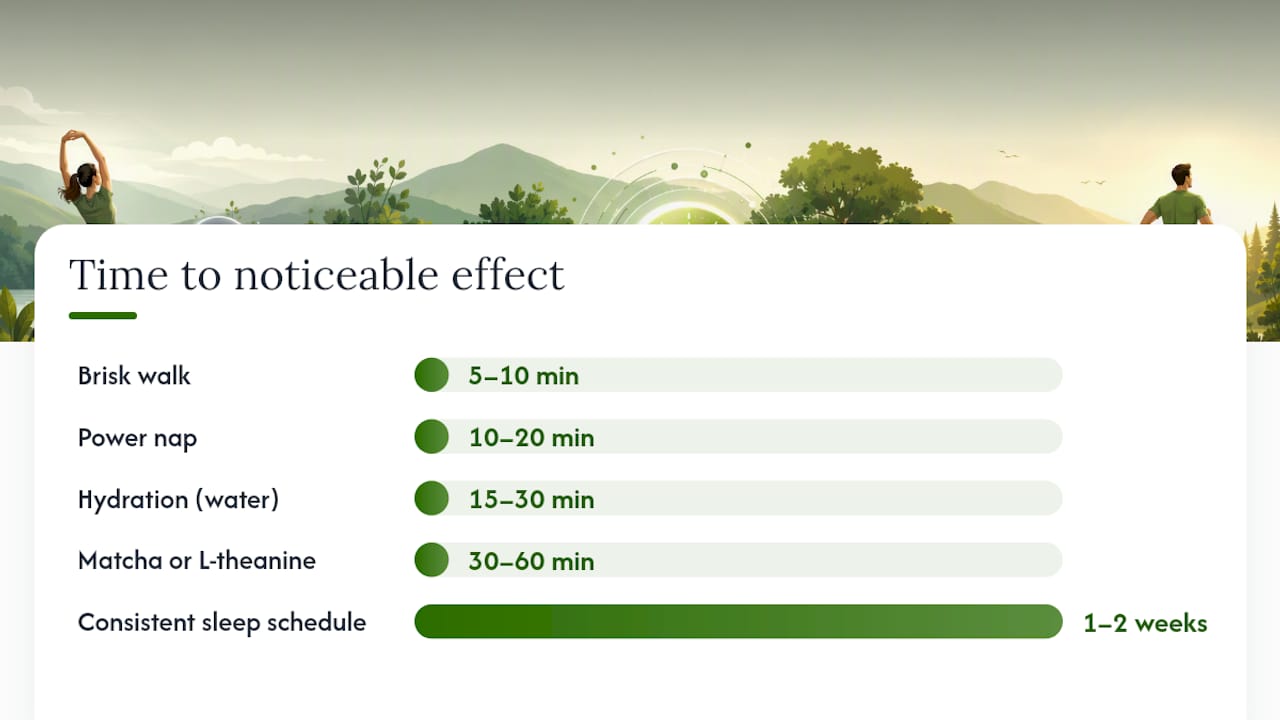
Decision rule: Spend the first two to four weeks on the free tactics: sleep, light, hydration, movement, and diet. If low energy persists and your labs are normal, that is the right time to add a targeted supplement. Adding Shilajit or ginseng on top of poor sleep is like putting premium fuel in a car with a flat tire.
The free tactics also have the highest return per dollar spent, which is worth saying plainly. Morning sunlight, a consistent wake time, and 8 oz of water before breakfast cost nothing and outperform most supplements for most people.
Shilajit sells Himalayan Shilajit resin because the evidence for its mineral density and fulvic acid content is real, and because it fits naturally into a broader, habit-first approach to energy. The recommendation here is always: build the habits first, test your labs if needed, and add a supplement only when the foundation is solid. Every product on the site comes with batch-level lab reports, and the goal is to educate before selling. If you are unsure whether Shilajit is right for your situation, consult a clinician, then explore the product pages when you are ready.
If you have spent two to four weeks on the habits in this guide and want to add a targeted supplement, pure Himalayan Shilajit resin is the natural next step. Each batch is third-party tested for heavy metals, microbial contamination, and fulvic acid content, with the COA published on the product page. You get a mineral-dense, whole-food resin with a clear sourcing chain, not a mystery capsule.
The 50g jar covers roughly two to three months at a standard starting dose, making it one of the more cost-effective options in the adaptogen category. For readers who want to pair it with complementary minerals, the Shilajit resin and pine pollen bundle is worth a look. Visit the product page, review the lab report, and decide from there.
This article is general information, not a substitute for advice from a qualified doctor. Consult a qualified healthcare professional about your own circumstances before acting on anything here.
Verify Shilajit lab reports in Australia with a six point checklist. Spot fake COAs, check lab accreditation, lot match, analytical methods, and LODs.
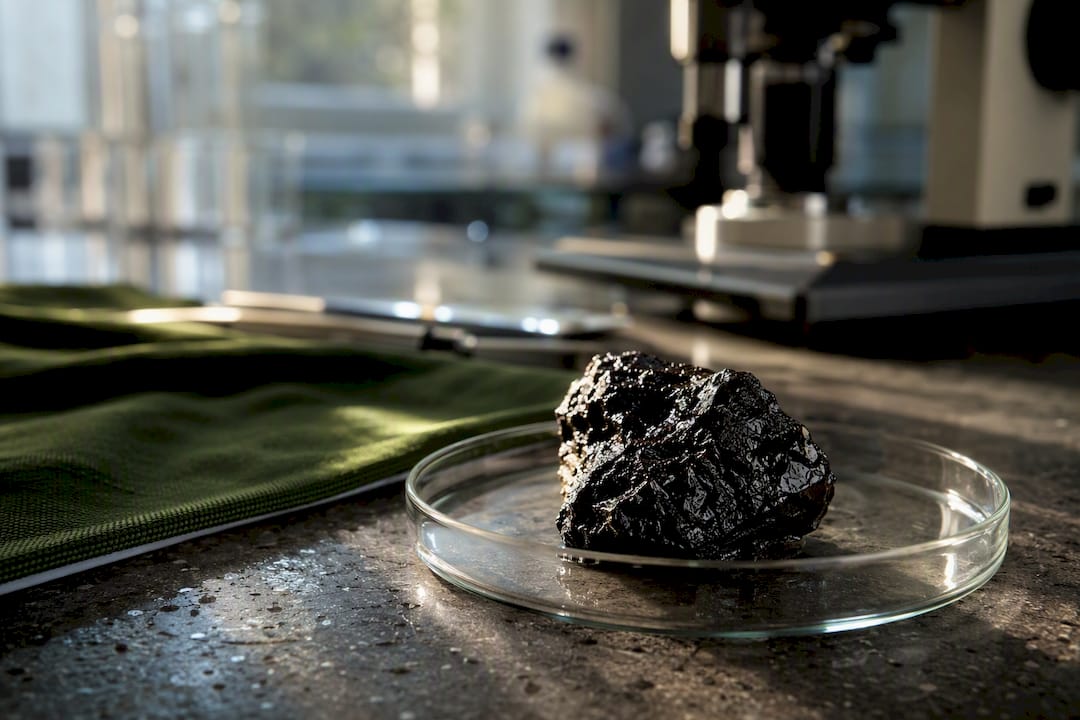
Learn to pick pure shilajit by reading the batch COA. Check fulvic acid range, named lab method, numeric heavy-metal results, and harvest altitude.