Uncategorized
Shilajit in Pregnancy: Why Doctors Advise Against It and What to Do
Avoid shilajit while pregnant or breastfeeding. No controlled trials, contamination risk, and one case links use to high blood pressure. Inform your…

Do not use shilajit during pregnancy or while breastfeeding. Safety in these groups has never been established in controlled human research, and the products carry real risks of heavy metal contamination and hormone-like disruptions to blood pressure and electrolytes. If you have already taken it, stop now and tell your obstetric provider or midwife so they can decide whether any testing or monitoring is needed.
TL;DR:
- Shilajit contains variable heavy metals and hormone-like substances that pose specific risks during pregnancy and breastfeeding, with no controlled human safety data.
- Animal studies and a single case report suggest potential reproductive harms, including electrolyte imbalance and blood pressure issues, but evidence is limited and inconsistent.
- Contamination with lead, cadmium, and chromium varies widely among commercial products and can exceed safe exposure levels during pregnancy, especially affecting fetal development.
- The risk of hormonal disruption, such as pseudo-hyperaldosteronism, can destabilize blood pressure and electrolytes, making it unsafe for pregnant or nursing individuals.
- Safer alternatives for energy and mineral support during pregnancy include regulated prenatal vitamins, dietary adjustments, and clinician-guided supplementation, not unregulated herbal products.
Shilajit is a sticky, mineral-rich substance that forms over centuries as plant matter decomposes and seeps through high-altitude rock, most notably in the Himalayas. It is sold as a resin, a powder, or in capsules, and marketed on the strength of its fulvic acid and humic substance content along with a broad spread of trace minerals like iron, zinc, and magnesium.
The trouble is that “shilajit” is not one standardized substance. What ends up in a jar depends heavily on where it was collected, how it was purified, and what quality control the seller applies before it reaches a consumer. A PMC review of traditional medicines and safety concerns notes that sourcing variability like this is common across traditional herbal products, and it is exactly why blanket claims of safety do not hold up.
Pregnancy and lactation raise the bar for a simple reason: a fetus and a nursing infant are far more sensitive to toxic exposure than an adult body is, and substances that seem tolerable for you can still cross the placenta or pass into breast milk. A few things worth understanding before going further:
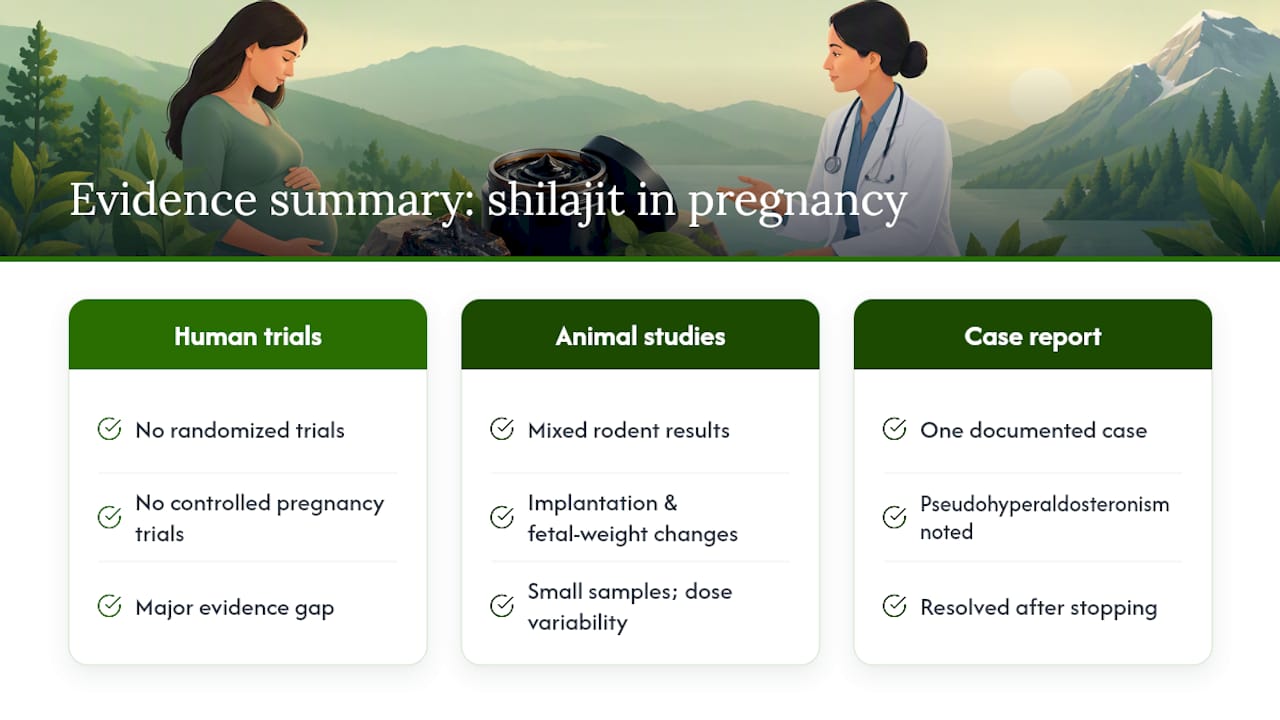
There are no randomized or controlled trials testing shilajit in pregnant humans. That is not a minor gap, it is the entire problem. According to the PMC review of traditional medicines and safety concerns, the available literature is limited to animal studies and isolated human case reports, neither of which can substitute for the kind of controlled pregnancy research used to clear other supplements or medications.
Animal reproductive studies add some texture but not clarity. A set of animal study references on traditional medicines and reproductive outcomes shows no adverse effects in some rodent models at certain doses, while other models report changes in implantation or fetal weight, particularly when shilajit was combined with other supplements. Small sample sizes, dose inconsistencies, and the simple fact that animal physiology does not map cleanly onto human pregnancy all limit what these studies can tell a clinician advising a pregnant patient.
One documented case report ties prolonged shilajit use in pregnancy to a serious, though reversible, syndrome. A case report published by Stavropoulos and colleagues describes a pregnant woman carrying twins who developed a licorice-like syndrome, pseudohyperaldosteronism, after daily shilajit use. She experienced electrolyte imbalance and high blood pressure that resolved once she stopped taking the product and her electrolytes were corrected. One case cannot establish how common this reaction is, but it demonstrates a real, biologically plausible pathway of harm, not a theoretical one.
Put together, the evidence base amounts to this: no human trials, a handful of animal studies that disagree with each other, and at least one case report of a serious complication in pregnancy. That is not evidence of danger in every case, but it is nowhere near enough to call the product safe, and that gap is the entire basis for a conservative recommendation.
Two separate risk pathways matter here, and they do not depend on each other. The first is contamination. The second is the substance’s own biological activity.
Contamination is a documented concern, not a hypothetical one. Analytical studies on shilajit composition have found measurable levels of heavy metals, including lead, cadmium, and chromium, in commercial samples, with concentrations varying widely by source and processing method. The World Health Organization’s guidance on quality control for herbal materials identifies heavy metals as a recurring risk category for traditional herbal products generally, and recommends monitoring and defined limits precisely because contamination is inconsistent and hard to predict from the outside. Lead and cadmium exposure during pregnancy is a known concern for fetal neurodevelopment, and there is no exposure level during pregnancy that regulators consider automatically safe.
The second pathway is hormonal and mineral disruption. The case report discussed above describes a licorice-like syndrome, where a compound mimics the effects of aldosterone, driving sodium retention, potassium loss, and rising blood pressure. That is a mechanism, not a one-off fluke, and it explains why an otherwise healthy pregnancy can be destabilized by a supplement that seems harmless on the label.
A few additional interaction risks worth flagging:
Pro Tip: An adult “safe” dose on a product label reflects adult physiology and adult contaminant thresholds, neither of which protects a developing fetus, so treat those numbers as irrelevant to a pregnancy decision.
One dose of a lab-tested product is unlikely to cause serious harm, but the right response is the same regardless of how much you took or for how long.
The evidence gap for breastfeeding mirrors the one for pregnancy, with an added complication: even substances that seem to clear a nursing mother’s system can still turn up in breast milk. There are no dedicated lactation studies on shilajit, and the heavy metals found in some commercial samples are exactly the kind of contaminant known to pass into breast milk in other contexts.
Clinical lactation resources that review supplements generally give shilajit a “not recommended” rating while nursing, citing the same two concerns raised throughout this article: insufficient safety data and inconsistent contamination risk.
If you are nursing and looking for an energy or recovery boost, the safer path is to address it through diet, rest, and a conversation with a lactation consultant rather than reaching for a product with no infant safety data behind it.
The goals people have when they consider shilajit, more energy, better mineral status, faster recovery, are all reasonable during pregnancy. They are just better served by tools that have actual safety data behind them.
Pro Tip: A COA is only useful if it is batch-specific and recent. A generic purity claim on a product page is marketing, not documentation, so ask the seller for the actual lab report tied to the batch you would receive.
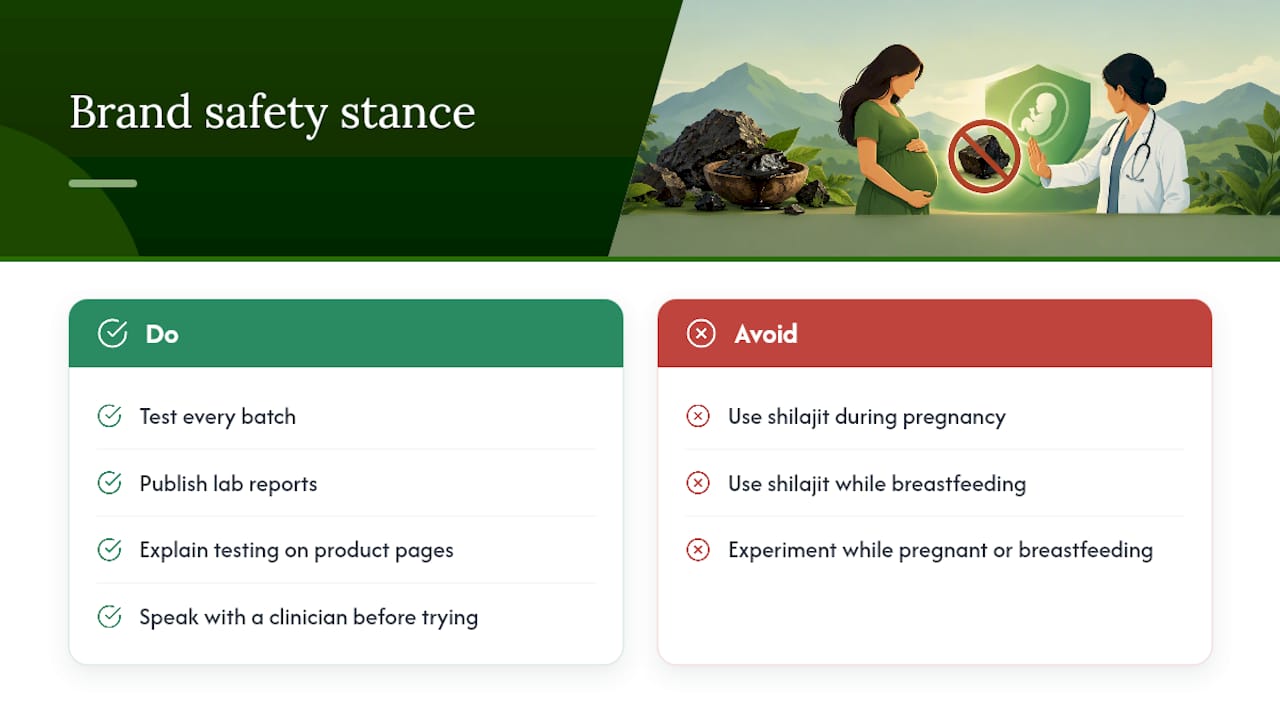
Shilajit has a long traditional history, and modern users often report benefits for energy and recovery. We take those claims seriously, which is why we test every batch and publish lab reports. But traditional use is not the same as pregnancy safety data, and we do not think it should be treated that way.
Our position is straightforward: we recommend against shilajit during pregnancy and breastfeeding, and we encourage anyone in either category to speak with a clinician rather than experiment. If you are curious about trying it later, our product pages explain exactly how our lab testing works.
— Shilajit
Once you are done breastfeeding, shilajit becomes a different conversation, and it is one worth having with your clinician first, not with a product page.
Lab results and purification processes are sometimes explained on product sites because a purity claim without documentation is not worth much. Our shilajit product range includes resin and other formats, and our guide on how shilajit resin gets purified walks through the testing behind each batch. This is not a pregnancy or breastfeeding recommendation. Review the COA with your doctor before starting anything, and only consider it once you have fully weaned.
The recommendations above draw on a small set of primary sources rather than general wellness commentary.
This article is general information, not a substitute for advice from a qualified doctor. Consult a qualified healthcare professional about your own circumstances before acting on anything here.
There is no controlled human research confirming shilajit improves fertility or is safe to take while trying to conceive. Given the documented contamination risk in some commercial samples, it is reasonable to stop use once you are actively trying to conceive and discuss any fertility-related supplement with your clinician.
Pregnant and breastfeeding people should avoid shilajit because safety data in these groups does not exist and contamination risk is real. People with kidney disease, hemochromatosis, or those on blood pressure medication should also talk to a doctor first, given the mineral load and the hormonal effects described in a published case report.
Most people who take a lab-tested product occasionally will not notice an obvious reaction, but a documented case describes a pregnant woman who developed high blood pressure and electrolyte imbalance after daily use, which resolved after she stopped. If you have taken shilajit while pregnant, stop and tell your OB-GYN or midwife so they can decide if any monitoring is needed.
No, shilajit is not a source of folic acid. Folic acid needs in pregnancy are met through a dedicated prenatal multivitamin, which remains the standard, evidence-based approach regardless of what other supplements you are considering.
Avoid shilajit while pregnant or breastfeeding. No controlled trials, contamination risk, and one case links use to high blood pressure. Inform your…
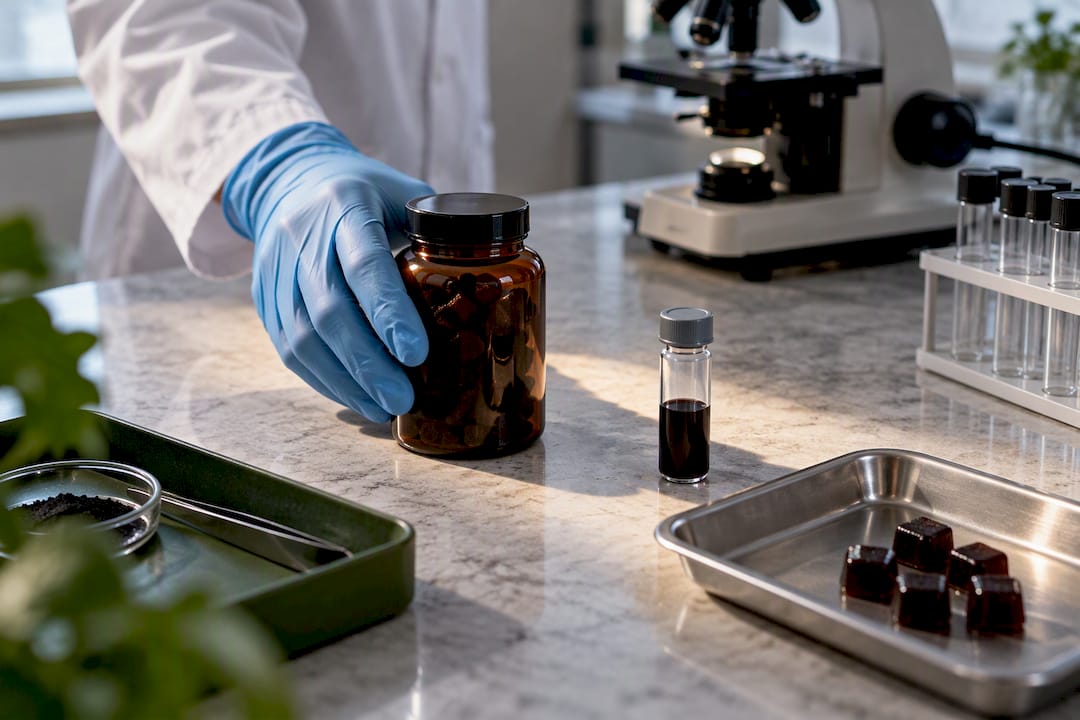
Australia-focused look at shilajit gummies: what human trials actually show, how 500 mg/day dosing compares, and why batch COAs and TGA safety checks matter.