Uncategorized
Shilajit in Pregnancy: Why Doctors Advise Against It and What to Do
Avoid shilajit while pregnant or breastfeeding. No controlled trials, contamination risk, and one case links use to high blood pressure. Inform your…
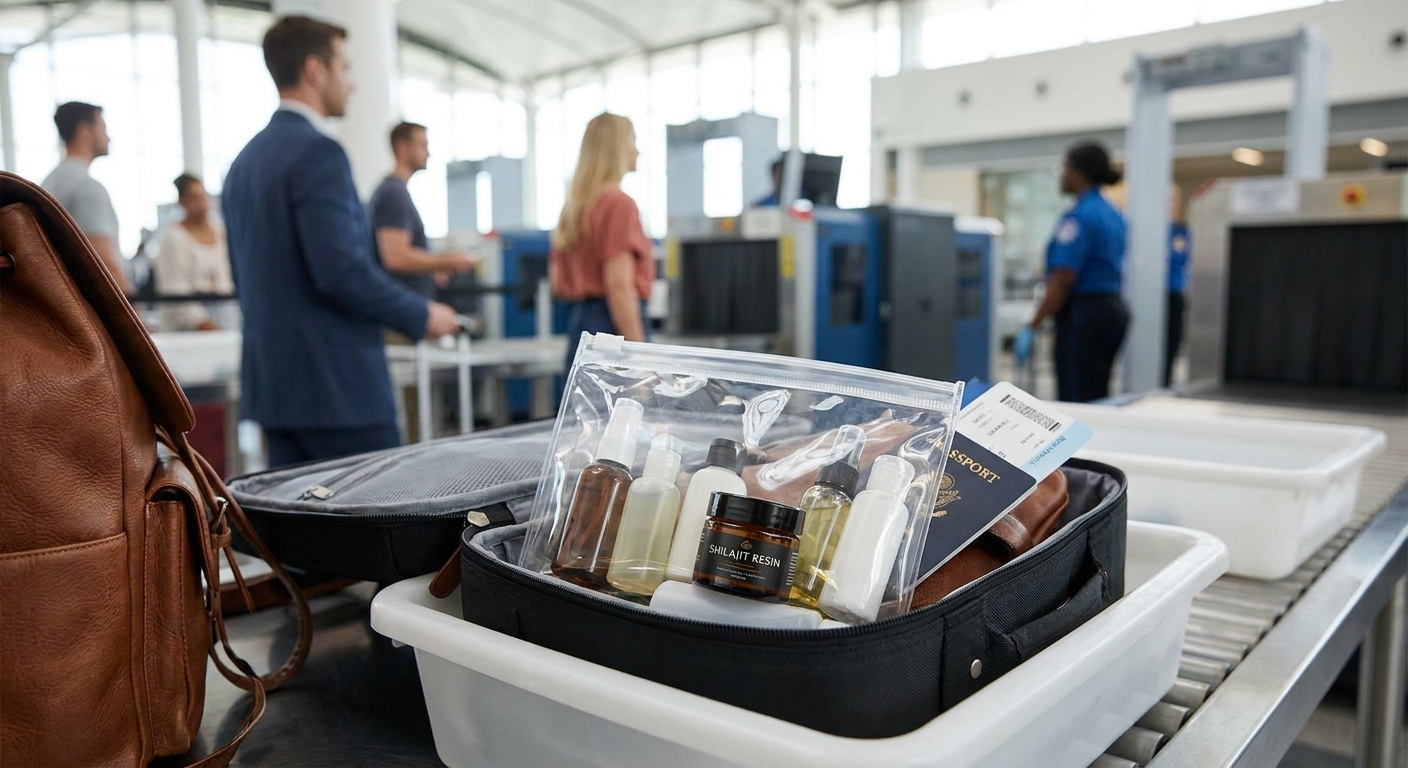
Carrying Pure Himalayan shilajit resin through an airport is legal almost everywhere in 2026, but the sticky paste format runs into rules most travellers never think about until a screening officer holds up their jar and asks questions.
Shilajit resin looks like tar and behaves like one at room temperature, and that texture is exactly what trips up airport screening. Security staff classify pastes, gels and semi-solids under the same liquid restrictions as shampoo or toothpaste, so a jar that looks solid on your kitchen bench reads as a "gel" on an X-ray screen. Add in Australia's biosecurity rules for anything plant- or mineral-derived crossing the border, and a supplement that takes ten seconds to use at home can add ten minutes to your airport queue if you haven't planned for it.
None of this means you should leave your shilajit resin at home before a trip. It means you pack it the right way, carry the right paperwork, and know which questions to expect. Get that right and moving through security with resin is no different to carrying a jar of manuka honey.
If you're stocking up before a trip, this is also the moment to check where to buy shilajit resin in Australia from a supplier that ships with a certificate of analysis attached — that document does most of the work for you at security.
Most countries' aviation security, including Australia's, cap liquids, gels and pastes at 100ml per container in carry-on baggage. Shilajit resin's soft, dense consistency puts it in that bracket even though it's sold as a solid.
A standard 25 gram jar sits comfortably under that limit and clears security without a second look in the vast majority of cases. A 50 gram or 100 gram jar is more likely to draw a query, so if you're travelling with a larger stash, split it: carry a small jar and put the rest in checked luggage.
Common mistake: decanting resin into an unlabelled pill container to save space. Unlabelled paste is the single fastest way to get pulled for secondary screening.
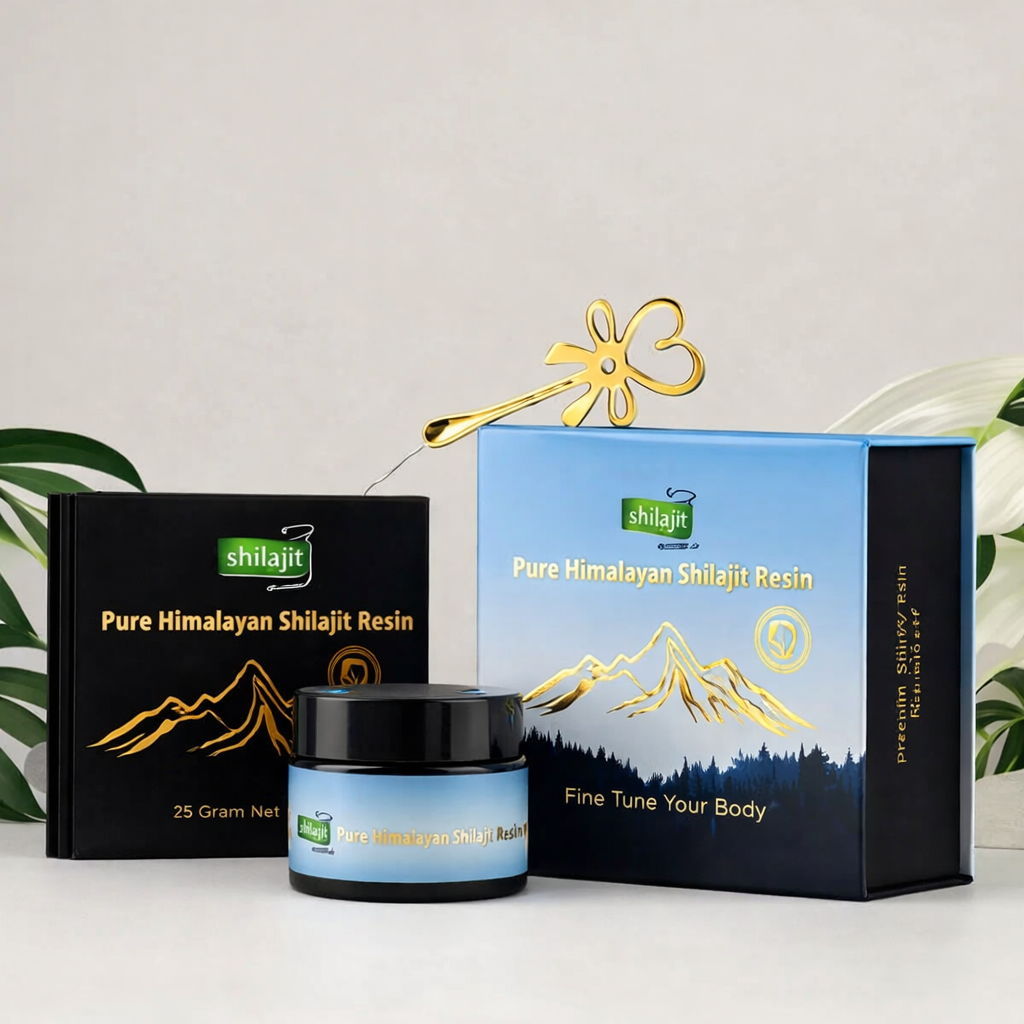
Security and customs staff move faster when they can read a label. A jar that clearly says "Himalayan shilajit resin" with an ingredient list and a brand name is processed as a supplement. A dark, unmarked paste in a sandwich bag gets treated as an unknown substance until proven otherwise.
This is also where buying from a supplier that lab-tests and labels every batch pays off when you travel, not just when you're at home taking your daily dose.
A certificate of analysis (COA) confirms what's in the jar — heavy metal screening, fulvic acid content, purity — and it's the fastest way to answer a screening officer's question without a long explanation. Save a photo of it on your phone before you leave home.
This single document is often the difference between a 30-second glance and a 10-minute conversation with a supervisor, particularly on international routes where staff have never seen shilajit before.
If you're travelling for more than a week and want to keep taking your daily dose, don't carry your entire supply in one bag. Put a small jar in carry-on for immediate access and the bulk of your supply in checked luggage, where the 100ml liquid rule doesn't apply.
This also protects you if a jar is confiscated at a security checkpoint that's unfamiliar with shilajit — you won't lose your entire trip's supply over one overcautious officer.
Australia's biosecurity rules require declaration of goods derived from plants, minerals, or animal matter, and shilajit resin — mined from Himalayan rock strata — falls into a grey zone that's safer to declare than guess about. Tick "yes" on the incoming passenger card for herbal or traditional medicine and let the biosecurity officer assess it.
Undeclared goods that should have been declared carry on-the-spot fines in 2026, and the assessment itself for a small, labelled, lab-tested jar of resin typically takes only a couple of minutes.
If an officer asks what it is, the direct answer works best: "It's a Himalayan mineral resin supplement, lab-tested, and this is the certificate." Avoid vague answers like "it's a herbal thing" — vague answers invite more questions, not fewer.
Shilajit resin softens in heat and can leak if a jar seal loosens under cabin pressure changes. Wrap the jar in a spare sock or a small zip bag inside your carry-on, and avoid checking it in a bag that sits on the tarmac in direct sun before loading — resin left in extreme heat can separate.
If the resin can dent your thumbnail at room temperature, it's real — and it's also exactly the texture that gets flagged as a paste at security.
Resin isn't the only option, and for frequent flyers it isn't always the easiest one. If you're constantly moving through airports, it's worth working out how to choose the right shilajit supplement for your goals before you commit to one format for every trip.
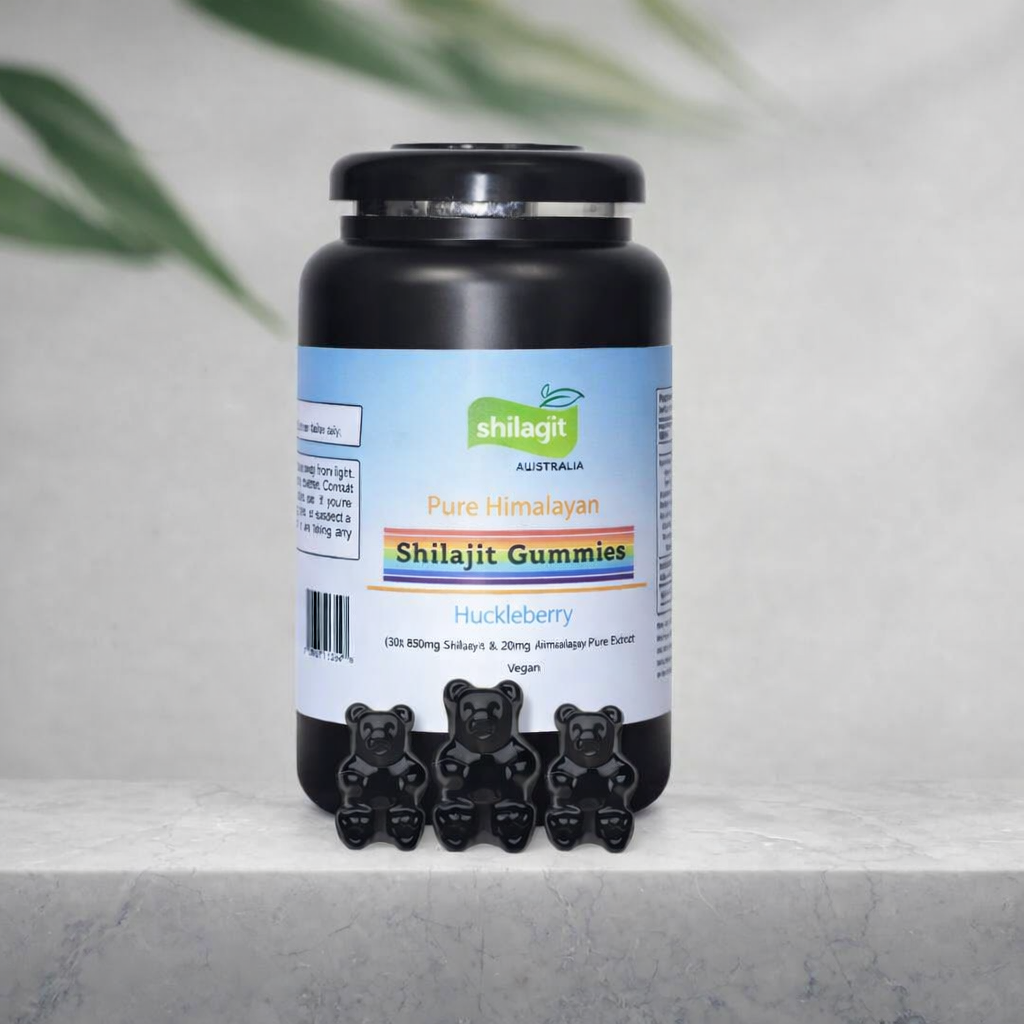
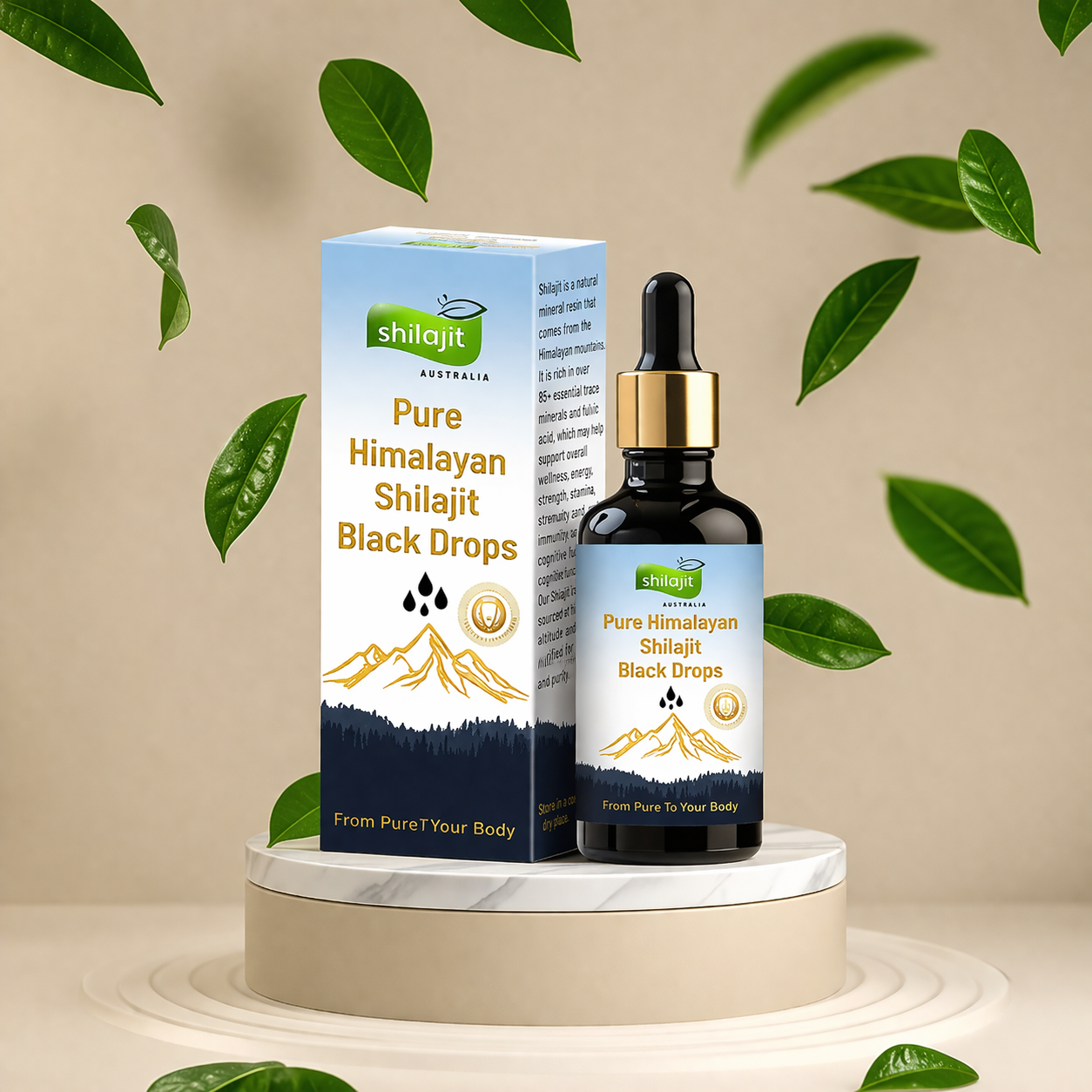
Shilajit tincture drops still count as a liquid, so they're bound by the same 100ml rule as resin — useful for short trips, less useful if you're travelling for a month. Capsules and gummies sidestep the liquid question completely, since they're solid dosage forms that don't trigger the same screening flags.
Security flags the jar as an unknown substance. Show the label and, if you have it, the certificate of analysis. Ask for a supervisor if the initial officer isn't familiar with shilajit — most resolve within a few minutes once the label is visible.
The resin has softened or leaked in transit. Heat exposure during loading or a cracked seal is the usual cause. Transfer what's left to a fresh container once you land and store it somewhere cool for the rest of the trip.
You're stopped at Australian biosecurity and didn't declare. Answer honestly and let the officer assess the product — an undeclared but disclosed item on questioning is treated very differently to one deliberately hidden.
Your jar exceeds 100ml and you forgot to check luggage. Some airports offer a surrender bin at the checkpoint; others will let you step back out to check the bag if you haven't gone through the gate yet. Ask before you assume it's confiscated.
A connecting flight has stricter rules than your first leg. Liquid and gel limits vary slightly by country. If you're connecting through a country you haven't flown through before, check that country's aviation security rules for gels and pastes before departure, not at the gate.
You're almost out of resin mid-trip and can't source more locally. This is the strongest argument for splitting your supply between carry-on and checked luggage before you leave, rather than trying to solve it overseas.
If resin's texture and the liquid rule feel like more hassle than you want for a short trip, switch formats rather than switching brands — shilajit drops for on-the-go energy support cover the same daily dose in a format built for movement, not a kitchen bench.
Can you travel with shilajit resin on a plane in 2026?
Yes, you can travel with shilajit resin on a plane in 2026, but airport security treats it as a paste under the standard 100ml liquid and gel limit for carry-on. Pack it in checked luggage if your jar is larger than that.
Do you need to declare shilajit resin at Australian customs?
You should declare shilajit resin as herbal or traditional medicine on the incoming passenger card when flying into Australia. Biosecurity officers assess labelled, lab-tested products quickly, and declaring avoids the fine attached to undeclared goods.
Is shilajit resin considered a liquid at airport security?
Shilajit resin’s soft, paste-like texture puts it in the same category as gels and liquids at most airport security checkpoints. A small jar under 100ml clears carry-on without issue.
What’s the easiest shilajit format for frequent flyers?
Shilajit gummies and capsules are the easiest formats for frequent flyers because they’re solid dosage forms and don’t fall under the liquid or gel restriction. Resin and tincture drops both do.
Will security confiscate shilajit resin?
Security won’t confiscate labelled, correctly sized shilajit resin under the liquid limit. Unlabelled paste or jars over the 100ml threshold are the most common reasons for confiscation.
Can you bring shilajit resin in checked luggage instead?
Yes, checked luggage isn’t subject to the carry-on liquid and gel limit, so larger jars of shilajit resin travel fine there. Wrap the jar to protect against heat and pressure changes during loading.
How much shilajit resin can you bring into Australia?
There’s no fixed weight limit for personal-use shilajit resin entering Australia, but it must be declared and may be assessed by biosecurity. Labelled, lab-tested product with a certificate of analysis moves through assessment fastest.
Does shilajit resin melt in checked luggage?
Shilajit resin softens in heat but doesn’t fully melt at typical cargo hold temperatures. Avoid leaving jars in direct sun before loading, since heat exposure can cause a loosely sealed jar to leak.
Most travel headaches with shilajit resin trace back to one habit: decanting it into an unlabelled pot to save space. Keep it in the jar it came in, carry the lab test certificate on your phone, and the 100ml rule becomes a non-issue instead of a checkpoint delay.
Avoid shilajit while pregnant or breastfeeding. No controlled trials, contamination risk, and one case links use to high blood pressure. Inform your…
Australia-focused look at shilajit gummies: what human trials actually show, how 500 mg/day dosing compares, and why batch COAs and TGA safety checks matter.