Uncategorized
Shilajit in Pregnancy: Why Doctors Advise Against It and What to Do
Avoid shilajit while pregnant or breastfeeding. No controlled trials, contamination risk, and one case links use to high blood pressure. Inform your…

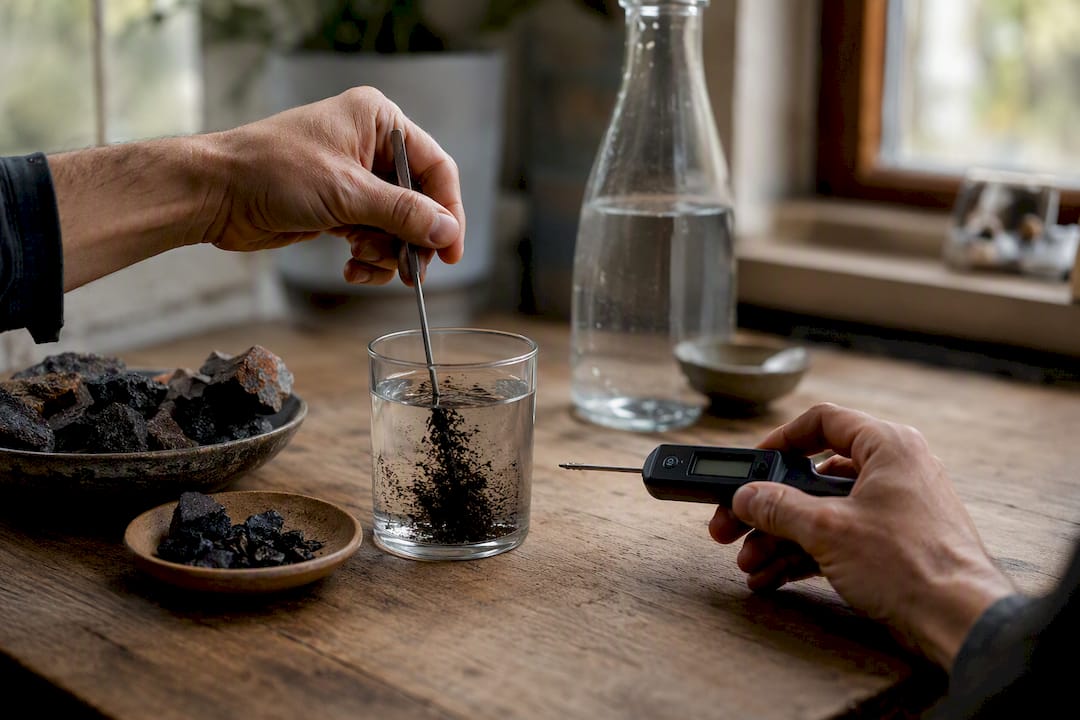
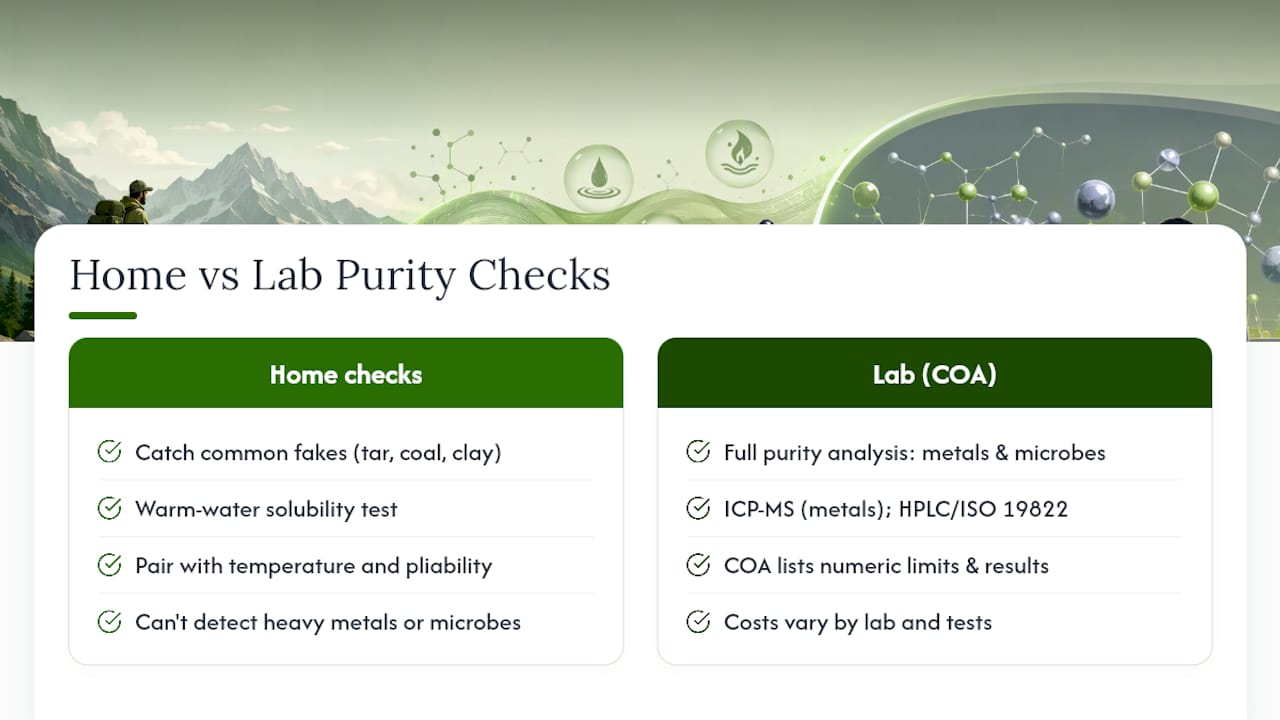
Run two quick screens before you trust any shilajit resin: drop a small piece in warm water and watch how it dissolves, then knead a pinch between your fingers to check its pliability at room temperature versus in the fridge. If both pass, ask the seller for a dated third-party Certificate of Analysis that names the fulvic acid testing method and shows ICP‑MS heavy-metal results. That combination catches the vast majority of fakes and lets you flag anything that needs a lab before you put it in your body.
Here’s the fast version, in order:
None of the home checks above can detect heavy metals or microbial contamination on their own. Never taste more than a rice-grain sized piece, keep raw resin away from children, and treat any at-home test as a screening layer, not a certification.
A reliable shilajit purity test combines fast home screens for solubility and pliability with a lab-issued COA that names its fulvic acid method and reports ICP‑MS heavy metal numbers.
| Point | Details |
|---|---|
| Run two home tests first | Warm-water solubility and temperature/pliability catch most obvious fakes in minutes. |
| Demand method transparency | A COA listing fulvic acid percentage without naming ISO 19822 or HPLC is unreliable. |
| Heavy metals need ICP‑MS | This is the only method sensitive enough to detect trace contaminants at safe levels. |
| Know your reject rule | Three or more failed home tests, or a COA missing methods, means return it or lab test it. |
| Shilajit publishes batch COAs | Each resin batch is tested through accredited labs with fulvic acid and heavy metal results available on request. |
A real purity assessment looks at three things: the fulvic and humic acid profile, the ash or inorganic residue left behind after processing, and the presence of contaminants like heavy metals or microbes. Get any one of those wrong and you either waste money on a weak product or expose yourself to something genuinely harmful.
Fulvic acid is the compound most closely tied to shilajit’s biological activity, and quality resin typically runs in the 15% to 20% range by weight when measured with a reliable method. Ash or inorganic residue tells you how much leftover rock, soil, or grit survived the purification process. High ash usually means the supplier skipped steps in traditional filtering. Heavy metals, mainly lead, arsenic, mercury, and cadmium, occur naturally in the mineral-rich rock shilajit comes from, so the question isn’t whether trace amounts exist. It’s whether they’ve been reduced below safety thresholds through proper purification.
Regulatory context matters here too. In markets that follow USP or 21 CFR dietary supplement guidance, manufacturers are expected to verify identity, strength, and contaminant limits before a product goes to market. Independent market audits have repeatedly found that a meaningful share of commercial shilajit products carry elevated heavy metals or undisclosed fillers, which is exactly why a lab-issued COA, not a marketing claim, is the strongest defense you have as a buyer.
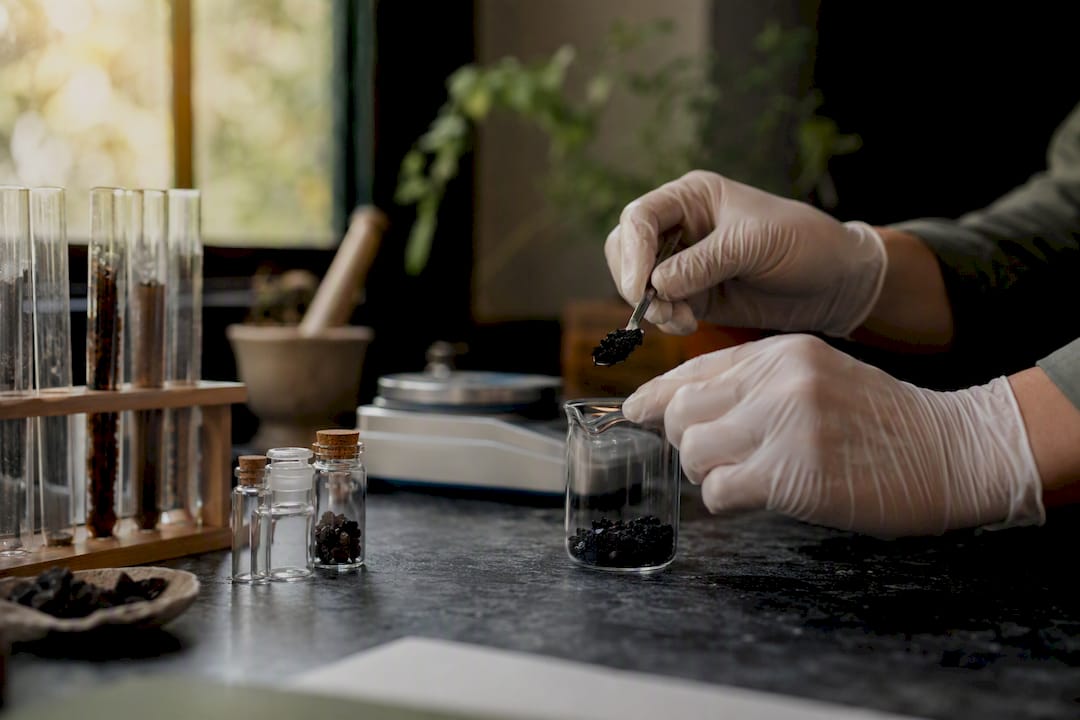
You can run seven home checks with items already in your kitchen. None of them require special equipment, and most take less than ten minutes.
Interpreting the results takes a little judgment. A single ambiguous result, say, a slightly odd smell but a clean solubility and pliability pass, usually isn’t cause for alarm. But if a sample fails two or more of these tests, especially solubility and pliability together, treat that as a strong reject signal and either return the product or send it for lab confirmation. Capsule and tablet products are trickier to screen this way since you’re testing an extracted powder rather than raw resin, which is one more reason to lean on a COA for anything that isn’t sold as pure resin.
A handful of these simple checks reliably catch cheap fakes made from pitch, coal dust, or clay bound with sugar, but they were never designed to catch trace heavy metals or microbial contamination. That’s a lab’s job, not a kitchen counter’s.
Pro Tip: Run the solubility and temperature tests together, and do it while your return window is still open. If either one fails, you’ve lost nothing but a few minutes.
Keep the flame test and taste test for last, and always with the safety notes above in mind: tongs for the flame, a rice-grain portion for taste, and no testing near children or pets.
Home checks tell you whether something is obviously wrong. Lab testing tells you whether something subtle is wrong, and subtle is where the real risk lives.
ICP‑MS (inductively coupled plasma mass spectrometry) is considered the gold-standard technique for trace heavy-metal analysis, capable of detecting contamination down to parts-per-billion. ICP‑OES is a related method suited to higher-concentration metals like lead and arsenic at parts-per-million levels, and some labs use it as a faster, cheaper first pass. For fulvic acid and related organic compounds, HPLC (high-performance liquid chromatography) or LC‑MS give a specific, quantifiable number, while FTIR (Fourier-transform infrared spectroscopy) creates a chemical fingerprint useful for spotting synthetic additives. GC‑MS screens for solvent residues and pesticides, and a microbiological panel checks total aerobic microbial count, yeast and mold, and pathogen absence.
| Test method | What it measures | What to look for |
|---|---|---|
| ICP‑MS | Trace heavy metals (lead, arsenic, mercury, cadmium) | Results in parts-per-billion, compared against USP limits |
| HPLC or ISO 19822 | Fulvic and humic acid content | Method named explicitly, typically 15% to 20% in quality resin |
| FTIR | Chemical fingerprint / adulterant screening | Spectral match consistent with authentic shilajit profile |
| GC‑MS | Solvent and pesticide residues | Non-detect or below regulatory threshold |
| Microbiological panel | TAMC, yeast/mold, pathogens | Absence of pathogens, microbial counts within limits |
Method matters as much as the number itself. Nonspecific UV‑Vis testing tends to inflate fulvic acid readings compared to chromatographic methods, because it can’t distinguish fulvic acid from other organic compounds in the sample. ISO 19822 separates humic and fulvic fractions before measurement, which produces a more repeatable, comparable result across different labs and batches. If a COA lists a fulvic percentage but doesn’t say how it was measured, treat that number as marketing, not data.
The document itself should carry the lab’s name, its accreditation status, a batch or lot number tied to your specific product, the exact methods cited for each test, detection limits, and clear test dates. Anything vaguer than that isn’t a real COA. Peer-reviewed ethnopharmacology research confirms fulvic acids and dibenzo-α-pyrones as core bioactive markers in shilajit, but also notes real compositional variability by geographic source, which is exactly why standardized testing matters more than any single headline number.
Getting a usable COA starts with asking the right questions, not just asking for “proof it’s pure.”
A complete COA should include:
If any of those fields are missing, that’s your answer already. A report that shows only “PASS” next to heavy metals, with no numbers or detection limits, tells you almost nothing verifiable. The single most important document in this entire process is a complete COA, and a supplier’s refusal to produce one on request should be treated as an immediate red flag on its own.
Some warning signs are loud enough that you don’t need a lab to tell you something’s wrong.
A useful decision rule: if a sample fails three or more home tests, or if the COA is missing method details entirely, or if the price is dramatically below realistic market rates, don’t use it. Return it or send it to a lab instead.
Pro Tip: Cross-check the supplier’s product description against their own COA. Mismatched batch numbers or vague origin claims that shift between the sales page and the lab report are one of the more common giveaways of a supplier cutting corners.
Lab testing makes sense in a handful of specific situations: your sample failed two or more home tests, the supplier can’t or won’t produce a complete COA, you’re immunocompromised, pregnant, or otherwise medically vulnerable, or you’ve spent enough on the product that certainty is worth the cost.
Turnaround time typically runs from a few business days for a basic heavy-metal panel to a couple of weeks for a full profile including fulvic acid quantification and microbiological testing. Costs vary by lab and scope, so ask for a quote covering exactly the parameters above before you send anything.
This is general information, not medical advice, and it doesn’t replace a conversation with your own clinician, especially if you’re pregnant, breastfeeding, or taking medication.
If you suspect heavy metal contamination or have an unexpected reaction after using a shilajit product, stop using it immediately. Save the remaining product, its packaging, and your purchase receipt, since you’ll need all three if you pursue lab testing, a refund, or a formal complaint.
The order matters more than most people think. Run the home tests the moment you open a new batch, before you’ve used any of it. If solubility and pliability check out, move to the COA and confirm the fulvic acid method and heavy metal numbers are actually stated, not just implied. Then do a price sanity check: if what you paid seems too low for labor-intensive traditional processing and independent testing, that’s worth a second look regardless of how the home tests went.
Home tests are fast, free, and good enough to catch obvious fakes. Lab tests cost money and take time, but they’re the only way to rule out heavy metals with certainty. Accept a product once it clears home tests and shows a complete, dated COA from a named lab. Insist on further testing when either is missing. A supplier willing to name their sourcing region, describe their processing, and hand over a dated COA without hesitation is telling you something important before you’ve even opened the jar. Join Shilajit Australia on Instagram for trusted information about resin quality, testing and product standards.
Shilajit tests every batch of resin through independent labs before it reaches a customer, publishing fulvic acid results alongside ICP‑MS heavy metal panels rather than a vague pass or fail stamp.
If you’ve just run through the checklist above and want a resin that already clears every item on it, that’s the whole point of buying from a supplier who tests and publishes results instead of asking you to take their word for it. Shilajit works with accredited lab partners, and batch COAs are available to customers who want to see the fulvic acid method and heavy metal numbers behind their specific jar, not just a marketing claim on the label. That transparency also extends to sourcing: the resin is traced back to a named Himalayan region and processed using traditional purification methods, which is exactly the kind of detail the red flags section above tells you to look for.
If you’d rather skip the guesswork entirely, you can view the 50 gram pure Shilajit resin product page for lab-tested batch details, or read the fuller breakdown of sourcing and testing on the Himalayan Shilajit purity guide before you order.
Can I test shilajit purity without sending it to a lab?
Yes, to a point. Home tests like warm-water solubility, temperature and pliability checks, and smell or taste spot-checks catch the most common fakes made from tar, coal, or clay. They can’t detect heavy metals or microbial contamination, so a full purity analysis still requires a lab report.
What’s the most reliable single home test?
The warm-water solubility test tends to be the most consistent on its own, since genuine resin dissolves cleanly while most fillers leave residue or an oily film. Pairing it with the temperature and pliability check gives you a stronger read than either test alone.
Is the flame or burn test a good way to check shilajit authenticity?
It’s a weak, secondary screen at best. Genuine shilajit tends to smolder and char rather than flare up, but several adulterants mimic that same behavior, so a flame test pass doesn’t confirm purity on its own.
What heavy metal levels are considered safe in shilajit?
Acceptable limits generally follow USP guidance for dietary supplements, with results reported at parts-per-billion sensitivity through ICP‑MS testing. A trustworthy COA states these numeric limits and the specific test result for each metal rather than a general “passed safety testing” claim.
How much does professional shilajit lab testing cost?
Costs vary by lab and by how many parameters you request, and turnaround typically ranges from a few business days for a basic heavy-metal panel to a couple of weeks for a full fulvic acid and microbiological profile. Get a specific quote from an ISO/IEC 17025 or NATA-accredited lab before sending a sample.
Why do some shilajit brands report very high fulvic acid percentages?
Often because they used a nonspecific method like UV‑Vis testing, which tends to inflate results compared to chromatographic methods like HPLC or the ISO 19822 standard. A high number without a named method is more marketing than measurement.
This article is general information, not a substitute for advice from a qualified doctor. Consult a qualified healthcare professional about your own circumstances before acting on anything here.
Avoid shilajit while pregnant or breastfeeding. No controlled trials, contamination risk, and one case links use to high blood pressure. Inform your…
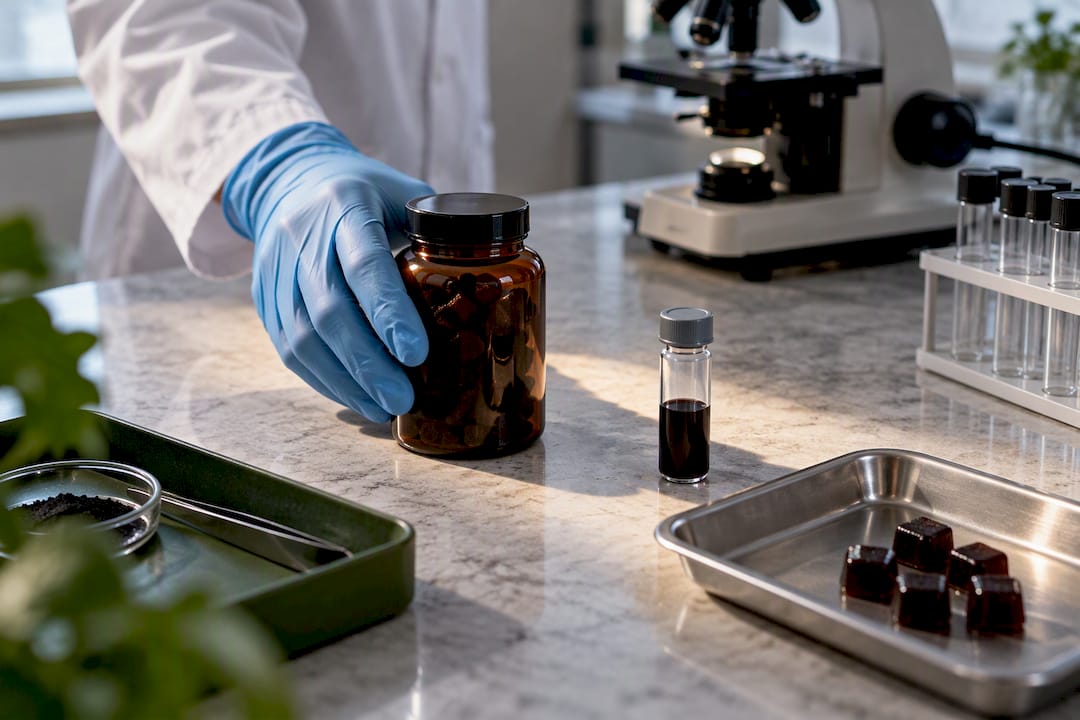
Australia-focused look at shilajit gummies: what human trials actually show, how 500 mg/day dosing compares, and why batch COAs and TGA safety checks matter.