Uncategorized
6 Point Shilajit Lab Report Checklist for Australian Buyers
Verify Shilajit lab reports in Australia with a six point checklist. Spot fake COAs, check lab accreditation, lot match, analytical methods, and LODs.

Current evidence does not support fulvic acid as a meaningful driver of muscle oxygenation or athletic performance. The compound shows real antioxidant activity in laboratory settings, and shilajit, its most concentrated natural source, has a long history of traditional use. But the specific claim that fulvic acid “delivers oxygen” to working muscle cells runs into a wall of exercise physiology that no supplement has cleared.
The bottom line for athletes: Muscle oxygen supply is governed by cardiac output, hemoglobin concentration, capillary recruitment, and microvascular diffusion. A small organic molecule consumed orally cannot replicate or meaningfully augment that system during high-intensity exercise. The evidence for fulvic acid’s performance benefits is preliminary at best, promotional at worst.
Quick implications for athletes considering fulvic acid:
Fulvic acid does not function as an exogenous oxygen carrier in working muscle; its potential athletic value lies in antioxidant activity and mineral support, not direct oxygen delivery.
| Point | Details |
|---|---|
| Oxygen delivery claim is unsupported | Muscle DO2 is governed by blood flow and hemoglobin; no human trial shows fulvic acid alters this. |
| Antioxidant evidence is real but limited | Lab and animal data support antioxidant activity; human performance trials are absent. |
| Dose-dependent oxidant risk exists | Cleveland Clinic notes fulvic acid may shift from antioxidant to oxidant at higher doses. |
| Purity is the non-negotiable first step | No standardized dosing exists; demand a third-party CoA with heavy-metal results before use. |
| Shilajit resin offers batch-level testing | Shilajit’s lab-tested resin provides declared fulvic content and heavy-metal panels per batch. |
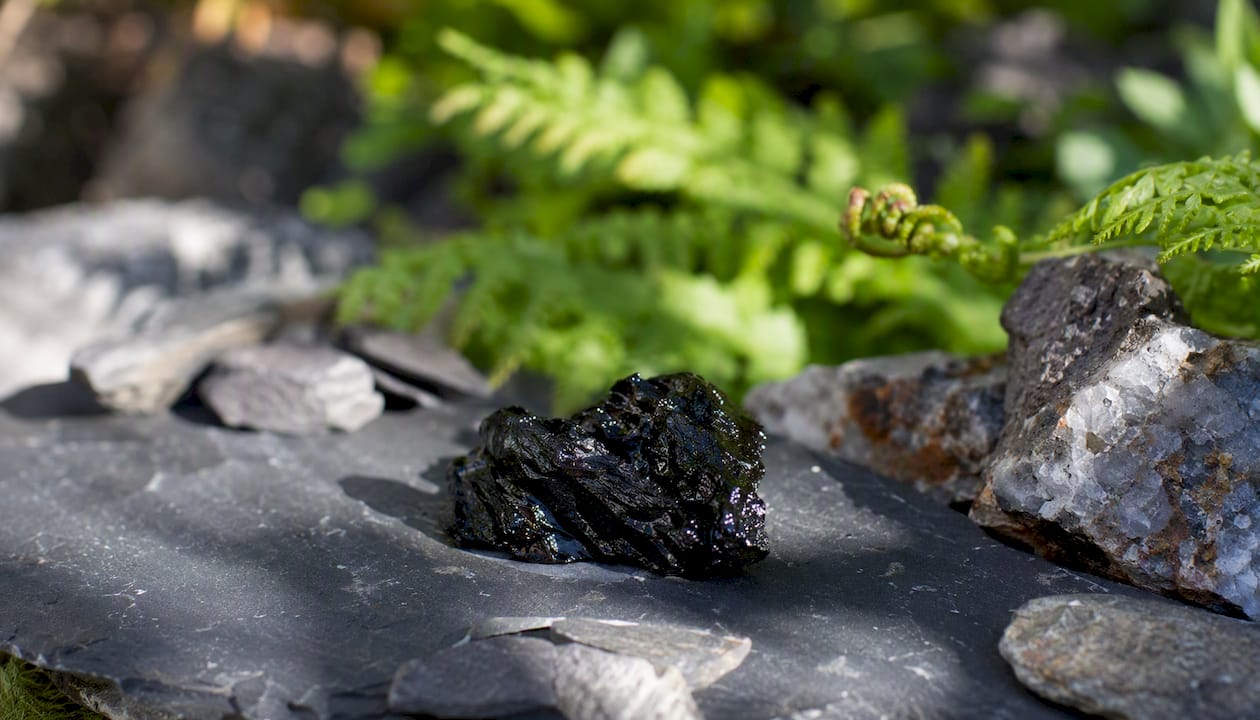
Fulvic acid is a low-molecular-weight compound produced when microorganisms break down organic matter over centuries. It belongs to the humic substance family, alongside humic acid and humin, and is found in soil, peat, and river sediment. In supplement form, it is most commonly delivered through shilajit, a resinous exudate that seeps from high-altitude Himalayan and Altai rock formations and contains a dense matrix of fulvic acid, minerals, and bioactive compounds.
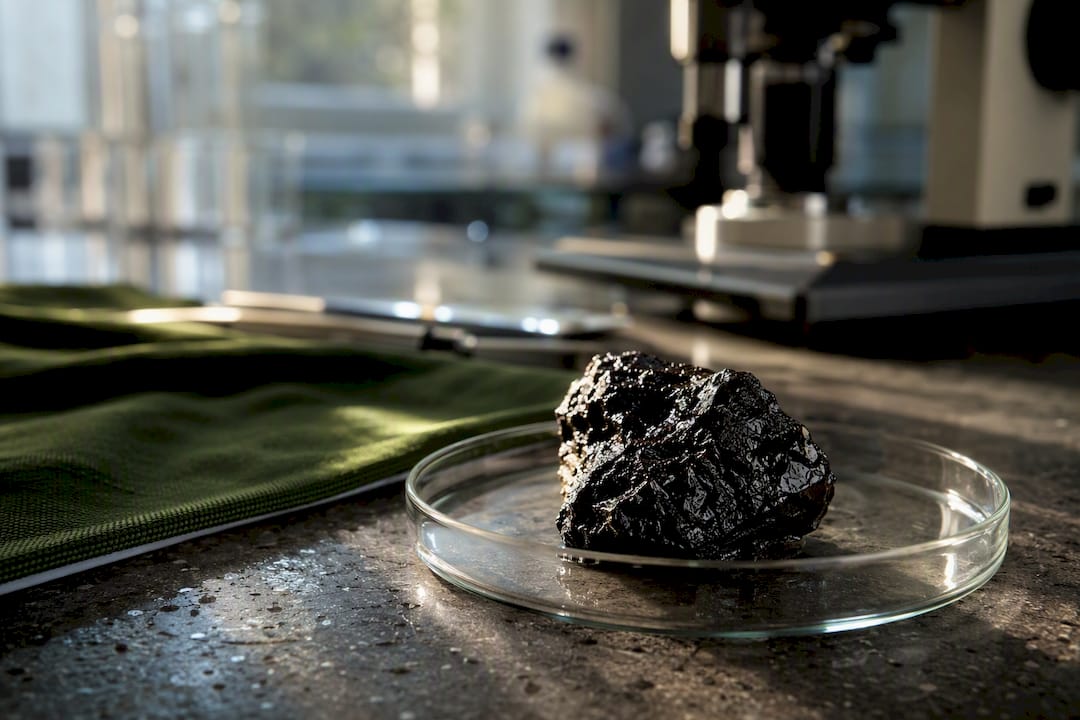
Shilajit resin is typically processed by dissolving raw material in water, filtering out insoluble debris, and evaporating the liquid to concentrate the active fraction. The result is a thick, dark resin with a characteristic tar-like consistency. Fulvic acid can also be extracted from leonardite, freshwater sediment, or composted plant matter and sold as a standalone liquid or powder supplement.
The widely cited claim that fulvic acid contains “45% oxygen” originates in promotional materials and refers to the relative proportion of oxygen atoms in its elemental composition—specifically, the presence of carboxyl, hydroxyl, and carbonyl groups. This figure does not come from clinical research or support the idea that fulvic acid acts as an oxygen carrier in the human body. The Peter Gouge 2009 PDF is a promotional informational piece, not a controlled human trial; no authoritative physiology or clinical literature confirms fulvic acid’s oxygen content as 45% or supports its functional relevance to muscle oxygenation.
What to look for on a supplement label:
For a deeper look at how fulvic acid in shilajit is processed and what quality markers matter, Shilajit’s own resource page covers the chemistry and safety checklist in detail.
The performance claims attached to fulvic acid and shilajit fall into two categories: mechanistic (what the molecule supposedly does at a cellular level) and clinical (what that supposedly means for your race time or recovery). Separating them is the first step toward evaluating any supplement honestly.
Mechanistic claims (molecular-level):
Clinical claims (performance outcomes):
Retailers and informational sites often cite a 2–3 month daily-use window before benefits become noticeable, which is a reasonable framing for any adaptogenic compound. The problem is that most of the evidence behind these claims comes from animal studies, in vitro cell experiments, or testimonials, as Healthline notes when summarizing the state of human clinical data for athletic performance. Retail sources like Oshun Health repeat the lactic-acid and recovery claims without citing a randomized controlled trial to back them.
The antioxidant claim is the most defensible. The lactic-acid and direct oxygen-delivery claims are the least supported by physiology.
Before evaluating any supplement’s oxygen claims, you need a clear picture of what controls muscle oxygen supply. The NCBI Bookshelf review on oxygen transport and skeletal muscle lays this out precisely: oxygen delivery (DO2) to working muscle depends on convective transport through blood flow (cardiac output multiplied by arterial oxygen content), diffusion across the capillary wall and interstitial space, capillary recruitment to shorten diffusion distances, and intracellular transport via myoglobin to the mitochondria.

A PMC review on muscle O2 transport and exercise hyperemia reinforces the point: multiple redundant vasodilator and diffusion mechanisms control exercise hyperemia, and these systemic constraints mean isolated chemical oxygen “donors” face major physiological barriers. The Frontiers in Physiology 2022 review adds that convective transport by blood flow and capillary-level exchange dominate performance outcomes. An orally consumed small organic molecule does not enter the red blood cell, does not bind to hemoglobin, and does not alter cardiac output. The pathway from “this molecule contains oxygen atoms” to “this molecule increases muscle DO2 during a 5K” simply does not exist in the physiology literature.
| Claimed effect | Type of evidence | Confidence level |
|---|---|---|
| Direct oxygen delivery to muscle | Promotional/elemental chemistry only | Very low |
| Reduced lactic acid buildup | Animal models, testimonials | Low |
| Antioxidant protection | In vitro, some animal data | Moderate (lab setting) |
| Improved endurance/VO2max | No controlled human trials | Very low |
| Faster recovery | Preliminary, anecdotal | Low |
| Mitochondrial support | In vitro cell studies | Low to moderate |
The PMC article on oxidant effects adds a complication: fulvic acid can increase oxidative markers including hydrogen peroxide and nitric oxide and induce apoptosis in certain cell lines at particular exposures. That is the opposite of the antioxidant narrative, and it matters for athletes who assume “more is better.”
Pro Tip: A change in a cellular marker, like reduced oxidative stress in a petri dish, does not equal improved VO2max or time-to-exhaustion in a trained athlete. Always ask: was this measured in humans, under exercise conditions, with a placebo control? If the answer to any of those is no, treat the finding as hypothesis-generating, not performance-guiding.
Overall evidence strength: The antioxidant and mineral co-transport mechanisms are plausible and supported by laboratory data. The direct oxygen-delivery claim is not supported by exercise physiology or human trials. No randomized, placebo-controlled trial has demonstrated that fulvic acid improves objective athletic performance metrics in humans.
The Cleveland Clinic is direct on the dose-response problem: fulvic acid can act as an antioxidant at lower doses but may show oxidant activity at higher doses, meaning the same compound that might protect cells at one concentration could damage them at another. Practitioners typically suggest a 2–3 month trial window for perceived energy and recovery benefits, but that window assumes a clean, consistently dosed product.
WebMD confirms there is no universally accepted dosage for fulvic acid and highlights significant variability in over-the-counter product purity. The FDA does not regulate fulvic acid supplements with a standardized dosing requirement, which means the amount of active compound per serving varies widely across brands.
The contamination risk is not theoretical. Shilajit and humic-substance products sourced from unverified deposits can carry elevated levels of lead, arsenic, mercury, and cadmium. A product with no third-party heavy-metal panel is a product you cannot evaluate for safety, regardless of its performance claims.
Practical safety checklist for athletes:
Dose caution: Because the antioxidant-to-oxidant shift is dose-dependent and no standardized human dosing exists, athletes should treat fulvic acid as a low-dose, monitored supplement rather than a high-dose performance compound.
The most effective levers for improving muscle oxygen supply are not supplements. They are training adaptations. Consistent aerobic training increases stroke volume, capillary density, and mitochondrial enzyme activity. Altitude or hypoxic training protocols drive erythropoiesis, increasing red blood cell mass and hemoglobin concentration. Correcting iron-deficiency anemia, which directly limits oxygen-carrying capacity, produces measurable VO2max improvements. Hydration status affects plasma volume and therefore convective oxygen delivery. These are the minerals and nutritional priorities that exercise physiologists actually build periodization plans around.
If you still want to trial fulvic acid after covering those bases, here is a conservative approach:
Pro Tip: Subjective energy is the most unreliable metric for evaluating a supplement. Placebo effects on perceived effort are well-documented in sports science. If you want to know whether fulvic acid is actually helping, measure something that cannot be faked: watts at lactate threshold, resting heart rate trend, or a standardized time trial.
The honest answer to “does fulvic acid improve muscle oxygenation?” is that we do not yet have the trials to answer it definitively. Here is what is missing:
What a well-designed trial would need:
Numbered research priorities for labs or funders:
Surrogate molecular readouts, like reduced malondialdehyde or increased ATP synthesis in isolated mitochondria, are hypothesis-generating. They become meaningful only when the same intervention also moves a performance needle in a controlled human setting.
Shilajit has been used in Ayurvedic practice for centuries, and the fulvic acid it contains is genuinely interesting from a biochemistry standpoint. The mineral co-transport properties, the antioxidant activity, and the traditional recovery applications all have a rational basis worth exploring. What the current evidence does not support is the specific claim that fulvic acid meaningfully increases muscle oxygen delivery during exercise. That claim requires human trial data that does not yet exist.
Shilajit’s position is straightforward: recommend quality-tested products, be transparent about what the evidence does and does not show, and encourage athletes to consult a clinician before adding any supplement to a training protocol. A product with a verifiable batch-level lab report for heavy metals and fulvic content is the minimum standard. Anything less is not worth the risk, regardless of the performance promise attached to it.
If you have done the groundwork, corrected any nutritional deficiencies, and want to trial a fulvic-rich supplement with confidence in what you are actually taking, the standard matters more than the brand story.
Shilajit’s pure Himalayan Shilajit resin is batch-tested by a third-party lab, with results covering heavy metals and fulvic acid content. Every batch ships with a certificate of analysis, so you are not guessing at purity or concentration. The resin format, rather than a powder or capsule, preserves the natural mineral matrix and makes dose adjustment straightforward: start small, dissolve in warm water, and scale only after you have tracked your response for a few weeks. For athletes who want to understand the full sourcing and quality picture before buying, the purity and sourcing guide covers the extraction process and lab-report details. Check the current batch report and place an order directly from the product page.
The sources below were selected for authority and relevance: peer-reviewed exercise-physiology reviews were prioritized for the oxygen-delivery physiology sections, and consumer health overviews from major clinical institutions were used for safety and dosing guidance. Promotional PDFs are listed but flagged as such.
This article is general information, not a substitute for advice from a qualified doctor. Consult a qualified healthcare professional about your own circumstances before acting on anything here.
Verify Shilajit lab reports in Australia with a six point checklist. Spot fake COAs, check lab accreditation, lot match, analytical methods, and LODs.
Learn to pick pure shilajit by reading the batch COA. Check fulvic acid range, named lab method, numeric heavy-metal results, and harvest altitude.