Uncategorized
6 Point Shilajit Lab Report Checklist for Australian Buyers
Verify Shilajit lab reports in Australia with a six point checklist. Spot fake COAs, check lab accreditation, lot match, analytical methods, and LODs.

Cordyceps produces modest, evidence-backed improvements in aerobic endurance and reaction time, not the jolt you get from caffeine; learn more about cordyceps and energy in this detailed explainer. Trials using 1 to 4 grams daily for several weeks show measurable gains in VO2max and time to exhaustion, while single doses can sharpen reaction speed and lift resting oxygen uptake within hours. The catch: most of the meaningful energy benefits build over days to weeks of consistent use, not one capsule before a workout.
TL;DR:
- Consuming 4 grams of cordyceps daily for at least three weeks produces an average VO2max increase of 4.8 ml·kg⁻¹·min⁻¹, supporting endurance training adaptations.
- Single doses can improve reaction times by approximately 70 milliseconds and increase resting oxygen uptake within hours, indicating short-term metabolic effects.
- Research is limited by small sample sizes, inconsistent dosing protocols, and variability in cordyceps preparations, making results less universally applicable.
- The main biological mechanism involves cordycepin activating cellular energy sensors like AMPK, which may boost mitochondrial function and fatigue resistance over time.
- For best results, take cordyceps consistently over multiple weeks, and avoid expecting immediate energy boosts similar to stimulants like caffeine.
The strongest human evidence for cordyceps stamina benefits comes from a small but well-designed 2016 trial. Researchers gave healthy adults 4 grams of Cordyceps militaris daily for three weeks and measured VO2max and time to exhaustion (TTE) on a cycling test. The result: a 4.8 ml·kg⁻¹·min⁻¹ jump in VO2max, a meaningful shift for anyone tracking aerobic capacity, along with a longer time before hitting exhaustion.
That’s the chronic use story. The acute picture looks different and, frankly, more interesting for anyone wondering how cordyceps increases energy on a same-day basis. A randomized crossover trial gave participants a single dose of Cordyceps militaris and measured what happened right after exercise. Reaction times improved by roughly 70 milliseconds compared with placebo (963.92 ms versus 1034.33 ms), and resting oxygen uptake rose from 0.24 to 0.37 liters per minute. That’s not a stimulant kick. It looks more like a metabolic nudge, your body pulling in and using oxygen slightly more efficiently at rest, which may explain why some people report feeling sharper without feeling wired.
A 2025 meta-analysis pooling multiple trials found statistically significant improvements across endurance performance, ventilatory threshold, and VO2peak in athletic populations, though the authors flagged real inconsistency in how different trials were designed. A separate narrative review scanning studies from 2017 through 2024 across doses of 1 to 12 grams and durations from one to sixteen weeks confirmed the same pattern: real signal, but heterogeneous methods make it hard to nail down one universal dose-response curve.
Here’s what’s held up across multiple independent trials for cordyceps athletic performance:
The clearest, most replicated figure across this research is the 4.8 ml·kg⁻¹·min⁻¹ VO2max improvement from three weeks of 4 grams daily. That number matters because VO2max is one of the hardest physiological metrics to move with a supplement. Most endurance athletes spend months of structured training to gain that much.
What doesn’t hold up as well: any claim that cordyceps functions as an immediate energy boost the way a pre-workout or coffee does. The acute reaction-time and resting VO2 effects are real, but they’re subtle shifts in oxygen handling, not a surge in alertness or motivation. If you’re comparing natural energy supplements based on how fast you feel something, cordyceps will disappoint. If you’re comparing them based on what shows up on a stopwatch or a gas analyzer after weeks of use, it earns its place.
Every trial cited above is genuinely useful, but none of them are large. Sample sizes in cordyceps exercise research typically run from a dozen to a few dozen participants. That’s normal for early-stage supplement research, but it means individual studies can be swayed by a handful of high or low responders, and results don’t always replicate cleanly across labs.
A few structural problems show up again and again when you dig into this literature:
The narrative review covering studies from 2017 to 2024 put it plainly: the ergogenic signal for VO2max, time to exhaustion, and recovery markers is real but inconsistent, and the risk of bias across included trials ranged from moderate to high. A separate expert commentary on cordyceps as an ergogenic aid reached a similar conclusion, calling for better-designed randomized controlled trials with chemically characterized preparations so results can actually be compared apples to apples.
None of this means the benefits are fake. It means the evidence base is early and the effect sizes, while measurable, aren’t guaranteed to show up the same way for every person or every product.
Pro Tip: When you read a supplementation study, check four things before trusting the headline: the exact dose used, whether there was a placebo control, whether participants and researchers were blinded to who got what, and whether the trial was registered in advance on a database like ClinicalTrials.gov. A study missing two or more of these is weaker evidence than the abstract might suggest.
The leading biological explanation centers on cordycepin, a nucleoside analog found in cordyceps that structurally resembles adenosine. That resemblance matters because adenosine-related signaling touches directly on how cells manage and produce energy.
In animal studies, cordycepin has been linked to activation of AMPK, an enzyme that acts as a cellular energy sensor. When AMPK activates, it tends to switch cells toward energy production and away from energy storage, partly by influencing PGC-1α, a protein that drives mitochondrial biogenesis, the process of building new mitochondria inside muscle cells. More mitochondria, in theory, means more capacity to produce ATP aerobically during sustained effort. This is the mechanistic story behind why cordyceps stamina claims focus so heavily on endurance rather than short bursts of power.
Preclinical work backs this up with concrete markers. Rodent studies found that cordycepin exposure was associated with increased ATP levels, higher glycogen stores, elevated SOD antioxidant activity, and reduced lactic acid and MDA (a marker of oxidative stress). Each of those shifts points toward better fatigue resistance and improved energy substrate availability during exercise.
Here’s where it gets nuanced, and where a lot of marketing copy oversimplifies things. There appear to be two distinct mechanisms at play, operating on different timelines:
One researcher analysis of the acute reaction-time trial suggested the fast cognitive benefit may stem from this metabolic priming effect on resting oxygen uptake, distinct from the slower mitochondrial adaptations tied to chronic use.
The honest caveat: most of the AMPK and mitochondrial biogenesis data comes from animal and cell studies, not confirmed human muscle biopsies. Human trials measure the downstream outcomes, better VO2max, longer TTE, but haven’t fully confirmed the cellular mechanism driving them. If you want to understand the broader biology behind mitochondrial function and why it matters for stamina, that’s worth reading about separately from the supplement claims themselves.
Trial doses vary more than most product labels suggest, and matching your intake to what’s actually been studied matters more than chasing a high milligram count on a label.
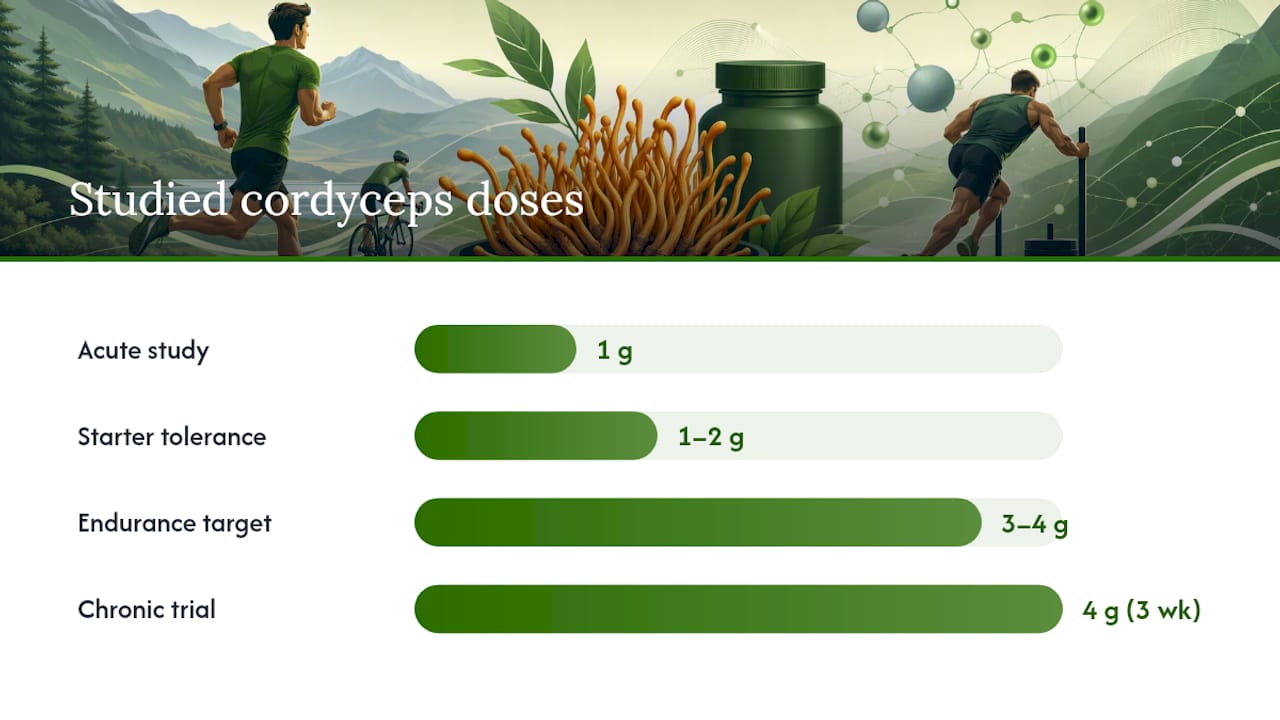
The chronic-use trial that produced the 4.8 ml·kg⁻¹·min⁻¹ VO2max gain used 4 grams of Cordyceps militaris daily for three weeks. That’s on the higher end of studied doses. A separate 12-week randomized trial in amateur marathoners tested a different protocol using Cordyceps sinensis over a longer duration, reinforcing that meaningful aerobic benefits generally require sustained daily intake measured in weeks, not days. On the lower end, a 2024 study on 14 young adults used just 1 gram taken before high-intensity interval training and still recorded reductions in muscle damage markers, showing that acute, lower-dose use has its own distinct research base separate from the endurance-focused chronic trials.
The 4.8 ml·kg⁻¹·min⁻¹ VO2max improvement remains the single most cited figure in this research, and it’s worth remembering it was tied specifically to a 4-gram, three-week protocol, not a one-off dose.
Safety data across these trials is reassuring but not exhaustive. Reported adverse events in published research have been mild and infrequent, mostly minor digestive discomfort. That said, certain groups should talk to a doctor before starting: pregnant or breastfeeding women, anyone immunocompromised, and people taking immunosuppressant medications, since cordyceps has documented immune-modulating activity that could theoretically interact with those drugs.
If you’re introducing cordyceps for the first time, a simple sequence keeps risk low:
For a broader framework on timing and amounts across different goals, a dedicated dosage guide can help you think through daily supplement planning more systematically.
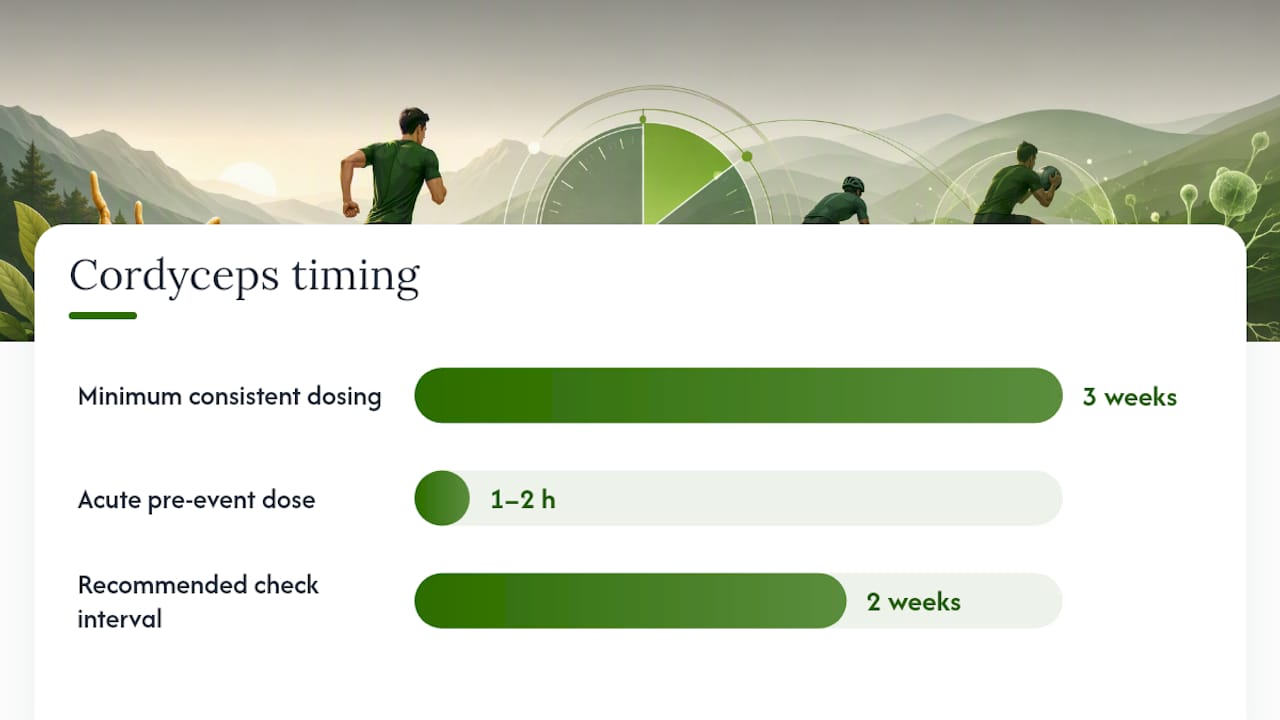
The timeline matters more than the timing. If your goal is cordyceps boost endurance outcomes like VO2max or time to exhaustion, you’re looking at a minimum of three weeks of consistent daily dosing before expecting a measurable shift, based on the protocols used in the trials above. Skipping doses or cycling on and off weekly undermines the exact mechanism, sustained metabolic and possibly mitochondrial adaptation, that produces those results.
Acute dosing serves a different purpose. If you’re chasing the reaction-time and alertness benefits seen in the crossover trial, a single dose taken an hour or two before activity may be worth testing, though the sample size behind that specific finding is small.
Cordyceps doesn’t operate in isolation, and several other evidence-backed ergogenic aids pair logically with it because they work through different pathways:
A resource on combining natural energy strategies for training walks through how these pieces fit together for active adults building a broader supplement approach.
Pro Tip: Don’t rely on how energized you feel to judge whether cordyceps is working. Subjective energy is notoriously unreliable and influenced by sleep, stress, and placebo effects. Track something objective instead: a fixed time trial, a cycling TTE test, or even a consistent 5K pace. Compare that number every two weeks. That’s the actual signal researchers use, and it’s the signal you should trust too.
Preliminary research suggests cordyceps may modestly reduce two biomarkers tied to muscle stress: creatine kinase (CK), a marker of muscle damage, and blood urea nitrogen (BUN), which can reflect protein breakdown under exertion.
The clearest data point comes from the small 2024 study of 14 young adults who took 1 gram of cordyceps before high-intensity interval training and showed reduced markers of muscle damage along with signs of faster cellular repair compared to placebo. The narrative review covering ergogenic and recovery effects across multiple trials similarly reported reductions in CK and BUN in several of the studies it analyzed, alongside the endurance findings.
Here’s the honest interpretation athletes should apply to these numbers:
If you’re already tracking recovery markers as part of a broader mineral and nutrition strategy, understanding how minerals support performance and recovery gives useful context for interpreting these biomarker shifts alongside your broader nutrition picture. Treat a favorable CK or BUN trend as one input among several, sleep quality, training load, protein intake, rather than the deciding factor in how hard you train next week.
Product quality varies enormously in this category, and that variance is part of why some people report zero effect while trial data shows real benefits. Matching what’s on the shelf to what’s been studied is the single biggest lever you control.
Run through this checklist before buying:
Be especially cautious with “mushroom blend” products that combine cordyceps with reishi, lion’s mane, or chaga without listing individual amounts. You have no way to know if you’re getting a research-relevant dose of cordyceps specifically, or a token amount diluted across five ingredients.
Pro Tip: If a multi-ingredient product appeals to you for convenience, only choose one that lists exact milligram amounts per ingredient on the label, not just a total blend weight. “500 mg proprietary blend” tells you nothing useful about how much cordyceps you’re actually getting.
One website specializing in lab-tested Himalayan resin and related natural wellness products, including mushroom elixirs, formulates them around energy, recovery, and performance goals similar to those discussed here. These products are tested for purity before reaching customers to maintain quality, an important consideration given the variability in formulation standards across this category.
Readers weighing cordyceps against other natural options often ask how it compares to fulvic-acid-rich resins or mineral-based supplements for daily stamina. A closer look at Shilajit capsules for everyday energy covers a complementary approach worth understanding before deciding what fits your routine. For readers building a broader natural performance stack, the dosage guide referenced earlier applies the same evidence-first thinking to mineral supplementation timing.
Cordyceps occupies a specific niche: slow-building aerobic support rather than immediate stimulation. That distinguishes it from most of the natural energy category.
Caffeine and other stimulant-based natural energy supplements work almost immediately by blocking adenosine receptors, producing alertness within 30 to 60 minutes. Cordyceps works on a completely different timeline, with its strongest evidence tied to three or more weeks of consistent dosing.
Rhodiola rosea, another popular adaptogen, is typically marketed for stress resilience and mental fatigue rather than the VO2max and time-to-exhaustion outcomes cordyceps trials focus on. Ginseng research leans toward cognitive alertness and mild stimulant-like effects, closer to caffeine’s profile than cordyceps’ slow metabolic build.
Shilajit resin, rich in fulvic acid and trace minerals, is generally positioned around sustained energy, mitochondrial support, and recovery rather than a specific VO2max endpoint, making it a reasonable complement to cordyceps rather than a direct substitute. If you’re comparing options based on what mechanism you actually want, oxygen utilization and endurance versus stimulant alertness versus mineral-based sustained energy, that distinction matters more than any single ingredient’s popularity. The health benefits of shilajit resin outline how that mineral-based approach differs mechanically from cordyceps’ oxygen-focused pathway.
Cordyceps carries a real, documented consideration: its immune-modulating activity. Because cordycepin and related compounds appear to influence immune signaling in animal studies, anyone taking immunosuppressant medications after an organ transplant or for an autoimmune condition should talk to a doctor before adding cordyceps, since the theoretical interaction could work against the medication’s intended effect.
Cordyceps has also been studied for mild effects on blood sugar and blood clotting in preclinical research. That means people on diabetes medications or blood thinners like warfarin should treat cordyceps as something to flag with a pharmacist or physician, not necessarily something to avoid outright, but something worth a conversation before daily use.
Combining cordyceps with other stimulant-based energy supplements, caffeine, high-dose green tea extract, or pre-workout blends, doesn’t appear to create a dangerous interaction based on available research, since the mechanisms differ. But stacking multiple products marketed for “energy” without understanding what each one actually does is a common mistake. You end up unable to tell which ingredient is responsible for any effect, or any side effect, you notice.
If you’re on any prescription medication, the safest approach is the same one that applies to most supplements: start at a low dose, introduce one new product at a time, and give your body two to three weeks before adding anything else to the mix. That approach protects you and also gives you a clearer read on what’s actually working.
Timing depends entirely on which benefit you’re chasing. For the acute reaction-time and resting oxygen uptake effects documented in crossover trials, taking a dose roughly one to two hours before physical or cognitive activity aligns with how that research was structured. For the endurance and VO2max benefits, timing within the day matters far less than daily consistency across three or more weeks.
Cordyceps is most commonly taken as a powder, capsule, or extract, typically with food to reduce the mild digestive discomfort some people report on an empty stomach. Splitting a daily dose, half in the morning and half a few hours before training, is a reasonable practical approach for anyone targeting both acute and chronic benefits simultaneously, though no trial has directly tested a split-dosing protocol against a single daily dose.
Consistency is the variable that actually predicts results in the research. Multiple trials showed improvements only after two to twelve weeks of uninterrupted daily use, which means skipping days or cycling on and off weekly likely undermines whatever aerobic adaptation is building. If you’re someone who forgets supplements easily, anchoring the dose to an existing habit, your morning coffee or post-workout shake, matters more for cordyceps than almost any other ergogenic supplement, precisely because the benefit depends on sustained exposure rather than a single strong dose.
Active adults and endurance athletes already training consistently are the clearest candidates here. If you’re running, cycling, or doing structured cardio and want a modest edge in VO2max or time to exhaustion, the trial evidence gives you a reasonable, if not guaranteed, reason to try it for a full three-to-four-week block.
Sedentary people expecting an immediate energy lift, something closer to what caffeine delivers, are likely to be disappointed. Cordyceps doesn’t work that way, and the acute effects documented in research are subtle metabolic shifts, not a jolt of alertness.
Judge results the same way researchers do: track a time trial, a TTE test, or a consistent training pace over several weeks rather than relying on how you feel day to day. Real gaps remain in this research, particularly around optimal long-term dosing and how effects vary by fitness level, so treat cordyceps as a reasonable experiment rather than a settled answer. Anyone managing a chronic condition or taking prescription medication should loop in a doctor before starting.
— Shilajit
This article is general information, not a substitute for advice from a qualified doctor. Consult a qualified healthcare professional about your own circumstances before acting on anything here.
Verify Shilajit lab reports in Australia with a six point checklist. Spot fake COAs, check lab accreditation, lot match, analytical methods, and LODs.
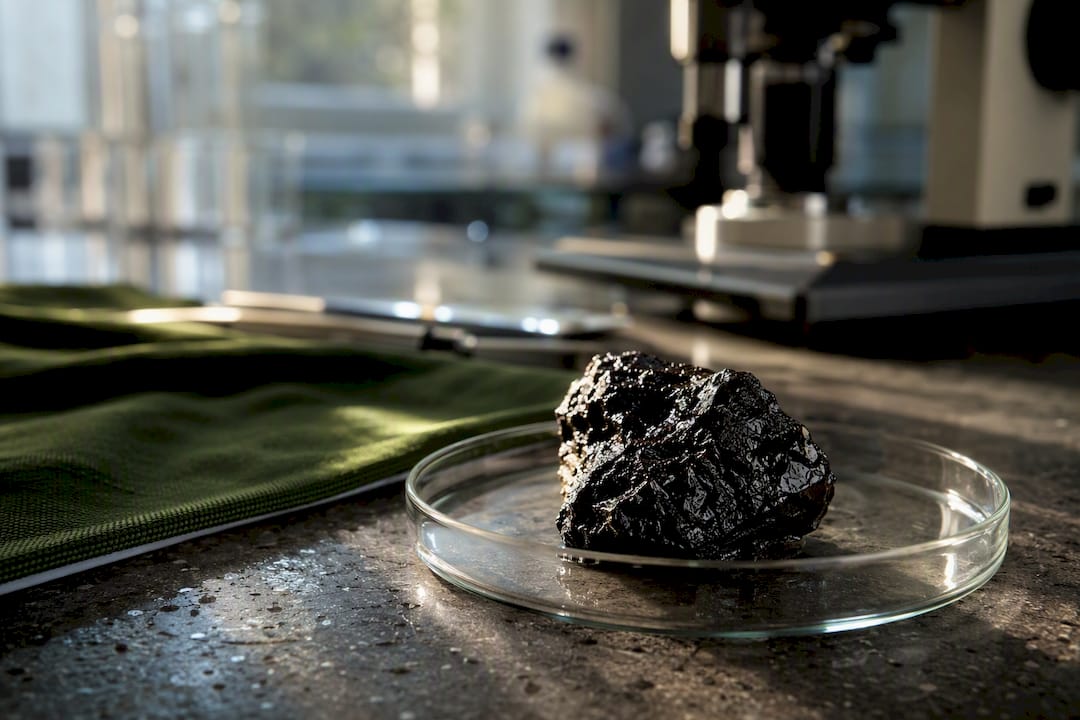
Learn to pick pure shilajit by reading the batch COA. Check fulvic acid range, named lab method, numeric heavy-metal results, and harvest altitude.