Uncategorized
Shilajit for People With Diabetes: Evidence, Risks and Safety Steps
Evidence-first review for people with diabetes: animal and small human trials (one used 500 mg twice daily), interaction risks, and clinician-supervised…

Shilajit shows promising glucose-lowering signals in animal studies and small clinical trials, but no large randomized controlled trial confirms that it works in humans the way prescription diabetes drugs do. If you have diabetes and want to try it, tell your prescriber first, check your blood sugar more often when you start, and never stop or adjust insulin, metformin, or sulfonylureas on your own.
TL;DR:
- Animal studies show shilajit can significantly reduce blood glucose at doses near 100 mg/kg per day, with enhanced effects when combined with metformin or glibenclamide.
- Small human trials indicate statistically significant blood sugar improvements with doses around 500 mg twice daily, but larger, placebo-controlled studies are lacking.
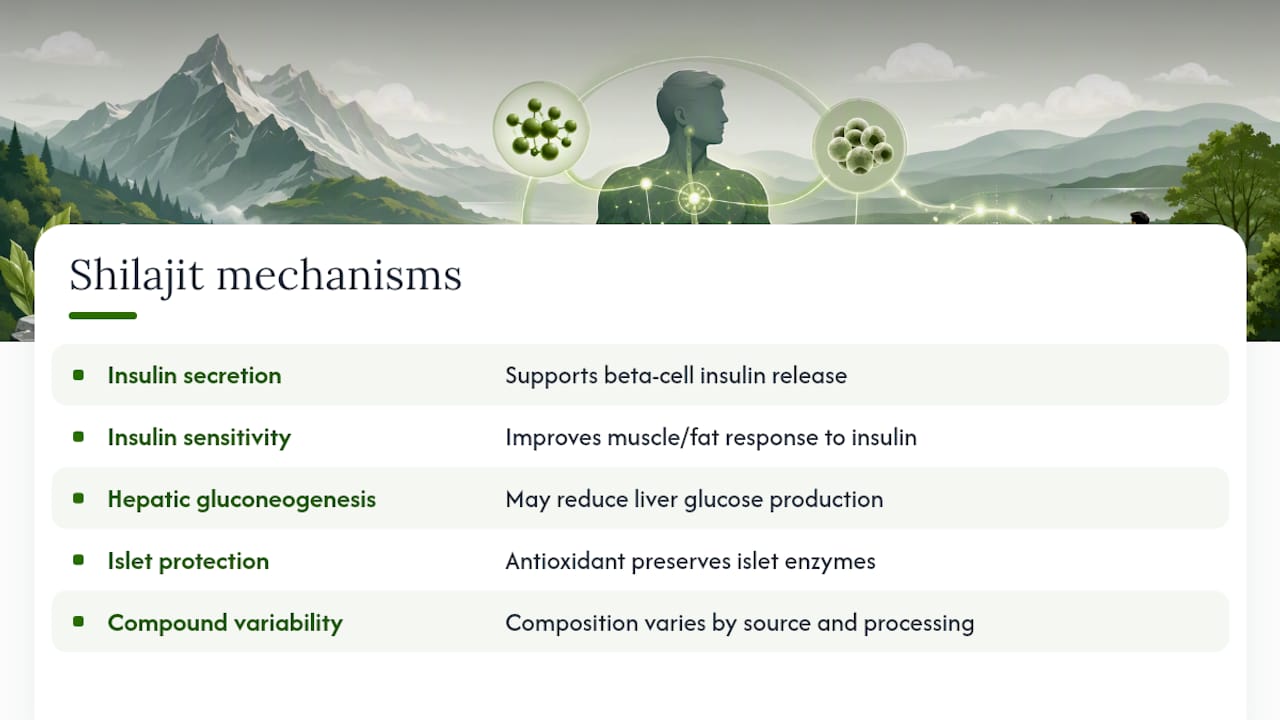
- Shilajit’s mechanisms likely involve supporting insulin secretion, improving insulin sensitivity, reducing liver glucose production, and providing antioxidant protection to pancreatic cells.
- Combining shilajit with diabetes medications raises the risk of hypoglycemia, requiring careful monitoring, dose adjustments, and clinician supervision.
- Quality and safety depend on verified sourcing, batch testing, and purity; use only products with tested, standardized extracts and consult your healthcare provider before starting.
The honest answer sits between two extremes: shilajit is not a proven diabetes treatment, and it is not snake oil either. A growing body of preclinical and small clinical research points toward real glucose-lowering activity, but the human evidence base is thin, brief, and inconsistent in design.
Animal research provides the clearest signal so far. In alloxan-induced diabetic rats, shilajit administration produced significant reductions in blood glucose and improved lipid profiles, with the strongest effect appearing at a dose of 100 mg per kilogram of body weight per day. That same study found something clinically interesting: when researchers combined shilajit with glibenclamide or metformin, the glucose-lowering effect was greater than either treatment alone. That is potentiation, not replacement, and it is the single most important safety fact in this entire topic.
Lipid changes tracked alongside glucose in these animal models. Total cholesterol and triglycerides dropped, HDL rose, and the pattern held across repeated experiments, which is why researchers keep citing that 100 mg/kg/day figure as the reference dose in rodent work.
Human data is sparser but not absent. A clinical evaluation of Shilajatu in people with diabetes mellitus reported statistically significant reductions in fasting and postprandial blood glucose, along with improvements in HbA1c. The researchers were upfront about the catch: small sample size, no placebo control described in the same rigorous way a pharmaceutical trial would require, and a need for larger follow-up work before anyone calls this settled.
A separate randomized comparative Ayurvedic study looked at Shilajatu against Asanadi Ghana Vati, another traditional formulation, in the management of Madhumeha (the classical term overlapping with type 2 diabetes). Using 500 mg of Shilajatu twice daily over three months, the trial found statistically significant improvement in glycemic measures. It is a real controlled comparison, but it is still a modest sample studied over a single season, not a multi-year outcomes trial.
Statistic Callout: Across the alloxan-rat model, 100 mg/kg/day repeatedly produced the maximum glucose and lipid response. In the small human Shilajatu trial, participants took 500 mg twice daily for three months and showed statistically significant glycemic improvement. Those two numbers come from different species and different endpoints. Neither one converts directly into “the right human dose,” and no study has bridged that gap with a dose-ranging human trial.
A broader integrative review pulled these threads together, arguing that shilajit may help regulate blood glucose through multiple biochemical pathways rather than a single mechanism, which lines up with what the animal and small clinical data separately suggest.
Case reports add texture, though they come with a big asterisk. One report describes a combination of Shilajatu and Daruharidra (Berberis aristata) that curtailed glycemic indicators and reduced diabetes symptoms in a documented patient. That is a genuinely interesting result, but a two-herb formula makes it impossible to say how much of the effect belongs to shilajit alone.
Here is the honest tally of what exists right now:
What is missing is just as important as what is present. Nobody has published a large, multi-center, placebo-controlled trial with hundreds of participants tracking HbA1c over a year or more. Preparations vary between studies, too. Some use raw purified shilajit, others use standardized extracts, and dosing units are not consistent across papers. That heterogeneity is exactly why clinicians treat these findings as encouraging, not conclusive.
The mechanistic story matters because it explains why researchers keep circling back to shilajit instead of dismissing it. Several plausible pathways show up across the preclinical literature, and they do not rely on one single “active ingredient” doing all the work.
The most cited mineral and organic compounds in shilajit include fulvic acid and dibenzo-alpha-pyrones, both of which have documented antioxidant and metal-chelating activity in lab studies. Fulvic acid in particular shows up repeatedly as a carrier molecule that may help transport minerals into cells more efficiently, though the diabetes-specific human trial data on fulvic acid alone remains limited.
Insulin secretion. Preclinical work suggests shilajit supports pancreatic beta-cell activity, the cells responsible for producing insulin. The integrative review on Shilajatu’s therapeutic potential describes enhanced insulin secretion from beta cells as one of several proposed mechanisms behind the glucose reductions seen in animal and small clinical work.
Peripheral insulin sensitivity. A second pathway involves how well muscle and fat tissue respond to the insulin that is already circulating. Improved insulin sensitivity would explain why some studies see lower postprandial glucose without a dramatic spike in circulating insulin itself. This is the piece most relevant to anyone using shilajit for insulin resistance, since insulin resistance is fundamentally a sensitivity problem, not just a production problem.
Hepatic gluconeogenesis. The liver manufactures glucose on its own, especially overnight and during fasting, through a process called gluconeogenesis. Several proposed mechanisms point to shilajit dampening this liver glucose output, which would help explain the fasting blood glucose reductions reported in both the rat model and the small human trial.
Antioxidant and islet protection. Oxidative stress damages pancreatic islet cells over time, which is part of why type 2 diabetes tends to worsen. A study using a streptozotocin-induced diabetes model found that shilajit helped preserve pancreatic islet superoxide dismutase activity, an antioxidant enzyme that protects those insulin-producing cells from ongoing damage. If that protective effect translates to humans, it would matter less for immediate glucose numbers and more for long-term pancreatic function.
A few things temper the enthusiasm here. Shilajit’s exact composition varies by geographic source, altitude, and purification method, which means the compound ratios driving these mechanisms are not identical from one product to the next. A rat study using one purified extract does not guarantee the same biochemical profile as a different brand’s resin. That variability is precisely why standardization and testing matter as much as the mechanism itself.
The single biggest safety concern with shilajit and diabetes medication is straightforward: shilajit may amplify the glucose-lowering effect of drugs you are already taking, and that combination can push blood sugar too low.
The animal data backs this directly. When shilajit was combined with glibenclamide or metformin in the alloxan-rat model, the glucose reduction exceeded what either treatment produced alone. In practice, this means insulin, sulfonylureas (like glipizide or glimepiride), and metformin combinations all deserve extra caution once shilajit enters the picture. Hypoglycemia, not high blood sugar, becomes the more immediate risk.
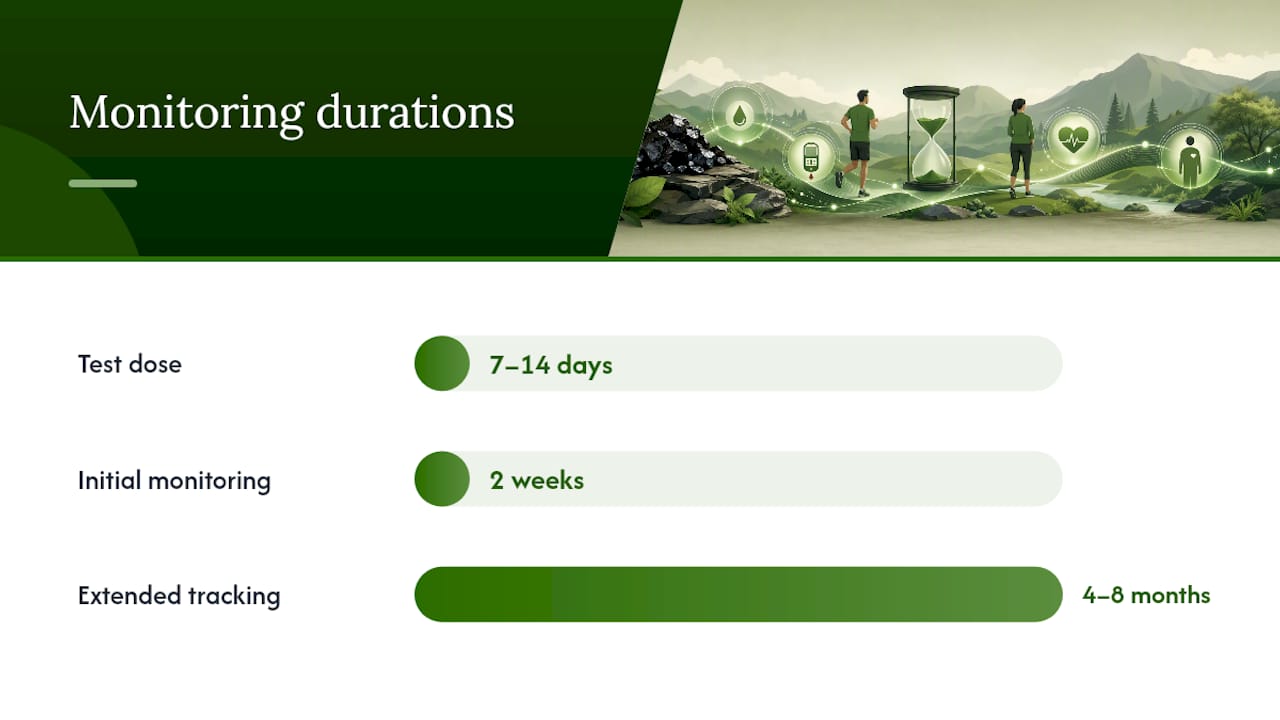
Pro Tip: Keep a simple log for the first two weeks: time, dose, blood glucose reading, and any symptoms like shakiness, sweating, or confusion. Bring that log to your next appointment. It gives your clinician real data instead of a vague “I think it’s helping” conversation.
Increase self-monitoring of blood glucose (SMBG) frequency for at least the first one to two weeks after starting shilajit or after any dose change. Check before meals and at bedtime, and add a 2 a.m. check if you are on insulin and your evening numbers have been trending low. Watch for readings below 70 mg/dL, along with symptoms like sweating, tremor, rapid heartbeat, or confusion. If you experience those symptoms, treat the low blood sugar per your usual emergency plan and call your clinician the same day. If you cannot get blood sugar back above 70 mg/dL after two treatment attempts, or if the person becomes confused or loses consciousness, call emergency services immediately.
Product purity is the other half of the safety equation. Shilajit is sourced from mineral rock exudate at high altitude, and low-quality or improperly purified batches have been associated with heavy-metal contamination, including lead, mercury, and arsenic. Contamination does not just risk organ toxicity on its own; it also muddies the clinical picture, since a bad reaction might come from a contaminant rather than shilajit itself. That is exactly why batch-specific lab testing is not optional for anyone using this alongside a chronic condition like diabetes.
There is no established human dose for diabetes management, and the research that exists cannot be converted into a simple daily number the way a drug label can. Treat every dose figure below as a signal from a specific study population, not a personal prescription.
The animal literature keeps returning to one figure: A certain measured dose produced the maximum glucose and lipid response in animal studies in alloxan-induced diabetic rats. Scaling that directly to a human by body weight is a common mistake and a risky one. Rodent metabolism, drug clearance, and dose-response curves differ from human physiology in ways that make simple weight-based conversion unreliable. Researchers use that number to compare experimental doses to each other, not to calculate what a person should swallow.
Human data offers a different reference point. The clinical evaluation of Shilajatu that reported glucose and HbA1c improvements and the randomized comparative study using 500 mg of Shilajatu twice daily for three months both worked with standardized Ayurvedic formulations, not raw resin measured by a home scale. That distinction matters for anyone trying to translate a study dose into a store-bought product.
Statistic Callout: One key insight from the dose-response animal data: efficacy did not simply climb with higher doses. There appears to be a moderate effective range rather than a “more is better” curve, which is exactly why manufacturer dosing guidance and clinician input matter more than trying to hit a research figure exactly.
Choosing a product responsibly comes down to a short checklist:
A shilajit dosage guide that lays out serving sizes by product format is a reasonable starting reference, but it should supplement, not replace, a conversation with your prescriber about your specific glucose control and medication list.
Treat this like adding any new variable to a regimen that is already working, meaning slowly, with data, and with your clinician looped in from day one.
Pro Tip: Track three numbers over your outcome window: average fasting glucose, average postprandial glucose two hours after meals, and any hypoglycemic events. Those three data points, brought to a follow-up appointment, give your clinician everything needed to decide whether to continue, adjust, or stop.
If you are curious what a longer-term pattern of consistent use looks like beyond the glucose question, some readers track broader wellness changes over a four to eight month period of daily use, though that timeline reflects general observations rather than diabetes-specific trial data.
Verifying quality is not optional when a supplement might interact with insulin or oral diabetes medications. Reputable sellers should make this easy to check before you buy, not after.
Shilajit.com.au publishes product pages for its pure Himalayan shilajit resin, including a 50-gram resin option with stated sourcing details and usage instructions. A dedicated dosage guide walks through serving amounts by product format, and a longform guide to Himalayan shilajit purity covers what purity testing and heavy-metal screening should look like in practice.
What to look for on any product page, regardless of seller:
None of this replaces a conversation with your endocrinologist or primary care provider. A clean COA tells you what is in the jar. It does not tell you whether shilajit is appropriate for your specific medication regimen, kidney function, or diabetes type, and that judgment call belongs to the clinician managing your care.
Shilajit looks like a genuinely promising adjunct for blood sugar support, not a replacement for insulin, metformin, or the rest of standard diabetes care. That distinction gets lost in a lot of supplement marketing, and it shouldn’t.
The realistic expectation, based on what the small trials actually measured, is a modest improvement in fasting and postprandial glucose over weeks to months, not a dramatic reversal of diabetes overnight. Anyone expecting shilajit to replace their medication is working from a false premise the research does not support. Anyone dismissing it outright is ignoring a consistent, if early, signal across animal and small human studies.
The right posture is shared decision-making. Bring the idea to your clinician, agree on a monitoring plan, and give it an honest eight to twelve week window with real data collected along the way. If your numbers improve and your clinician sees room to safely adjust medication, that is a good outcome achieved the right way. If nothing changes, you have lost little more than time and learned something concrete about your own physiology.
— Shilajit
If you have talked with your clinician and decided to explore shilajit as part of your diabetes management plan, sourcing matters as much as the decision itself. Shilajit’s pure Himalayan resin is sold with batch-specific lab testing behind it, so you are not left guessing what is actually in the jar before you introduce something new alongside insulin or metformin.

Every batch is checked for purity, and the site’s dosage guide breaks down serving sizes by product format so you can start conservatively and track results against your own glucose logs. The buyer’s guide to choosing the right shilajit supplement walks through what to check on a certificate of analysis if you want to compare products side by side.
None of this replaces your care team. Before you order, confirm with your prescriber that adding shilajit fits safely into your current medication plan, and set up your monitoring routine first. Once that conversation happens, the 50-gram resin is a straightforward place to start.
This article is general information, not a substitute for advice from a qualified doctor. Consult a qualified healthcare professional about your own circumstances before acting on anything here.
Small clinical trials and animal studies show shilajit can lower fasting and postprandial glucose and may improve HbA1c, but the evidence base is too limited to call it a proven treatment. It works best as a monitored adjunct alongside standard care, diet, and exercise, not as a substitute for either.
People with type 1 diabetes, pregnant or breastfeeding women, children, and anyone with severe kidney or liver impairment should avoid shilajit or use it only under direct medical supervision, since safety data for these groups is lacking.
Yes. Animal research found that combining shilajit with metformin or glibenclamide produced a stronger glucose-lowering effect than either treatment alone, which raises the risk of hypoglycemia and means dose adjustments should only happen with clinician guidance.
Start with a low test dose for one to two weeks, increase blood glucose monitoring during that window, and only adjust your diabetes medications with your prescriber’s direct involvement based on the glucose patterns you record.
Shilajit comes from Ayurvedic tradition and mineral-rich Himalayan rock exudate, while traditional Chinese approaches to diabetes typically rely on different herbal formulas and acupuncture; both traditions share a common thread of pairing herbal support with dietary discipline rather than replacing medical treatment.
Evidence-first review for people with diabetes: animal and small human trials (one used 500 mg twice daily), interaction risks, and clinician-supervised…
Practical, goal-focused shilajit timing: morning fasted default, 30–60 minute pre-workout window, split dosing, 8–12 week timelines, plus lab-tested…