Uncategorized
Shilajit in Pregnancy: Why Doctors Advise Against It and What to Do
Avoid shilajit while pregnant or breastfeeding. No controlled trials, contamination risk, and one case links use to high blood pressure. Inform your…


Yes, most healthy adults can take purified, batch-tested shilajit with coffee, as long as the coffee stays moderate and the shilajit is a pea-sized dose of a lab-verified product. If you have heart disease, high blood pressure, diabetes, kidney issues, or take blood pressure, blood sugar, or blood-thinning medication, or if you’re pregnant or breastfeeding, talk to a healthcare provider first. Start with a small amount in the morning rather than late in the day, and skip anything unverified or raw.
TL;DR:
- Combining purified, batch-tested shilajit with moderate coffee in the morning is generally safe for healthy adults, but those with medical conditions should consult a healthcare provider.
- The stimulating effects of caffeine peak within an hour, while shilajit’s benefits, if any, develop over many hours, meaning their combined effects are primarily additive rather than synergistic.
- Dosing should start low at about 125 to 250 mg in the morning and be adjusted gradually; doubling the dose early is unnecessary and may increase discomfort.
- Proper shilajit dissolution involves warming water, stirring the resin until fully dissolved, and avoiding adding it to hot or brewed coffee directly to prevent clumping.
- Only buy shilajit from reputable sources that provide detailed lab testing results, including heavy metal and microbial screening, to avoid contamination risks associated with raw or unpurified resin.
Shilajit is a mineral-rich resin that forms in Himalayan rock crevices over centuries, and its main active compound is fulvic acid, a molecule credited with helping the body absorb trace minerals like magnesium, zinc, and potassium. Marketers attach it to energy, focus, and recovery, but the human clinical evidence behind those claims is thin. PubMed lists several small studies on fulvic acid and shilajit’s components, yet nothing at the scale needed to call these effects proven.
Coffee’s contribution is more predictable, at least in the short run. Caffeine blocks adenosine receptors in the brain within 15 to 45 minutes, which is why the alertness hit from coffee shows up fast while shilajit’s effects, whatever they turn out to be for you, unfold on a completely different clock.
That mismatch matters more than most people realize. Shilajit metabolizes slowly, and Verywell Health reports peak blood levels 12 to 14 hours after intake, which is a big part of why morning dosing is the standard recommendation. You’re not layering two stimulants that peak together. You’re pairing an immediate caffeine lift with a mineral supplement whose real effect, if any, arrives well after your coffee has worn off.
Here’s what that practically means for someone drinking shilajit coffee in the morning:
None of this means the pairing is pointless. Plenty of people like the ritual, and there’s no known direct interaction between shilajit and coffee as beverages. But go in understanding that the “boost” you feel is mostly your usual cup of coffee doing what it always does.
The safety conversation around shilajit has almost nothing to do with coffee itself and everything to do with who is taking the shilajit. Certain health conditions and medications change the calculation considerably, and this is the section to actually read carefully before you start.
Banner Health specifically advises against shilajit for people with heart conditions, hypertension, diabetes, or kidney disease, and for anyone on medications for blood pressure, blood sugar, or blood clotting. Pregnant or breastfeeding individuals should not take it at all. A few other groups deserve caution too:
The mechanisms behind these cautions are worth understanding, not just memorizing. Cleveland Clinic notes reported side effects ranging from GI upset, headaches, and dizziness to rarer but more serious reactions, including elevated blood pressure, low potassium, and a metabolic condition called pseudohyperaldosteronism. That last one sounds obscure, but it’s the kind of reaction that shows up in case reports precisely because shilajit’s mineral content can quietly shift electrolyte balance in susceptible people. Raw or unpurified resin carries an added risk layer: heavy metal or microbial contamination that has nothing to do with the plant compound itself and everything to do with how (or whether) the batch was tested.
Pro Tip: Treat your first two weeks with shilajit coffee like a trial run, not a routine. Start low, keep a simple daily note of how you feel, and stop immediately if you notice dizziness, heart palpitations, or stomach upset that wasn’t there before.
If you experience any of those warning signs, discontinue use and check in with a healthcare provider rather than pushing through it. Shilajit isn’t a supplement where “more consistency equals better results” applies blindly. Given its slow metabolic profile, problems can build quietly before they become obvious.
The dosing question trips up more people than any other part of this. Traditional guidance, per Britannica, runs from a grain of rice to a pea-sized amount, dissolved in warm liquid and taken once to three times a day depending on the product form. Translated into milligrams, that pea-sized portion generally lands around 250 to 500 mg of resin, though this varies by brand density and moisture content.
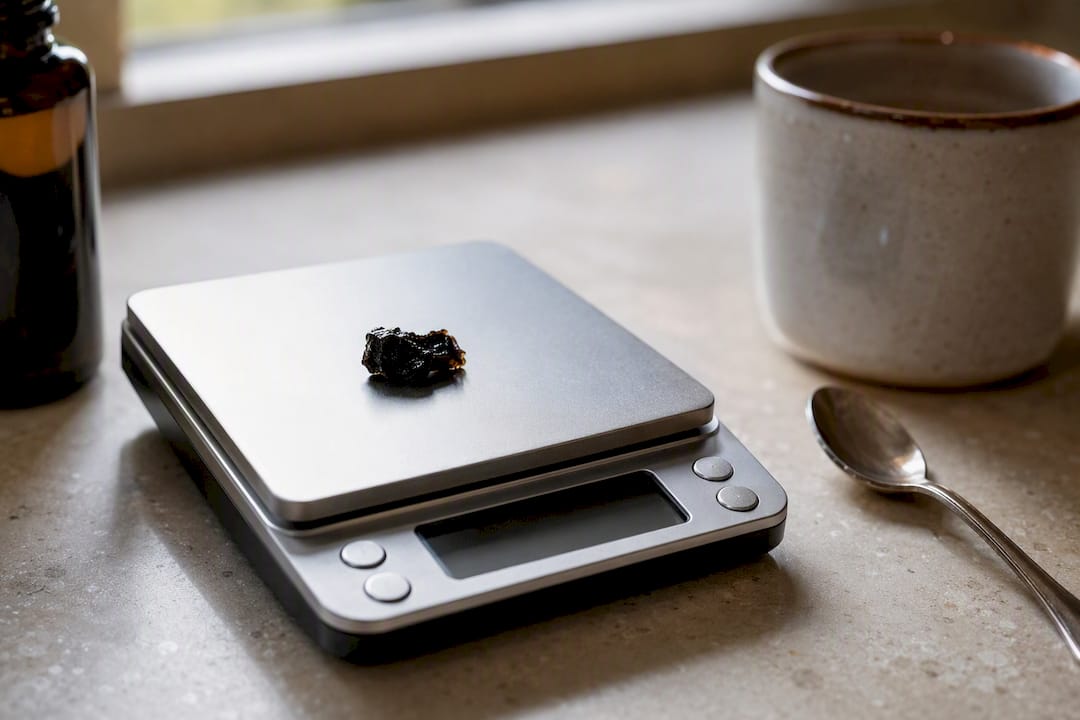
A kitchen scale that measures in milligrams or small gram increments removes the guesswork “grain of rice” language leaves behind. It’s a five-dollar fix for a dosing question people otherwise eyeball for months.
Timing follows the same logic laid out earlier: morning, not evening. Since shilajit’s effects peak many hours after intake, taking it at night offers no advantage and just adds an unnecessary variable to your sleep. Pairing it with your first coffee of the day is practical for exactly that reason, not because the caffeine and the shilajit need each other chemically.
A sensible start-up protocol looks like this:
Resist the urge to increase the dose because you don’t feel anything in week one. Shilajit for energy is a cumulative story for most users, not an instant one, and doubling up early mostly just increases your risk of GI discomfort without speeding up results.
Dump resin straight into a hot cup and you’ll usually get a stubborn, gritty clump sitting at the bottom instead of a smooth cup.
The method holds up across brewing styles with small adjustments. Espresso drinkers often dissolve the resin in the same warm water used to preheat their cup, then pull the shot into it. French press users can stir the dissolved shilajit directly into the plunged coffee. Instant coffee is arguably the easiest pairing, since you’re already dissolving one thing in hot water and can add the shilajit at the same stage.
Milk, ghee, or a small amount of honey are common additions, and they’re not just about taste. Fat and warm dairy can help mask the earthy, slightly bitter flavor shilajit brings, which is strong enough that some people prefer it in a latte over black coffee.
Pro Tip: If your resin keeps clumping no matter what you try, it’s probably too cold or too firm straight out of the jar. Warm the jar slightly (a few seconds in your palm or near, not in, hot water) before scooping, and it will soften enough to measure and dissolve cleanly.
Store the resin in a cool, dry place, tightly sealed. Heat and humidity are what cause clumping and texture problems in the first place, not anything wrong with the product itself. Following a clear mixing method solves most of the “why won’t this dissolve” complaints people run into on their first try.
Purity is where this entire topic actually gets serious, and it’s the piece most casual guides skip. Raw shilajit, straight off a mountainside, is not something anyone should consume without processing. Cleveland Clinic points out that unpurified shilajit can carry heavy metals and microbial contamination, and that purification plus third-party testing is what separates a usable supplement from a genuine health risk.
A real Certificate of Analysis (COA) should show specific test results, not vague assurances. Look for these elements before you buy anything:
Traditional Ayurvedic purification involves repeated dissolving, filtering, and sun-drying cycles meant to strip out insoluble minerals and organic debris before the resin is concentrated back down. It’s a real process with real steps, not a marketing phrase, and it’s worth understanding how purification actually works before assuming any dark, sticky substance labeled “shilajit” has been through it.
Format matters here too. Resin is the least processed form and requires the most trust in the seller’s purification process. Capsules and powders add a manufacturing step that can either add quality control or introduce fillers, depending on the brand, so the same COA scrutiny applies regardless of which format you choose.
A few red flags should end the conversation immediately: no lab testing available on request, a raw or “wild-harvested, unprocessed” label worn as a selling point rather than a warning, health claims that sound like they belong in a pharmaceutical ad, and pricing so low it couldn’t possibly cover legitimate third-party testing. Genuine testing costs money, and that cost shows up somewhere in the price. If you want a deeper checklist, how to spot real versus fake shilajit walks through the visual and behavioral differences buyers can check before they even open a COA.
The wellness internet loves to talk about shilajit and caffeine like they’re some kind of synergistic stack, two ancient-meets-modern energy sources working in tandem. That framing oversells what’s actually happening. Coffee does its fast, well-understood thing to adenosine receptors within the hour. Shilajit, if it does anything measurable for you, is working on a completely different, much slower timeline. Calling that combination a “stack” gives people the wrong expectation and, worse, sometimes pushes them toward taking more of either substance to chase a feeling that was never going to show up that quickly.
What we think gets underappreciated is how much the safety conversation depends entirely on sourcing, not on the coffee pairing at all. A pea-sized dose of purified, tested shilajit in your morning coffee is a fundamentally different proposition than the same dose of an untested resin scraped off a rock with no idea what else came along with it. The coffee is the least risky variable in this entire equation. The shilajit itself is where the real due diligence needs to happen.
We’d also push back gently on the idea that daily use is automatically the goal. Cycling, starting low, and paying attention to how you actually feel matters more than hitting some arbitrary daily habit streak. Supplements don’t reward blind consistency the way exercise sometimes does.
— Shilajit
Everything in this article comes back to one practical filter: don’t put anything in your coffee that hasn’t been tested. Shilajit’s own 50-gram pure resin is sourced from high-altitude Himalayan deposits and processed using traditional purification methods, with batch-specific lab testing behind every jar, so you’re not guessing what’s actually in your cup.
If resin isn’t your preferred format, the capsule and powder buying guide breaks down which option fits your routine best, and the fulvic acid explainer covers dosing details in more depth than we could fit here. Talk to a healthcare provider before starting any new supplement, particularly if you have an existing health condition or take regular medication. When you’re ready, browse the full shilajit resin and capsule range and pick a starting dose based on the guidance above.
This article is general information, not a substitute for advice from a qualified doctor. Consult a qualified healthcare professional about your own circumstances before acting on anything here.
Yes, for most healthy adults, as long as you use purified, batch-tested shilajit and keep the coffee at a moderate amount. People with heart disease, hypertension, diabetes, or kidney issues should check with a healthcare provider first, per Banner Health.
Avoid combining shilajit with blood pressure, blood sugar, or blood-thinning medications without medical guidance, since these interactions aren’t fully understood. There’s no known direct interaction with coffee as a beverage, but combining with alcohol or other stimulants isn’t well studied either.
Dissolve a grain-of-rice to pea-sized portion in warm (not boiling) liquid, whether that’s water, milk, tea, or coffee, and take it in the morning to match its slow metabolic profile. Choose a resin or capsule with a verifiable Certificate of Analysis rather than an untested raw product.
Daily use is common, but there’s limited long-term clinical data on continuous use, so many people cycle it (several days on, a couple off) rather than taking it indefinitely without a break. Watch for warning signs like dizziness, palpitations, or GI upset, and stop if they appear.
Avoid shilajit while pregnant or breastfeeding. No controlled trials, contamination risk, and one case links use to high blood pressure. Inform your…
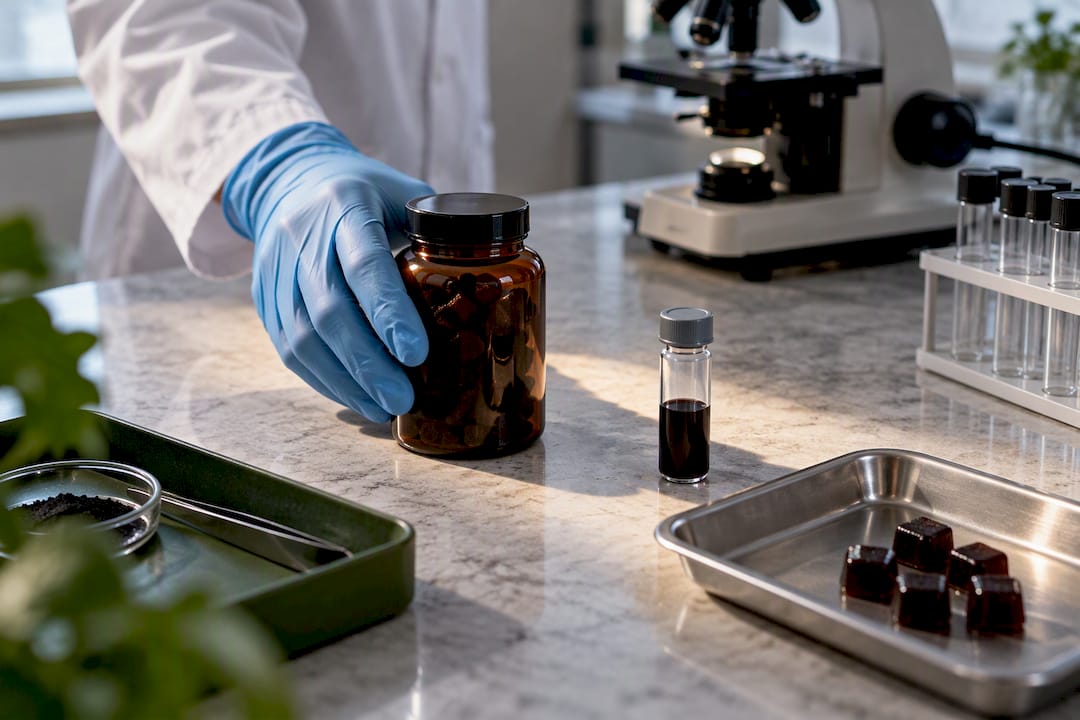
Australia-focused look at shilajit gummies: what human trials actually show, how 500 mg/day dosing compares, and why batch COAs and TGA safety checks matter.