Uncategorized
Shilajit in Pregnancy: Why Doctors Advise Against It and What to Do
Avoid shilajit while pregnant or breastfeeding. No controlled trials, contamination risk, and one case links use to high blood pressure. Inform your…

Fulvic acid is the smaller, more bioavailable fraction of humic substances — the one that actually crosses cell membranes, ferries minerals into tissues, and drives the systemic effects supplement shoppers are after. Humic acid is the larger fraction; it stays mostly in the gut lumen, where it can bind toxins and support the microbiome but does not circulate the way fulvic acid does. For energy, cognition, and recovery goals, fulvic acid is the fraction that matters. The practical buying recommendation: choose a fulvic-rich Shilajit resin or a lab-tested fulvic extract that carries a batch-specific Certificate of Analysis (COA) and third-party heavy metal results. The FDA classifies these as dietary supplements, not drugs, so the burden of verifying purity falls entirely on you.
Key facts to keep in mind before you shop:
Fulvic acid is the bioavailable, systemic fraction of humic substances that makes Shilajit relevant for energy, cognition, and recovery — and a batch-specific COA is the only reliable way to verify you are getting it.
| Point | Details |
|---|---|
| Fulvic vs humic difference | Fulvic acid is low molecular weight and acts systemically; humic acid stays in the gut lumen. |
| COA is non-negotiable | Always request a batch-specific COA showing fulvic % and heavy metal results before buying. |
| Typical fulvic concentrations | Purified Shilajit resin runs ~6–7% fulvic; concentrated extracts may reach ~60–70%. |
| Evidence is preliminary | Most human data uses purified Shilajit at study ranges around 250 mg twice daily. |
| Shilajit recommendation | Shilajit’s lab-tested Himalayan resin declares fulvic content and provides batch COAs for verification. |
Both fulvic and humic acids belong to the broader family of humic substances, which form when organic matter decomposes over millennia. The difference comes down to molecular size and where each fraction acts in the body.
Fulvic acid has a low molecular weight and remains soluble across a wide pH range, which lets it pass through intestinal walls and enter circulation. Once there, it acts as a mineral chelator, binding trace elements and escorting them into cells. Humic acid molecules are larger and less soluble at physiological pH; they tend to remain in the gut, where they can adsorb certain toxins and interact with the microbiome, but they do not circulate systemically the way fulvic acid does.
Research confirms that fulvic acid’s structural variability by geographic source contributes directly to inconsistent research outcomes and product-to-product differences. A fulvic extract from one region can have a meaningfully different carboxyl-group profile than one from another, which is exactly why a COA naming the parent material and showing the fulvic fraction result matters more than any marketing description.
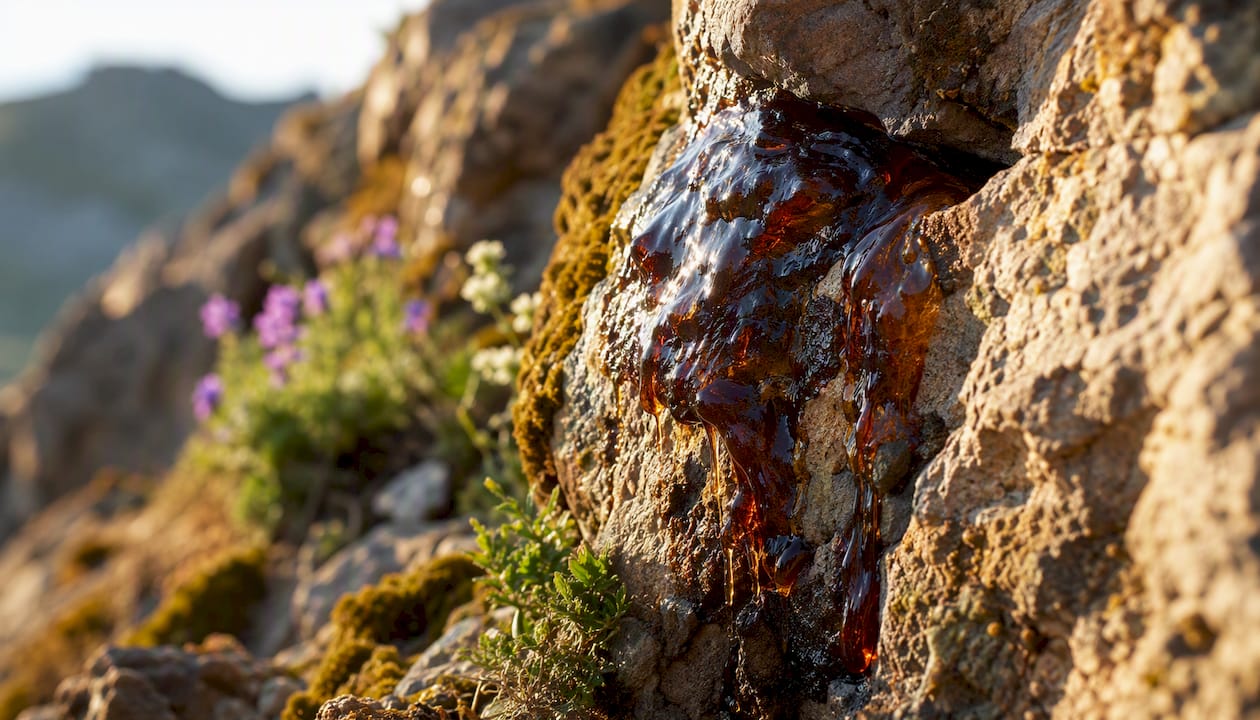
Shilajit is not simply “fulvic acid.” It is a tar-like phytocomplex that seeps from Himalayan rock faces and contains dozens of minerals, dibenzo-alpha-pyrones, and other organic compounds alongside its fulvic fraction. Purified Shilajit resin typically contains around 6–7% fulvic acid, while concentrated fulvic extracts can report 60–70% fulvic content. Neither number is useful without a batch-specific COA to back it.
Think of it in three layers: the raw Himalayan source material at the base, the fulvic fraction that becomes bioavailable and acts systemically, and the humic fraction that remains in the gut. Composition shifts with every source and every processing method, which is why label transparency is non-negotiable.
The proposed mechanisms are genuinely interesting. Fulvic acid appears to modulate oxidative stress, support mitochondrial function, chelate and transport trace minerals, reduce certain inflammatory signals, and shift the gut microbiome in favorable directions. Controlled preclinical models show cytocompatibility, anti-inflammatory signal suppression, and positive microbiome shifts, building a credible translational roadmap. The problem is that most of the compelling data comes from in vitro and animal work.
Evidence tiers for fulvic acid and Shilajit:
Human evidence for fulvic acid and Shilajit remains limited and inconsistent, and dosing is not well established across studies. Clinicians at the Cleveland Clinic note that while the preliminary data is promising, these remain dietary supplements under FDA rules and cannot be marketed as treatments for any disease or condition. Approach any product making dramatic therapeutic claims with real skepticism.
Pro Tip: When evaluating supplement claims, look for the phrase “may support” rather than “treats” or “cures.” The former is legally appropriate for a dietary supplement; the latter is a red flag that the brand is operating outside FDA guidelines.
Raw or poorly processed Shilajit can carry lead, arsenic, mercury, and cadmium at levels that exceed safe intake thresholds. Microbial contamination is a separate risk in unprocessed resins. Practitioners consistently advise prioritizing batch-specific third-party lab testing as the primary safety check, not color, smell, or price.
Under U.S. law, dietary supplements do not require FDA pre-market approval. Manufacturers are responsible for safety, but the FDA does not verify label claims before a product reaches store shelves. That regulatory gap puts the verification work squarely on the consumer.
Red flags that signal an unsafe or misleading product:
Labeling standardization for fulvic acid content is still inconsistent across the industry, which means a product can legally list “fulvic acid” on the label without specifying how much. Always ask for the actual number.
A practical purchasing flow keeps the process manageable:
Green-light signals: batch COA, explicit fulvic % or mg, third-party heavy metal testing, GMP facility statement, clear Himalayan sourcing for Shilajit, and a transparent return policy.
Pro Tip: When reading a COA, scan four rows first: fulvic acid % or mg, arsenic, lead, and mercury. If any of those four are missing or show “not tested,” move on to a different product.
Shilajit resin is the most studied format in human research. It delivers fulvic acid alongside the full mineral and organic compound matrix of the phytocomplex. Purified resin has more human research behind it than generic fulvic drops, and study protocols using purified Shilajit often used moderate doses twice daily for several weeks, or doses around half a gram per day in exercise-focused protocols.. These are study ranges, not universal dosing recommendations.
The higher concentration sounds appealing, but product quality varies enormously and most lack the full mineral matrix that Shilajit provides. They also tend to have less human research behind them specifically.
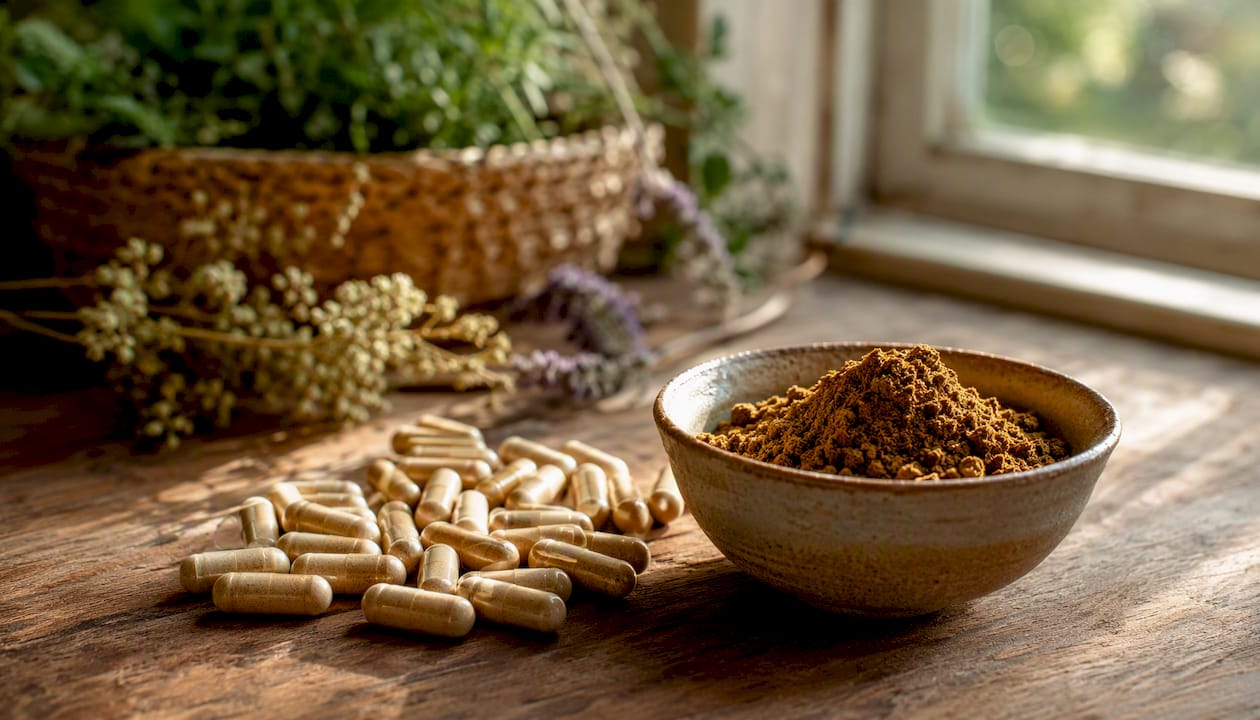
Capsules and powders offer convenience and precise dosing. The downside is that you cannot visually assess the resin quality, and some capsule products use fillers that dilute the active content.
A few practical usage notes: take Shilajit or fulvic extracts with food if you experience GI sensitivity. Avoid stacking with multiple high-dose mineral supplements on the same day, since fulvic acid’s chelation activity can amplify mineral uptake in ways that are hard to predict. Pregnant women, children, and anyone managing a complex health condition should consult a clinician before starting. For energy and recovery support, purified resin with a verified COA is the most defensible starting point.
Fulvic extracts usually declare their fulvic percentage clearly; raw resins often do not. That labeling gap alone is a reason to favor purified, standardized formats over raw jars with no documentation. For readers also exploring anti-inflammatory supplement options, evidence-based joint support supplements follow the same COA-first logic.
Fulvic acid is low molecular weight, crosses membranes, acts systemically, transports minerals into cells, and is the fraction most relevant to energy, cognition, and recovery goals. Humic acid is higher molecular weight, stays in the gut lumen, binds toxins, and may support the microbiome without circulating.
| Feature | Fulvic Acid | Humic Acid |
|---|---|---|
| Molecular weight | Low | Higher |
| Primary action site | Systemic (crosses membranes) | Gut lumen |
| Mineral transport | Yes, active chelation | Minimal |
| Typical supplement form | Shilajit resin, liquid extracts | Rarely isolated for supplements |
| Declared concentration | ~6–7% in purified resin; ~60–70% in concentrated extracts | Not typically declared |
| Evidence tier | In vitro, animal, limited human | Mostly preclinical |
For health-conscious buyers targeting energy, cognition, and recovery: prioritize a product where fulvic acid content is declared on the label and backed by a batch-specific COA. Purified Himalayan Shilajit resin with verified fulvic content is the most practical, research-adjacent choice available today.
The supplement market has a tendency to treat concentration as a proxy for quality. The full mineral matrix in Shilajit, including its dibenzo-alpha-pyrones and trace elements, may contribute to the effects researchers observed. Stripping everything out to chase a higher fulvic percentage removes the context that made the original material interesting.
That does not mean isolated fulvic extracts are useless. For someone who wants a very specific, high-concentration fulvic product and has verified the COA thoroughly, they can be a reasonable choice. But for general energy and mineral support, a well-sourced, lab-tested Shilajit resin with a declared fulvic fraction is the more defensible option, because the evidence base was built on that format. The COA is not a nice-to-have detail. It is the only way to know what you are actually taking.
If you have worked through the buying checklist above and want a product that actually meets it, Shilajit’s pure Himalayan Shilajit resin is sourced from high-altitude Himalayan rock faces, purified using traditional Ayurvedic processing, and tested batch by batch for heavy metals and microbial contaminants. The COA is available per batch, fulvic acid content is declared, and the sourcing is transparent.
For practical use: a pea-sized serving (roughly 250–300 mg) dissolved in warm water once or twice daily fits within the study ranges referenced above. Start at the lower end and track how you feel over the first two to four weeks before adjusting. This is not a prescription; it is a sensible starting point grounded in available research. Visit the product page to review the current batch COA and confirm the fulvic content before you order.
This article is general information, not a substitute for advice from a qualified doctor. Consult a qualified healthcare professional about your own circumstances before acting on anything here.
Avoid shilajit while pregnant or breastfeeding. No controlled trials, contamination risk, and one case links use to high blood pressure. Inform your…
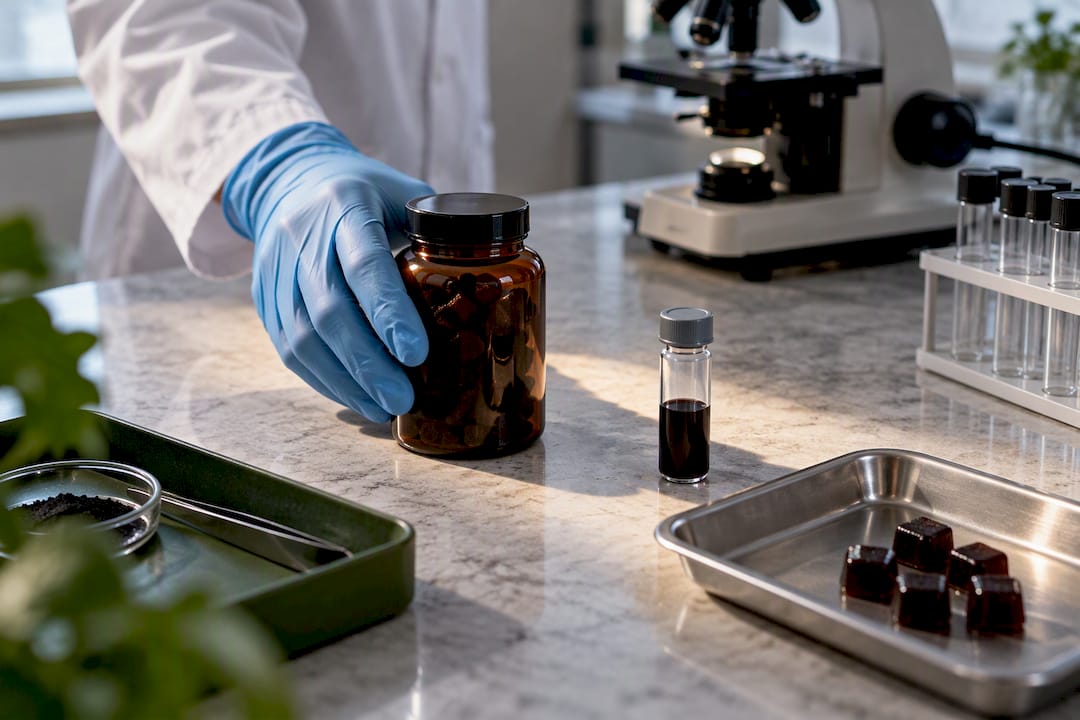
Australia-focused look at shilajit gummies: what human trials actually show, how 500 mg/day dosing compares, and why batch COAs and TGA safety checks matter.