Uncategorized
Shilajit in Pregnancy: Why Doctors Advise Against It and What to Do
Avoid shilajit while pregnant or breastfeeding. No controlled trials, contamination risk, and one case links use to high blood pressure. Inform your…


Plant-based minerals are elements naturally bound inside plant tissue or ancient organic deposits, delivered alongside cofactors like fulvic acid, amino acids, and polyphenols that help your body actually absorb them. That organic packaging is what separates them from the isolated mineral salts in most synthetic supplements.
Why this matters for supplement shoppers:
The term covers minerals that arrive in your body already embedded in an organic matrix rather than as isolated chemical compounds. In living plants, minerals absorbed from soil get chemically integrated into cell structures, proteins, and metabolic compounds. In ancient fossilized plant deposits, geological pressure concentrates those same organically bound minerals over millions of years into dense, trace-element-rich materials.
Three categories qualify under this definition. First, whole plant foods and sea vegetables like spirulina, kelp, and moringa, where minerals exist inside cellular structures. Second, plant-derived mineral complexes, which are concentrated extracts from botanical sources. Third, ancient organic deposits such as humic shale and concentrated resins, where fossilized plant matter has been compressed into a far broader trace-element spectrum than modern produce typically delivers.
What they are not: synthetic mineral salts like ferrous sulfate or magnesium oxide, which are isolated inorganic compounds with no organic cofactors. Animal-derived minerals (bone meal, for instance) carry some organic context but lack the plant-specific polyphenol and fulvic acid matrix that drives the bioavailability story.
The core difference is chelation. Plant-derived minerals are bound to amino acids and organic cofactors that ease intestinal uptake, while synthetic mineral salts must first be broken down and re-complexed by your digestive system before absorption can begin — a step that often reduces how much actually reaches your cells.

A 2025 peer-reviewed study published in Integrative Food, Nutrition and Metabolism put numbers to this. Plant-derived organic iron (from curry leaf) reached a peak plasma concentration of 197.3 µg/mL versus 172 µg/mL for synthetic iron. Organic zinc (from guava leaf) hit 298 µg/mL versus 270 µg/mL for its synthetic counterpart. Both plant-sourced forms also maintained steadier absorption over time.
Beyond absorption benefits, plant-based forms tend to be gentler on digestion than isolated inorganic salts, which are often associated with gastrointestinal irritation. The organic curry leaf iron in the same study delivered effective supplementation without that side effect.
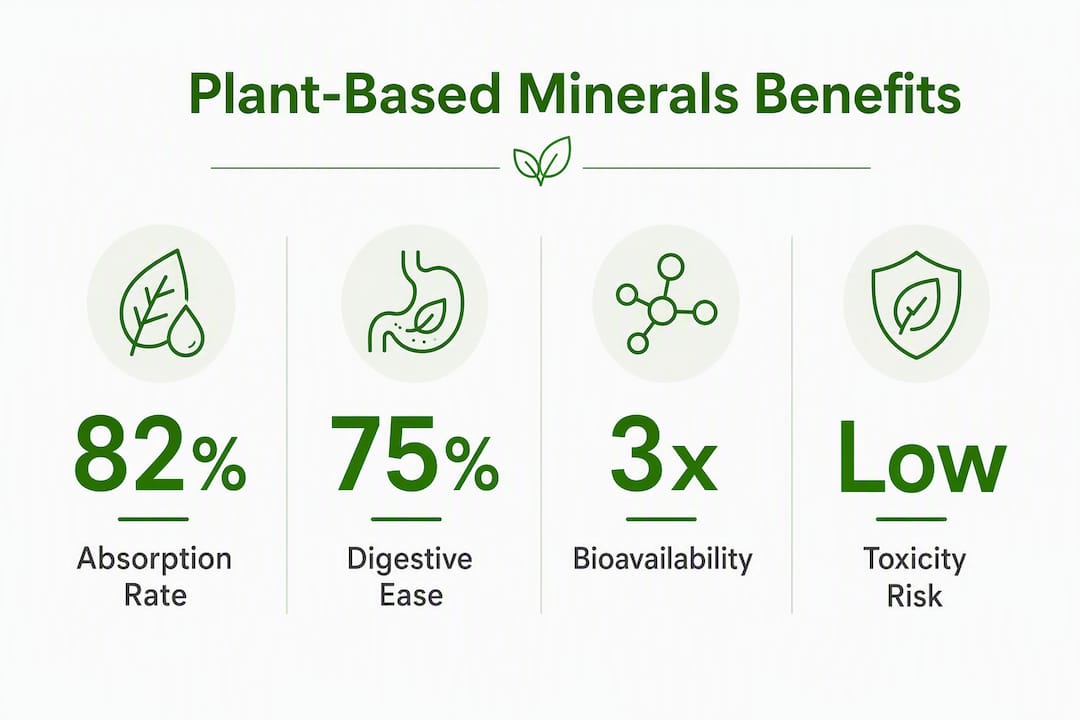
Fulvic acid is the key delivery agent. It chelates minerals and facilitates transport across cell membranes, essentially escorting minerals into cells that would otherwise struggle to absorb them from a standard supplement. Humic substances provide a broader structural scaffold, while polyphenols and amino acids contribute antioxidant support and additional transport pathways.
The four main functional components in a quality plant-mineral product:
Pro Tip: When reading a COA for a fulvic-rich supplement like Shilajit resin, look for a dedicated “Fulvic Acid %” row. A high-quality product will report this figure clearly. If it’s missing entirely, that’s a gap worth questioning before you buy.
Evidence suggests plant-derived minerals can meaningfully improve absorption and may support outcomes tied to mineral status, including energy, cognitive clarity, and immune function. The 2025 study cited above also found that animals supplemented with plant-sourced zinc showed enhanced lymphocyte function and higher antibody production following immune suppression — a dual role as mineral source and immune modulator.
That said, the evidence base has real limits. Many studies use specific patented botanical ingredients that may not represent every product on the market. Heterogeneous product quality makes it hard to generalize results across brands.
For energy and mental clarity, some people report noticing effects within two to four weeks of consistent use. Structural benefits tied to bone or connective tissue take considerably longer. Treat any claim of overnight transformation as a red flag.
Plant-based minerals generally carry lower toxicity risk than poorly dosed synthetic salts because the organic matrix allows the body to regulate absorption more naturally. But “plant-based” does not mean automatically safe. Himalayan and other geological sources can carry heavy metal contamination if not properly tested, and some sea vegetables accumulate iodine or arsenic at levels that matter for regular supplement users.
Under U.S. law, dietary supplements are governed by the Dietary Supplement Health and Education Act (DSHEA). The FDA does not approve supplements before they go to market. That means the burden of verification falls on the buyer.
Red flags to avoid:
Three non-negotiables: a third-party COA covering heavy metals and microbiology, a reported fulvic acid percentage, and a clearly stated origin. Everything else is secondary.
| Checklist Item | What “Good” Looks Like |
|---|---|
| COA present | Batch-specific, dated, from an independent third-party lab |
| Fulvic acid % reported | Clearly stated percentage on the COA or product label |
| Heavy-metal panel | Lead, arsenic, mercury, cadmium all within safe limits |
| Origin stated | Named region (e.g., Himalayan high-altitude) with provenance detail |
| Microbiology tested | Pathogens screened and results documented |
Pro Tip: On a COA, the heavy-metal section usually appears under “Elemental Analysis” or “Inorganic Contaminants.” Each metal should show a result value alongside a pass/fail designation. If the document only lists “compliant” without actual numbers, ask the vendor for the full quantitative report.
Common forms include resin (the most concentrated), tincture, powdered plant-mineral complexes, and whole-food sources like sea vegetables. Resin versus other forms is a meaningful choice: resin typically delivers higher fulvic acid concentration per serving than encapsulated powder.
Practical use tips and cautions:
No single plant source covers every mineral need. Rotating between sources — sea vegetables for iodine and trace elements, fulvic-rich resins for broad-spectrum organic minerals — is a practical approach many wellness practitioners recommend.
Yes. Authentic Himalayan Shilajit is a concentrated, fulvic-rich source of plant-derived minerals formed from ancient compressed plant deposits over geological timescales. It fits the definition precisely: minerals embedded in an organic matrix of fulvic and humic acids, polyphenols, and amino acids. What distinguishes it from fresh produce is the concentration. Geological pressure has packed a broader trace-element spectrum into Shilajit than most modern plant foods deliver.
Quality and testing vary widely across the market, though. The trust signals that matter: Himalayan provenance (altitude and region specified), a reported fulvic acid percentage, a batch-specific COA covering heavy metals and microbiology, and traditional processing combined with modern purification. Shilajit’s lab-tested resin is presented as an example of a product that meets these criteria, with purity documentation available per batch.
Lab testing and provenance documentation are the deciding factors that separate a genuinely effective plant-based mineral supplement from one that only looks the part on a label.
| Point | Details |
|---|---|
| Bioavailability advantage | Plant-derived minerals arrive chelated with organic cofactors, improving absorption over isolated synthetic salts. |
| Fulvic acid is the mechanism | It chelates minerals and transports them across cell membranes — look for a reported percentage on the COA. |
| COA is non-negotiable | Require a batch-specific, third-party COA with heavy-metal and microbiology panels before purchasing. |
| Safety red flags | No COA, vague sourcing, missing heavy-metal data, and unrealistic mineral claims are all reasons to walk away. |
| Shilajit as a leading example | Himalayan Shilajit resin, when properly tested and provenance-verified, is one of the most concentrated plant-derived mineral sources available. |
The supplement market is full of products that use “plant-based” as a marketing phrase rather than a quality standard. What actually matters is whether the organic matrix is intact, whether the fulvic acid percentage is documented, and whether an independent lab has confirmed the product is free of heavy-metal contamination.
Shilajit’s appeal in this category comes down to concentration and cofactors. Ancient fossilized plant deposits deliver a trace-element breadth that fresh produce rarely matches, and fulvic acid levels in a quality resin are meaningfully higher than in most botanical extracts. That combination is why fulvic-rich Shilajit consistently appears at the top of practitioner recommendations for plant-derived mineral supplementation.
The caveat is real, though: the category has no shortage of low-quality products with no testing behind them. “Natural” is not a safety guarantee. The COA is. Any brand that cannot produce one, batch-specific and from an independent lab, is asking you to take their word for something that matters to your health.
If you’ve read this far, you know what to look for: a fulvic acid percentage on the label, a batch-specific COA from an independent lab, and a named Himalayan origin. Shilajit’s pure Himalayan Shilajit resin is formulated to meet exactly those standards. The resin form delivers a higher fulvic acid concentration per serving than capsules or powders, and each batch comes with third-party lab documentation covering heavy metals and microbiology. You can view the COA directly on the product page, check the batch number, and contact the team with questions before you order. For shoppers who want the full plant-mineral and adaptogen combination, the Shilajit and Pine Pollen bundle pairs the resin with pine pollen powder for a broader wellness stack. Start with the 50g resin, review the lab report, and see what a properly tested plant-derived mineral source actually feels like.
The sources below back the factual claims in this guide and are worth bookmarking if you want to go deeper on plant mineral science or supplement safety.
This article is general information, not medical or nutritional advice. Confirm current supplement regulations and your individual needs with a qualified healthcare professional before starting any new supplement.
Avoid shilajit while pregnant or breastfeeding. No controlled trials, contamination risk, and one case links use to high blood pressure. Inform your…
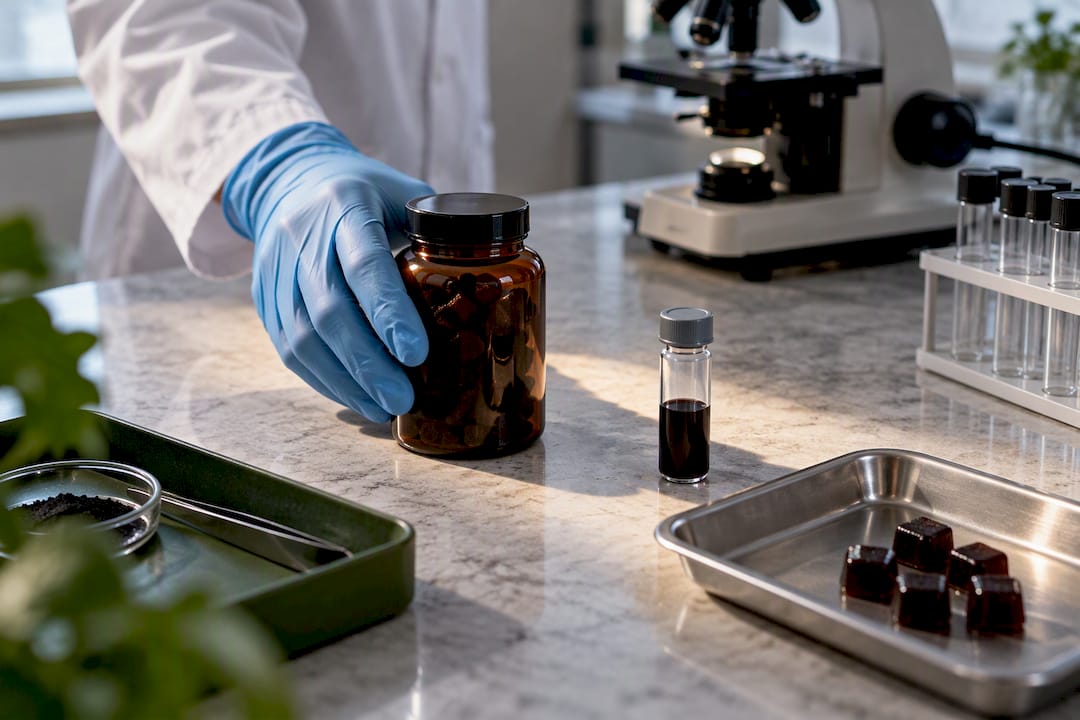
Australia-focused look at shilajit gummies: what human trials actually show, how 500 mg/day dosing compares, and why batch COAs and TGA safety checks matter.