

Uncategorized
Shilajit in Pregnancy: Why Doctors Advise Against It and What to Do
Avoid shilajit while pregnant or breastfeeding. No controlled trials, contamination risk, and one case links use to high blood pressure. Inform your…
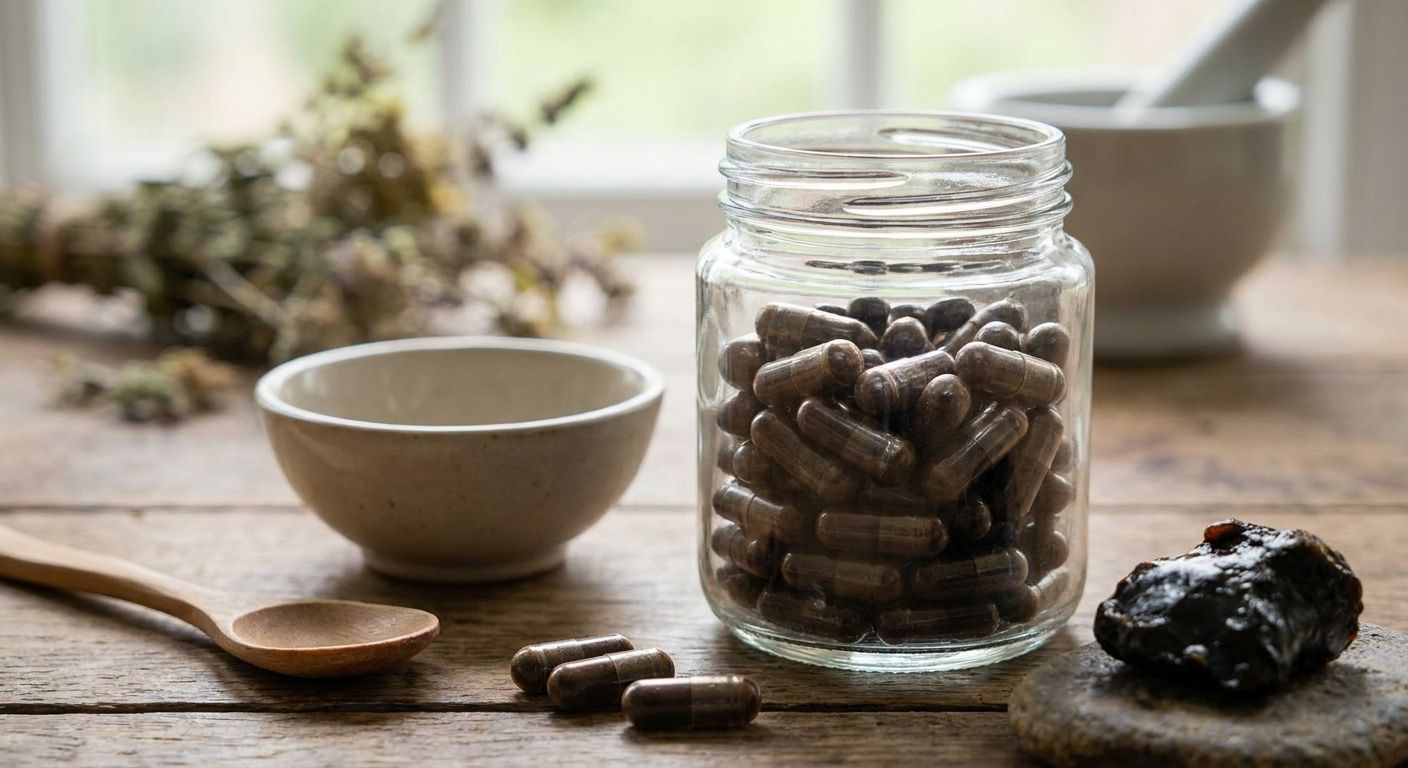
If you gag at the earthy, tar-like taste of shilajit resin but still want the fulvic acid and mineral profile it delivers, shilajit capsules solve the problem by sealing the extract inside a shell that never touches your tongue.
Resin works, but plenty of people never get past the first dose because the taste is genuinely off-putting — bitter, mineral-heavy, and lingering. That’s not a small barrier: if you can’t tolerate taking something daily, you won’t take it consistently enough to notice the energy or stamina benefits shilajit is known for. Shilajit capsules exist specifically to remove that barrier, and in 2026 they’re one of the fastest-growing formats among Australian buyers who tried resin once and never went back to it.
The catch is that not every capsule on the market is built the same way. Shell type, fill weight, and filler content all affect whether you’re actually getting a usable dose or just a convenient-looking product.
This guide is for someone who has already tried — or actively avoided — shilajit resin because of the taste, and wants a format that delivers the same mineral and fulvic acid content without the daily grimace. That includes busy professionals who don’t want to stir resin into warm water at their desk, people who’ve tried resin and physically can’t tolerate the flavour, and anyone who wants a grab-and-go supplement rather than a ritual. If you actually enjoy the resin process, this guide isn’t for you — stick with the jar.
The shell is doing all the work of hiding the taste, so it needs to be intact and properly sealed — a capsule that cracks or leaks in the bottle defeats the point. Look for capsules described as fully sealed with no visible powder residue in the bottle, since loose powder around the shells usually means some capsules have already split.
Most shilajit resin labels recommend a pea-sized serving, generally cited across the category at roughly 300-500mg per day. A capsule product should state its per-capsule fill weight clearly so you can work out how many capsules match that same daily amount — if the label only says “proprietary blend” with no milligram figure, you can’t do that math.
A capsule shell makes it easy to hide bulking agents like maltodextrin or rice flour behind the shilajit name on the front label. Check the ingredient list on the back — it should read close to “purified shilajit extract” and the shell material, not a list of five other powders.
Shilajit resin gets tested for heavy metals and fulvic acid content before it’s sold, and capsules made from that same resin should carry the same certificate of analysis. A capsule brand that can’t point to batch-level testing is asking you to trust a sealed shell you can’t visually inspect, which is a bigger leap of faith than trusting a jar of resin you can see and smell.
Most capsules on the Australian market use a size 0 or size 00 shell, holding roughly 400-700mg of fill depending on the density of what’s inside. Size 00 is noticeably larger — fine for most adults, but worth checking if you’ve ever struggled to swallow bigger tablets.
Traditional capsule shells are made from gelatin, which is an animal product; vegetarian and vegan buyers need a plant-based (usually cellulose) shell instead. This isn’t listed consistently across every brand, so check the product page rather than assuming.
Here’s how to shortlist without wasting time on the wrong format.
The safe pick — start with the comparison. Shilajit Australia’s capsule comparison guide breaks products down by shell size and fill weight, which matters because most shilajit capsules sold in Australia use a size 0 or 00 shell holding roughly 400-700mg. Reading this before you buy anything saves you from picking on flavour claims alone, since a sealed capsule shell should already be tasteless by default. Buy — read this first.
The convenience pick — for desks, gyms and flights. If your resistance to resin is really a time-and-mess objection as much as a taste one, capsules built for busy professionals skip the pinch-and-dissolve step entirely. You get the same 300-500mg resin-equivalent serving in a swallow-with-water format, with nothing to stir into warm milk before a 9am meeting. Buy — the best fit if your day doesn’t have room for a ritual.
The stacker’s pick — for multivitamin users. If you already swallow two or three capsules with breakfast, adding capsules for people already taking a multivitamin who want more means one more capsule in an existing stack rather than a new taste to manage on top of everything else. Consider — a sensible add if your routine is already capsule-based.
The wildcard — tincture drops. Liquid tincture is often marketed as an “easy” alternative to resin, but because it’s a liquid extract you still taste it going down, just diluted. If avoiding the taste entirely is the actual goal, a tincture doesn’t solve that the way a sealed capsule shell does. Skip — it solves convenience, not taste.
| Option | Format | Prep needed | Taste exposure | Verdict |
|---|---|---|---|---|
| Capsule comparison guide | Capsule | None — swallow with water | None | Buy |
| Busy professionals capsules | Capsule | None | None | Buy |
| Multivitamin stacker capsules | Capsule | None, fits existing stack | None | Consider |
| Tincture drops | Liquid | Measure and swallow | Some, diluted | Skip |
Do shilajit capsules taste like the resin inside them?
No — a properly sealed capsule shell keeps the shilajit extract from ever touching your tongue, so there’s no bitter or mineral taste. The taste only becomes an issue if a capsule is cracked or you bite into it instead of swallowing it whole.
How many capsules equal a pea-sized resin serving?
It depends on the fill weight per capsule, since resin’s typical daily serving sits around 300-500mg. Check the milligram dose stated on the capsule label and divide the standard resin serving by that number to work out your daily count.
Are shilajit capsules as effective as resin?
A capsule made from the same purified extract at an equivalent milligram dose should deliver comparable fulvic acid and mineral content to resin. The difference is delivery format, not the underlying material, provided the capsule brand discloses its fill weight and testing.
Is shilajit resin or capsules better for daily energy in 2026?
Resin and capsules made from the same extract deliver similar mineral content, so the better choice comes down to consistency: whichever format you’ll actually take every day. For taste-averse users, capsules solve the compliance problem resin creates.
How much do shilajit capsules cost in Australia?
Pricing varies by dose per capsule and bottle size, so check current pricing directly on the product page before comparing brands. Cost per serving matters more than the sticker price on the bottle.
Are vegetarian shilajit capsules available in Australia?
Some brands use plant-based cellulose shells instead of gelatin, but this isn’t standard across every product. Check the listed shell material on the specific product page rather than assuming it’s vegetarian.
Can I take shilajit capsules on an empty stomach?
Many people take shilajit first thing in the morning, whether in resin or capsule form, though some prefer taking it with food if they notice any stomach sensitivity. There’s no taste-related reason capsules would need to be taken differently from resin.
Do shilajit capsules smell like resin even if they don’t taste like it?
A properly sealed capsule shouldn’t have a noticeable smell in the bottle. If you open a bottle and get a strong earthy odor, it usually means some capsules have cracked or the fill is exposed.
The taste-free effect isn’t a special “unflavoured extraction process” some brands claim to use — it’s simply what a properly sealed capsule shell does by default, because the extract inside never reaches your taste buds. You don’t need to hunt for a product labelled “flavourless” or pay more for one; you need a capsule with a stated milligram fill, a listed shell material, and batch testing behind it. Get those three things right and the taste problem is already solved before you swallow the first one. Connect with us on Pinterest for fresh ideas about natural energy and active living.
You have subscribed to our newsletter successfully.

Avoid shilajit while pregnant or breastfeeding. No controlled trials, contamination risk, and one case links use to high blood pressure. Inform your…
Australia-focused look at shilajit gummies: what human trials actually show, how 500 mg/day dosing compares, and why batch COAs and TGA safety checks matter.

Subscribe to our weekly newsletter and receive exclusive offers you love!!
You have subscribed to our newsletter successfully.