
Uncategorized
Shilajit in Pregnancy: Why Doctors Advise Against It and What to Do
Avoid shilajit while pregnant or breastfeeding. No controlled trials, contamination risk, and one case links use to high blood pressure. Inform your…


The best available clinical evidence, a small 90 day trial published in Andrologia, found a significant rise in total sperm count in infertile men taking purified shilajit. That is a real signal worth taking seriously, but it comes from one small trial, not a body of confirmed research. Semen values still get judged against WHO reference ranges, and guideline bodies including NICE and AUA/ASRM stop short of recommending shilajit as standard fertility treatment. Talk to a doctor before using it to treat infertility.
TL;DR:
- The only notable human trial reported a 61.4% increase in sperm count after 90 days of taking 100 mg of purified shilajit twice daily, but large-scale studies are lacking.
- Animal research shows shilajit can boost sperm production in rats, with potential mechanisms involving antioxidant effects and mitochondrial support in sperm cells.
- Verify shilajit quality through third-party heavy-metal testing and fulvic acid content, and avoid products with added testosterone boosters if fertility is the goal.
- Lifestyle changes, such as quitting smoking and avoiding heat exposure, are more reliably effective for improving sperm than supplements alone, requiring about three months to show results.
- Current guidelines do not recommend shilajit as standard treatment due to limited evidence, and consulting a healthcare professional is advised before use.
The trial most people cite when they ask about shilajit for sperm count is a 2010 study in Andrologia. Researchers gave 35 infertile men with oligospermia 100 mg of purified shilajit twice daily for 90 days, then compared semen analysis results against baseline. The outcomes were substantial for a supplement study:
Those figures sound impressive, and they are, within the limits of what a single trial can prove. Animal research adds some backing. A 2006 study in the Journal of Ethnopharmacology found that rats given shilajit showed dose-dependent increases in sperm count, along with measurable changes in the seminiferous tubules where sperm are produced. That gives the human trial some biological context rather than leaving it as an isolated result.
The gaps matter just as much as the gains. Thirty-five men is a small sample. Nobody has published a large-scale replication. Publication bias is a real concern with supplement research, positive results get submitted and printed far more often than null ones. And “shilajit” as a category covers wildly different preparations, so a trial using one purified extract does not automatically apply to whatever product ends up on a store shelf.
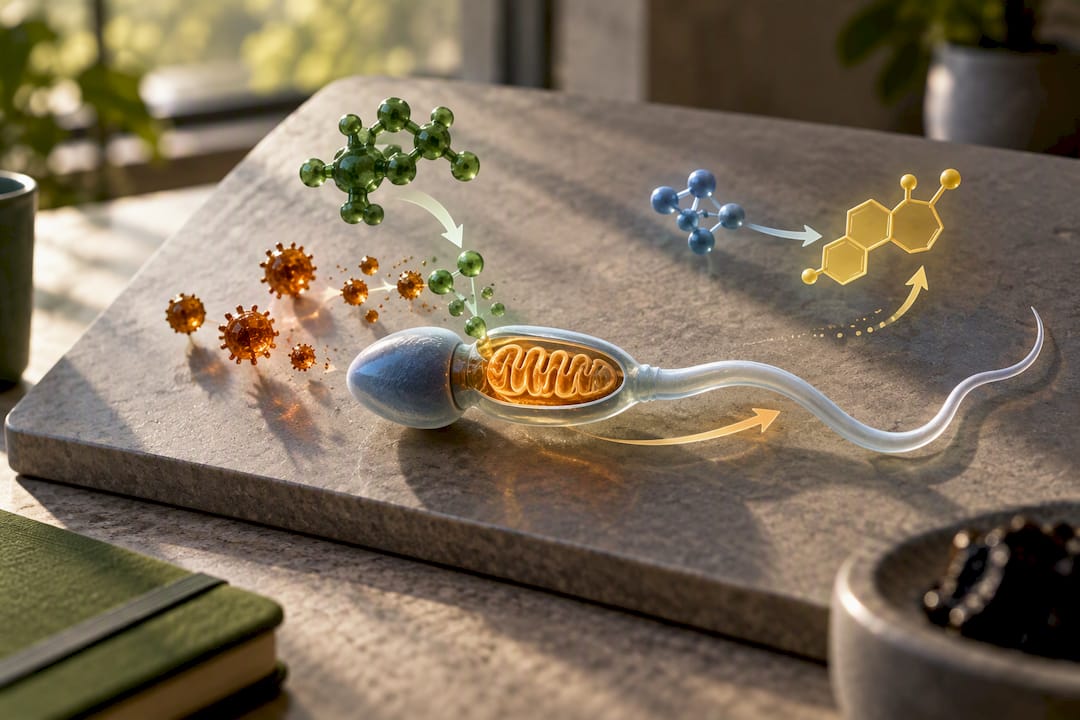
Fulvic acid is the compound researchers point to most often when explaining shilajit’s effects, and a review of shilajit’s chemistry describes it as the principal bioactive ingredient behind many claimed benefits. Its antioxidant activity may reduce oxidative stress in testicular tissue, which matters because oxidative damage is one of the more consistent culprits behind poor sperm quality. Some researchers also propose a mitochondrial support mechanism: healthier mitochondria in sperm cells could explain the motility gains seen in the 2010 trial. The modest rise in serum testosterone may partially drive the improvements in sperm production, since testosterone plays a direct role in spermatogenesis. None of this amounts to proof of mechanism, though. Composition varies by region and processing method, so a mechanism observed in a lab study on one extract will not necessarily hold for every product labeled shilajit.
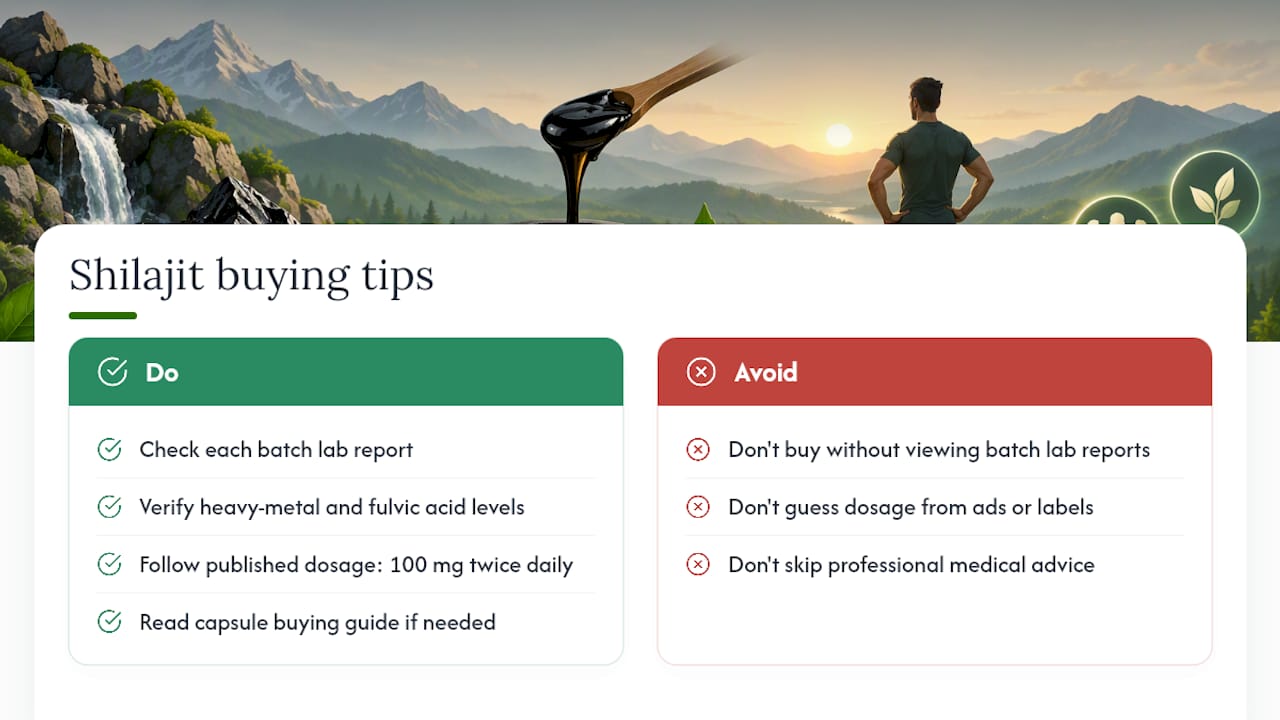
The Andrologia trial used 100 mg of purified shilajit twice daily for 90 days, which works out to 200 mg total per day. Commercial products come as raw resin, standardized capsules, or tinctures, and dosing recommendations vary by format, so check the label against the trial dose rather than assuming more is better.
Before buying, verify:
Skip any product that pairs shilajit with added testosterone boosters if fertility is the goal. Exogenous testosterone suppresses natural sperm production rather than supporting it, which is the opposite of what someone trying to conceive wants. Stop use and see a clinician if you notice unusual hormonal symptoms.
Pro Tip: Start with a low dose for the first week and watch for digestive upset or headaches before moving to the full trial dose. Your gut and your hormones both need time to adjust.
Sperm takes roughly 70 to 90 days to fully mature, which is exactly why the Andrologia researchers waited three months before retesting. Anyone trying shilajit for sperm count needs to plan around that same window rather than checking results after two weeks.
Lifestyle factors tend to move the needle more reliably than any single supplement, according to a 2024 review on male fertility:
Get a baseline semen analysis before starting anything, then repeat it after about three months, matching the interval Mayo Clinic recommends for meaningful comparison. Some men will see real improvement. Others will not, because low sperm count has many possible causes, and shilajit only addresses a fraction of them.
Professional guidelines have not caught up with the enthusiasm around shilajit. Both AUA/ASRM and NICE decline to recommend supplements, shilajit included, as standard infertility treatment, citing inconsistent and inadequate evidence. NICE specifically advises against offering supplements for sperm DNA integrity outside of formal trials.
The research gaps are straightforward: small trial sizes, formulations that differ from product to product, and no large randomized controlled trial confirming the 2010 results. Nutrition experts covering this space describe the evidence as preliminary rather than settled.
Some symptoms should send you to a specialist instead of a supplement aisle. Azoospermia, extremely low sperm counts, or a personal or family history suggesting hormonal or genetic issues all warrant targeted testing before trying anything on your own.
The honest read on shilajit for sperm count is this: one well-designed trial found a promising effect, and animal data backs up a plausible mechanism, but that is not the same as proof. We would rather see a man run a baseline semen analysis, talk to a fertility clinician about his specific numbers, then layer a tested shilajit product on top of the lifestyle changes with the strongest track record. Supplements work best as one part of a plan, not the whole plan.
— Shilajit
Shilajit products include purified Himalayan resin and capsules with known dosage and tested purity to help customers understand what is in the jar.
Every batch listed in the Shilajit product category comes with its own lab report covering heavy-metal screening and fulvic acid content, so you can check the numbers before you buy rather than after. Product pages spell out dosage guidance based on published research, including the 100 mg twice-daily pattern used in the Andrologia trial, so you are not left guessing how to translate a study into a daily routine. If you would rather start with capsules than raw resin, the capsule buying guide walks through the format differences before you commit. Ready to see a batch report for yourself? Open the current lineup and check the lab results attached to each listing before your next order.
This article is general information, not a substitute for advice from a qualified doctor. Consult a qualified healthcare professional about your own circumstances before acting on anything here.
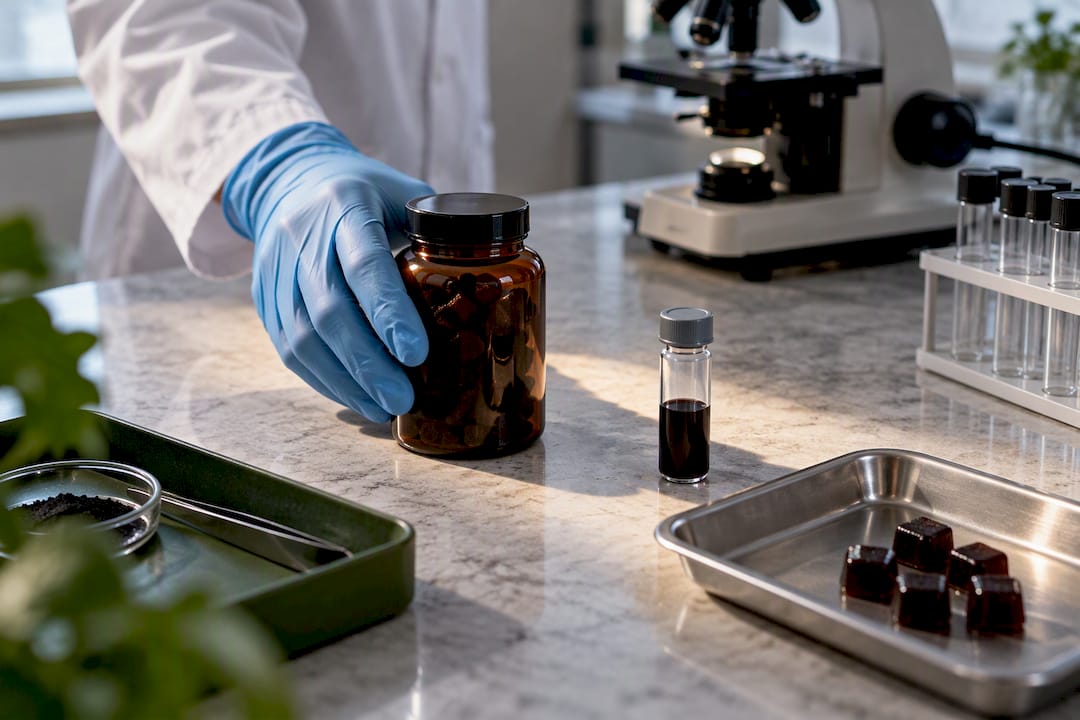
Shilajit sources Himalayan resin and processes it using traditional methods, then runs batch-specific lab testing for heavy metals and confirms fulvic acid content before it reaches a customer. That testing matters because raw shilajit collected without oversight can carry contaminants that no amount of traditional processing removes on its own. Every batch report and dosage guide is published on the product page rather than kept behind a request form.
…
Shilajit shows a promising signal for fertility in one clinical trial, where 35 infertile men saw meaningful gains in sperm count, motility, and testosterone after 90 days of use. That result has not been widely replicated, so treat it as encouraging rather than conclusive, and check with a doctor if you are actively trying to conceive.
There is no legitimate way to raise sperm count meaningfully in a very short time because sperm takes about 70 to 90 days to fully mature. The fastest realistic path combines proven lifestyle changes, quitting smoking, cutting alcohol, avoiding testicular heat exposure, with a consistent three-month timeline before retesting.
Shilajit currently has the strongest human clinical trial data of any single natural compound studied for sperm count, backed by a 61.4% increase reported in the Andrologia trial. Evidence for other herbs remains thinner or more mixed, so shilajit stands out mainly because of that one well-documented trial.
Beyond the fertility effects covered here, shilajit is used for energy support, cognitive focus, and recovery, largely tied to its fulvic acid and mineral content. In the fertility-specific trial, it produced measurable gains in sperm count, motility, morphology, and testosterone over 90 days.
The clinical trial that produced the strongest results used 100 mg of purified shilajit twice daily, for a total of 200 mg per day, over 90 days. Commercial dosing varies by format, so match the product label to that trial dose rather than assuming a higher amount works better.
Avoid shilajit while pregnant or breastfeeding. No controlled trials, contamination risk, and one case links use to high blood pressure. Inform your…
Australia-focused look at shilajit gummies: what human trials actually show, how 500 mg/day dosing compares, and why batch COAs and TGA safety checks matter.