Uncategorized
Shilajit in Pregnancy: Why Doctors Advise Against It and What to Do
Avoid shilajit while pregnant or breastfeeding. No controlled trials, contamination risk, and one case links use to high blood pressure. Inform your…

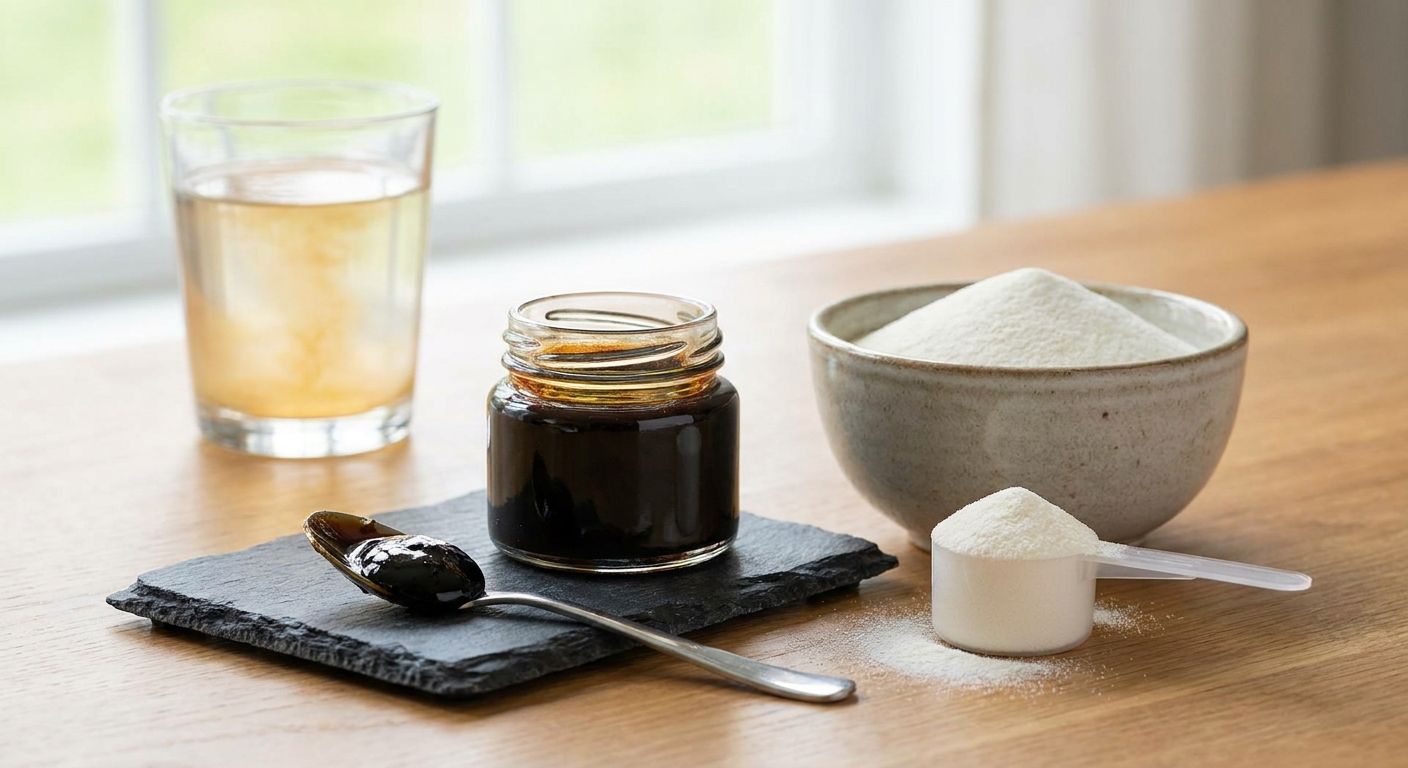
If you already take a collagen supplement for skin, joints or recovery, shilajit resin is the next logical add — it delivers fulvic acid and trace minerals that support the same connective tissue and energy systems collagen targets, without duplicating what collagen already does.
Collagen supplements rebuild the protein scaffolding in skin, joints and tendons, but collagen synthesis needs cofactors — minerals and trace elements the body uses to actually process that protein. This is where shilajit with fulvic acid earns its place next to a collagen scoop: fulvic acid is a natural chelator that helps the body absorb minerals more efficiently, and pure Himalayan resin carries 85+ of them.
Collagen users chasing skin elasticity, joint comfort or post-workout recovery are stacking two supplements that solve different problems. Collagen without adequate mineral cofactors is a common reason people say it “isn’t working” after a few months in 2026 — the raw material is there, but the supporting nutrients aren’t always.
This guide is for someone already buying a collagen powder or capsule — for skin, joint mobility, or gym recovery — who wants a second, complementary supplement rather than a replacement. You’re not choosing between shilajit and collagen; you’re deciding how to combine shilajit resin into a stack you’ve already committed to. If you’re still deciding whether to start collagen at all, this isn’t your starting point.
Fulvic acid is the compound that makes shilajit resin more than a mineral supplement — it acts as a delivery vehicle, helping the body take up nutrients at the cellular level. A resin with genuine fulvic acid content does more heavy lifting for a collagen stack than one that’s mostly filler minerals.
Pure Himalayan shilajit resin typically carries 85+ trace minerals, and these are the cofactors collagen synthesis quietly depends on — zinc, copper and manganese all play a role in how the body builds and maintains connective tissue. Skimping here means your collagen scoop is working with less support than it needs.
Shilajit is a mineral pitch pulled from mountain rock, and untested resin can carry heavy metals at levels nobody wants sitting next to a daily supplement. Lab-tested, authentic resin is non-negotiable if you’re already layering multiple supplements into a daily routine — you want fewer unknowns, not more.
Resin gives you dose control down to the pea-sized serve, which matters when you’re already tracking a collagen scoop, a protein shake, or other supplements. Capsules and gummies are more convenient but less flexible if you want to fine-tune dose against how your body responds.
Shilajit resin is best taken on an empty stomach, ideally first thing in the morning, dissolved in warm water or coffee. Collagen is more flexible on timing, so the practical move is to anchor shilajit resin to your morning and let collagen slot in later — added to a shake, smoothie, or afternoon coffee — rather than trying to take both at once.
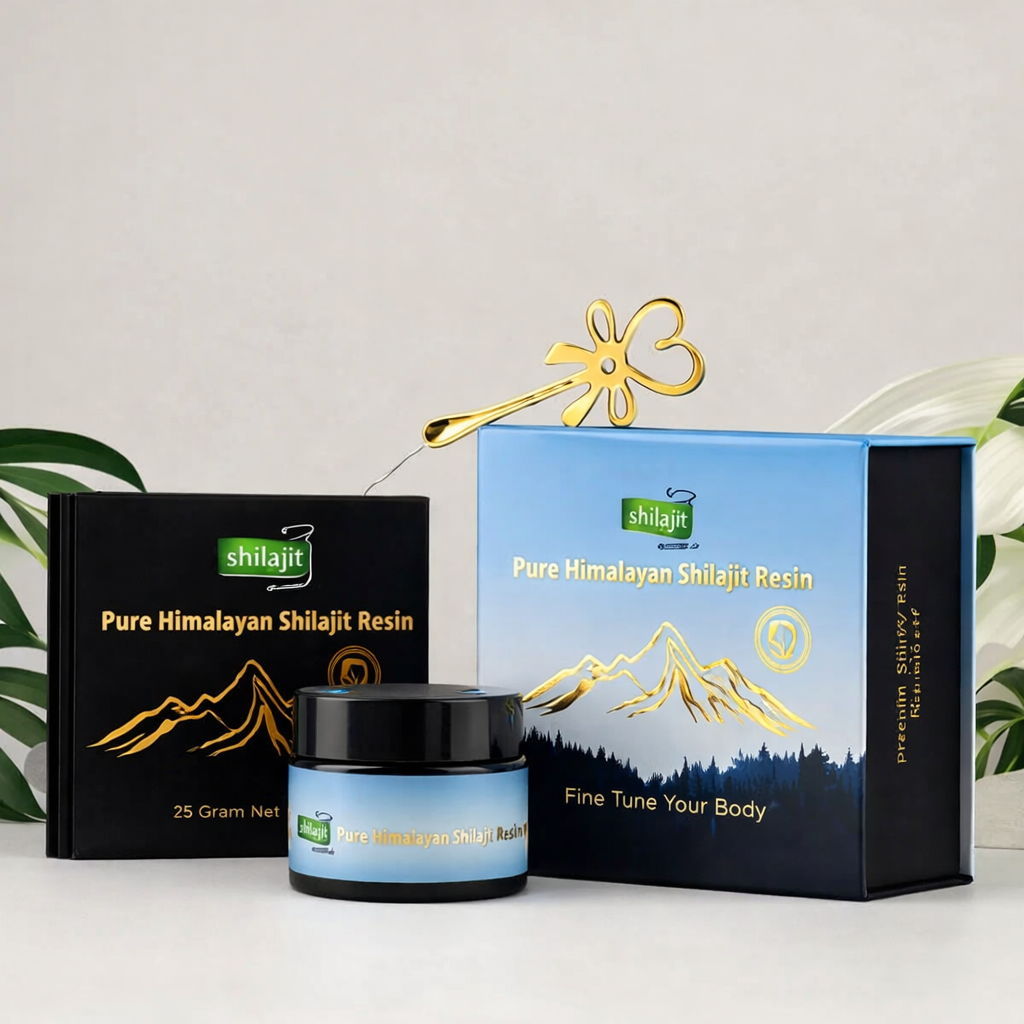
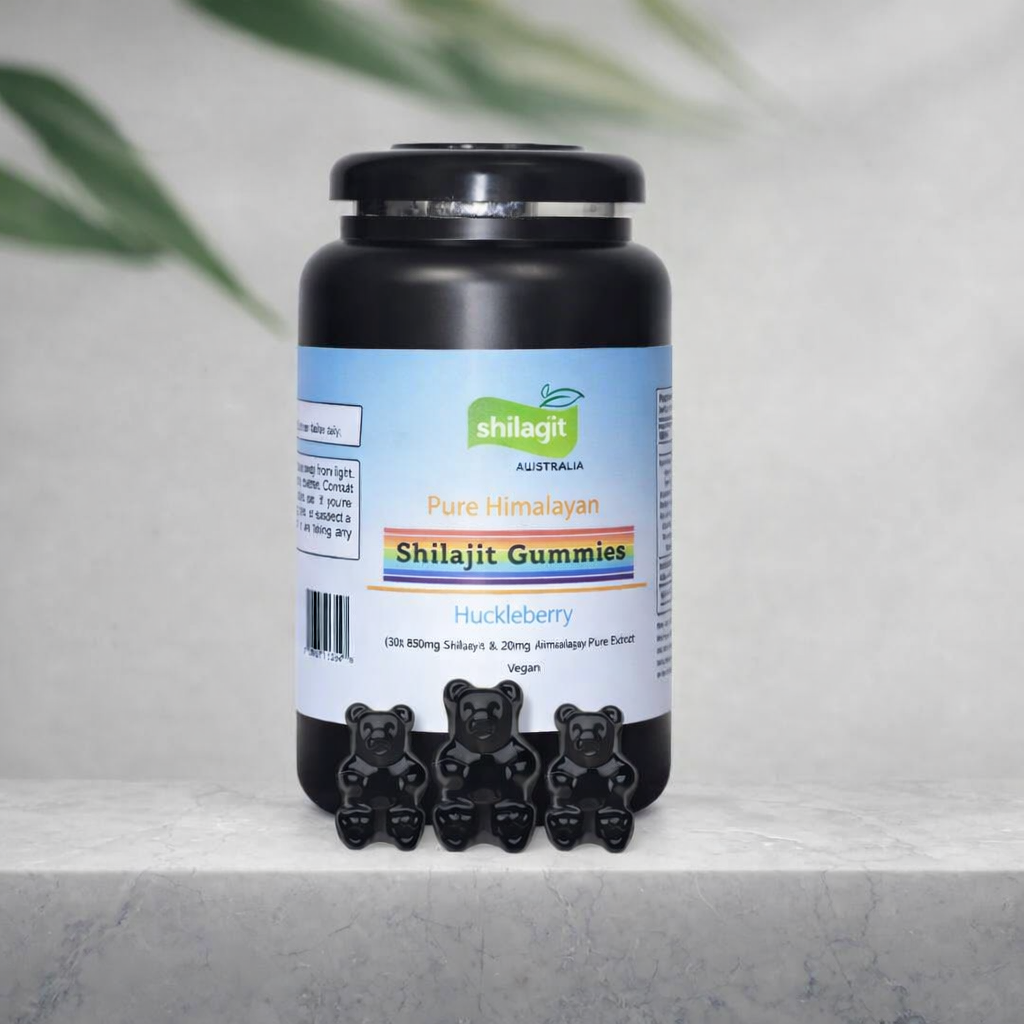
The absorption pick. If your priority is getting the most out of every dose next to a collagen scoop, the technique matters as much as the product. The how-to guide for maximum absorption covers dissolving resin properly rather than swallowing it cold, which changes how much fulvic acid actually gets absorbed. One spec that matters: resin should fully dissolve in warm (not boiling) water within a minute or two — if it doesn’t, it’s cut with fillers. Buy.
The joint and skin support pick. Collagen users chasing joint comfort alongside skin elasticity should look at shilajit resin for joint pain and mobility, which pairs naturally with collagen’s role in cartilage and connective tissue. The overlap here is real — both are working on the same tissue, from different angles. Buy.
The everyday stamina pick. For collagen users who take it mainly for energy and general wellness rather than joints or skin, a standard daily resin routine works without extra complexity — the trace mineral load (85+ minerals) is the same regardless of your primary goal. Consider this if energy, not skin or joints, is your main reason for stacking.
The beginner-friendly pick. If you’ve never taken shilajit resin before and only just started collagen, don’t jump straight to a high-dose stack. Start with a smaller jar, a pea-sized dose, and build up over two to three weeks before treating it as a permanent daily habit. Consider, not Buy, until you’ve confirmed how your body responds.
“Collagen gives the body raw material; shilajit resin gives it the minerals to actually use it.”
| Pick | Format | Best for | Verdict |
|---|---|---|---|
| Absorption-focused resin | Resin, dissolved in warm water | Maximising fulvic acid uptake | Buy |
| Joint and skin resin | Resin, daily dose | Collagen users targeting joints/skin | Buy |
| Everyday stamina resin | Resin, standard dose | General energy alongside collagen | Consider |
| Beginner starter jar | Small resin jar, pea-sized dose | First-time shilajit users | Consider |
| Untested bargain resin | Unknown | Nobody | Skip |
Can you take shilajit resin with a collagen supplement?
Yes, shilajit resin and collagen supplements are commonly taken together in 2026 because they work on different systems — collagen supplies amino acids, shilajit resin supplies fulvic acid and trace minerals. Take resin in the morning on an empty stomach and add collagen to a shake or coffee later in the day.
Is shilajit the same as collagen?
No, shilajit is a mineral-rich resin from the Himalayas, while collagen is a protein. They’re not interchangeable — shilajit resin supports mineral uptake and energy, while collagen supplies the amino acids used to rebuild skin, joints and connective tissue.
How much shilajit resin should I take alongside collagen?
A pea-sized dose, roughly 300-500mg, is the standard starting point for shilajit resin regardless of what else you’re taking. Increase gradually over two to three weeks rather than starting at a full dose on day one.
Does shilajit help skin the way collagen does?
Shilajit resin doesn’t supply collagen protein directly, but its trace minerals and fulvic acid support the cofactors involved in collagen synthesis. It’s a support act for skin health, not a replacement for a collagen supplement.
What is fulvic acid and why does it matter next to collagen?
Fulvic acid is a natural compound in shilajit resin that acts as a mineral carrier, helping the body absorb nutrients more efficiently. Next to a collagen supplement, it helps deliver the mineral cofactors collagen synthesis depends on.
How much does shilajit resin cost in Australia in 2026?
Pure Himalayan shilajit resin from Shilajit Australia runs from roughly $1.50 to $2.40 per gram in 2026 depending on jar size, with a 25g jar priced at $69.99. Larger jars generally bring the per-gram cost down.
Is it safe to stack shilajit resin with other supplements besides collagen?
Lab-tested shilajit resin is generally safe alongside most daily supplements, but check total mineral intake if you’re also taking a fortified multivitamin or mineral-heavy collagen blend. When in doubt, space doses across the day rather than taking everything at once.
Most people troubleshoot a stalled collagen routine by switching collagen brands. The more useful fix in 2026 is checking mineral cofactors first — a resin with genuine fulvic acid content and a real 85+ trace mineral profile often does more for visible results than another collagen brand switch. Follow Shilajit Australia on Instagram for collagen insights, Shilajit education and supplement information.
Avoid shilajit while pregnant or breastfeeding. No controlled trials, contamination risk, and one case links use to high blood pressure. Inform your…
Australia-focused look at shilajit gummies: what human trials actually show, how 500 mg/day dosing compares, and why batch COAs and TGA safety checks matter.