
Uncategorized
Shilajit in Pregnancy: Why Doctors Advise Against It and What to Do
Avoid shilajit while pregnant or breastfeeding. No controlled trials, contamination risk, and one case links use to high blood pressure. Inform your…


New mums running on broken sleep and back-to-back feeds need energy that lasts through a 3am wake-up, not another coffee that wears off by 10am. This guide breaks down what to look for in shilajit for postpartum energy, which formats actually fit a newborn’s schedule, and where a lab-tested resin like the ones sold by Shilajit Australia fits into a realistic 2026 postpartum routine.
Postpartum fatigue isn’t ordinary tiredness — it’s disrupted sleep architecture stacked on top of physical recovery, and most new mums try to fix it with caffeine, which can spike anxiety and disturb the next nap window for both mum and baby. Shilajit resin is a mineral-based supplement, not a stimulant, which is why it gets searched heavily as an alternative to another flat white in 2026.
The catch is that postpartum bodies are more sensitive to new supplements, and breastfeeding adds a second person to consider with every dose. None of that rules shilajit out — it just means the buying decision needs more care than picking whatever’s cheapest on a marketplace listing.
This guide is for new mums, typically somewhere between two weeks and twelve months postpartum, who are dealing with fatigue that sleep alone isn’t fixing and who want a mineral-based option instead of stacking more caffeine. It’s also for partners buying on behalf of a nursing mum who want to understand format and dosage before ordering. If you’re pregnant rather than postpartum, this isn’t the right guide — talk to your obstetrician before starting any new supplement during pregnancy.
Shilajit is a raw mineral resin, and unpurified or untested versions can carry heavy metals like lead or arsenic. For a postpartum body already managing recovery — and potentially passing nutrients through breast milk — lab-tested purity isn’t optional, it’s the first filter. Check that any product you’re considering, including anything from Shilajit Australia, publishes lab results rather than just claiming “pure” on the label.
Fulvic acid is the compound that helps the body absorb the trace minerals in shilajit resin, and its presence is a decent proxy for how properly the resin was processed. A resin with a visible fulvic acid claim on the label is a stronger signal than one with vague “ancient Himalayan” marketing and no specifics.
This is the criterion most postpartum buying guides skip. If you’re holding a baby, feeding, or rocking a bassinet with one arm, a jar of sticky resin you need a spoon and warm water for is harder to manage than a gummy or a dropper bottle. Match the format to your actual day, not to whichever version looks most “authentic” in photos.
Most adults start shilajit resin at a pea-sized amount, roughly 300-500mg, dissolved in warm water once daily, and postpartum bodies do better starting at the low end of that range. Read how to take shilajit resin for maximum absorption before your first dose so you’re not guessing at serving size in week two postpartum.
Postpartum taste sensitivity is real, and shilajit resin has a strong, mineral, slightly bitter flavour that some new mums find harder to tolerate than they expected. If the smell or taste is a dealbreaker, a gummy format removes that friction entirely without changing what’s actually in the dose.
There’s no dedicated clinical data on shilajit and breastfeeding, so this isn’t a supplement to start without a conversation with whoever manages your postpartum care. A lab-tested resin reduces contamination risk, but it doesn’t substitute for medical clearance for a nursing mum.


Pure Himalayan Shilajit Resin 25 Grams — the classic pick. A single 25-gram jar priced at $69.99, this is the format that gives you the most control over how small your first dose is, which matters when you’re testing tolerance postpartum. It dissolves into warm water in under a minute, but it does require a free hand and a spoon. Verdict: Buy, if you can carve out two quiet minutes a day.
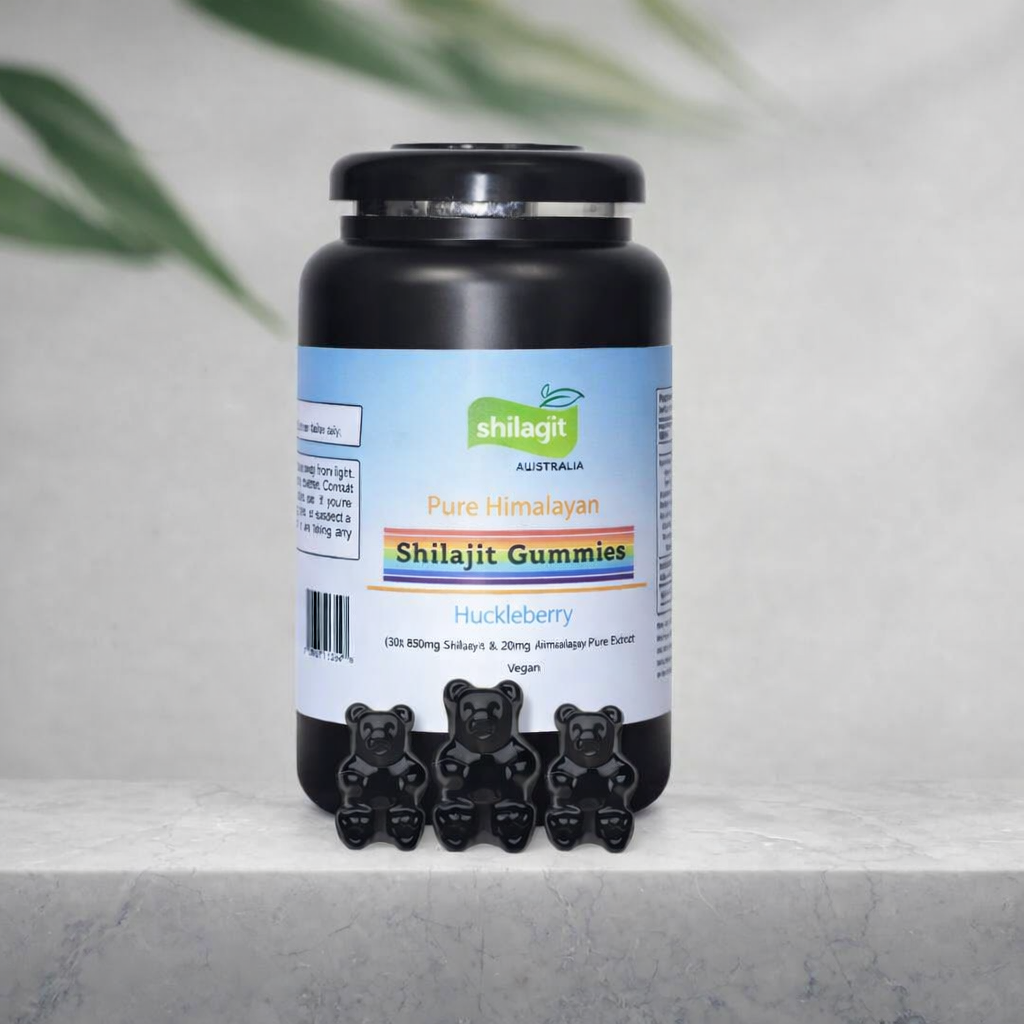
Shilajit Gummies (100 count) — the no-mess pick. At $89.55 for 100 gummies per bottle, this is the format built for one-handed dosing while you’re holding a newborn or mid-feed. No resin residue on your fingers, no taste aversion, and the count means roughly three months of daily use before reordering. Verdict: Buy for anyone prioritising convenience over customisable dose size.
All Natural Shilajit Tincture 50ml — the fastest pick. A 50ml dropper bottle at $68.55 that mixes into water or a bottle of milk in seconds, which suits a 3am feed better than measuring resin with a spoon in the dark. The tradeoff is a smaller total volume than the resin jars, so it suits lighter daily use rather than heavy stacking. Verdict: Consider if speed matters more than volume.
Pure Himalayan Shilajit Resin 25 Grams – Pack of 4 (100 gram) — the stock-up pick. Four 25-gram jars for $149.99 works out cheaper per gram than buying single jars repeatedly, and it means you’re not reordering during a sleep-deprived month three or four postpartum. It’s a bigger upfront spend, so it suits mums who’ve already confirmed shilajit resin agrees with them. Verdict: Consider once you’ve tested a smaller jar first.
| Product | Format | Price | Best For | Verdict |
|---|---|---|---|---|
| Pure Himalayan Shilajit Resin 25 Grams | Resin, dissolve in water | $69.99 | Full dose control | Buy |
| Shilajit Gummies (100 count) | Chewable | $89.55 | One-handed dosing | Buy |
| All Natural Shilajit Tincture 50ml | Liquid drops | $68.55 | Fast overnight mixing | Consider |
| Resin 25g Pack of 4 (100g) | Resin, bulk | $149.99 | Long-term stock-up | Consider |
If you’re still deciding between resin and a simpler starting point, shilajit resin for beginners covers the basics before you commit to a bulk jar.
Is shilajit safe to take while breastfeeding?
There’s no dedicated breastfeeding safety data on shilajit, so talk to your GP or lactation consultant before starting it in 2026. Lab-tested resin lowers contamination risk, but that doesn’t replace medical clearance for a nursing mum.
How much shilajit should a new mum take for energy?
Most adults start with a pea-sized amount, roughly 300-500mg, of shilajit resin dissolved in warm water once daily. New mums should start at the low end of that range and only increase with a doctor’s approval.
What’s the best time of day to take shilajit for postpartum fatigue?
Mornings work best for most people, ideally before the day’s first feed, since shilajit is a mineral supplement rather than a stimulant. Taking it early also avoids overlap with any evening caffeine that could affect sleep for both mum and baby.
Shilajit resin vs shilajit gummies, which is better for new mums?
Shilajit Gummies suit new mums who need one-handed, no-mess dosing while holding a newborn, while resin gives more control over dose size. Both come from the same purified source, so the choice comes down to lifestyle, not potency.
How soon does shilajit help with postpartum fatigue?
Response time varies by person and by how depleted mineral levels are after birth, so there’s no fixed timeline to expect. Consistency with a low daily dose matters more than the specific week you notice a difference.
Can shilajit support postpartum hormone balance?
Shilajit is often taken by women managing hormone-related energy dips, but it isn’t a treatment for postpartum hormone conditions. It shouldn’t replace medical care if you’re dealing with a diagnosed postpartum hormone issue.
Is it safe to combine shilajit with iron or magnesium supplements postpartum?
Shilajit contains fulvic acid and trace minerals, so stacking it with high-dose iron or other mineral supplements is worth checking with your GP first. Mineral overlap isn’t automatically dangerous, but a new mum’s full supplement stack deserves a professional review.
How should shilajit resin be stored so it stays fresh?
Keep shilajit resin sealed in its jar in a cool, dry spot away from direct sunlight and humidity — a kitchen cupboard works better than a bathroom shelf. Resin that turns runny or overly hard usually points to temperature swings rather than a quality problem.
The detail most new mums miss isn’t dosage, it’s taste tolerance — postpartum smell and taste sensitivity spikes for a lot of women, and shilajit resin has a strong, mineral, slightly bitter flavour that can catch you off guard in week three when it didn’t bother you in week one. If that’s you, switching to Shilajit Gummies keeps the same source material without the flavour fight, and it’s a one-line change to your routine rather than giving up on shilajit entirely.
Avoid shilajit while pregnant or breastfeeding. No controlled trials, contamination risk, and one case links use to high blood pressure. Inform your…
Australia-focused look at shilajit gummies: what human trials actually show, how 500 mg/day dosing compares, and why batch COAs and TGA safety checks matter.