Uncategorized
Shilajit in Pregnancy: Why Doctors Advise Against It and What to Do
Avoid shilajit while pregnant or breastfeeding. No controlled trials, contamination risk, and one case links use to high blood pressure. Inform your…


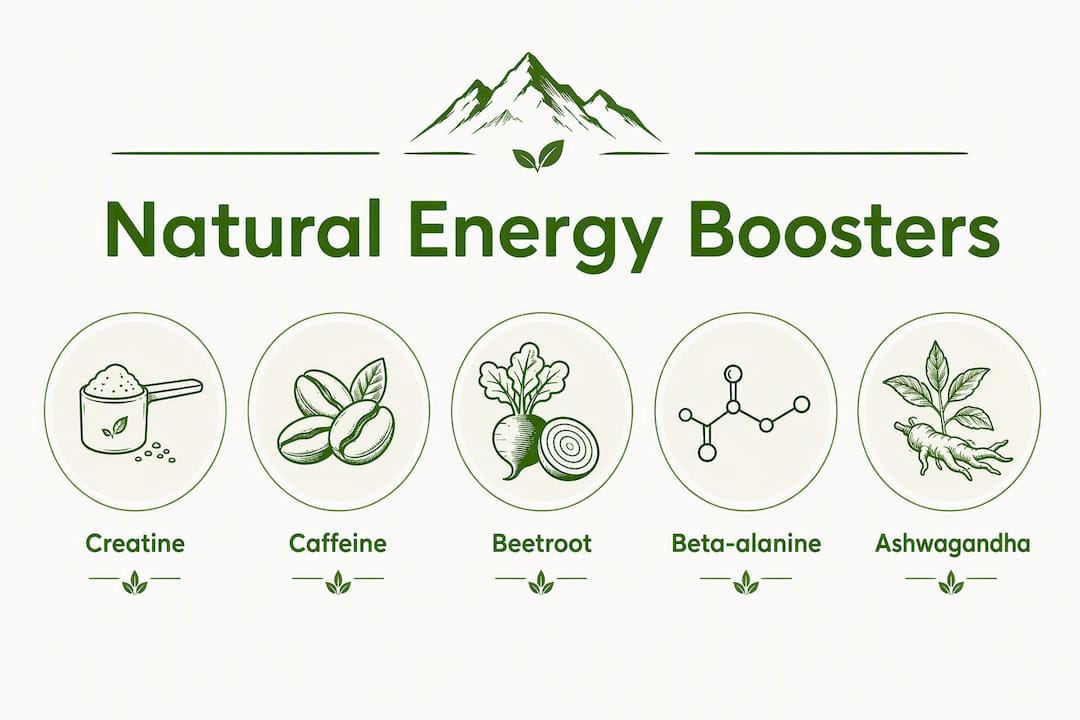
The most reliable natural energy boosters for training are creatine monohydrate, dietary nitrates from beetroot, caffeine, beta-alanine, and targeted micronutrients (B12, iron, magnesium), with adaptogens like ashwagandha and rhodiola rounding out the stack for stress-related fatigue. Himalayan Shilajit adds a complementary mineral and fulvic acid layer that supports baseline energy and recovery. No single compound does everything; the right choice depends on whether your priority is strength, endurance, or general fitness.
Quick shortlist by goal:
| Booster | Best for | One-line benefit | Timing window |
|---|---|---|---|
| Creatine monohydrate | Strength, power | Replenishes ATP for short-burst efforts | Daily (no acute window needed) |
| Beetroot/nitrates | Endurance | Improves blood flow via nitric oxide | 2–3 hours pre-workout |
| Caffeine | All training types | Reduces perceived effort and delays fatigue | 30–60 minutes pre-workout |
| Beta-alanine | High-intensity intervals | Buffers intracellular acid buildup | Chronic loading; daily dose |
| B12/Iron/Magnesium | Deficient individuals | Restores energy metabolism at the cellular level | Daily with food |
| Ashwagandha/Rhodiola | Recovery, stress fatigue | Lowers cortisol, supports perceived energy | Daily; morning or pre-workout |
| Himalayan Shilajit | General performance | Fulvic acid and mineral matrix support cellular energy | Daily; morning or pre-workout |
The ten boosters below each have a distinct mechanism, a defined evidence level, and a practical dose range. Matching the right one to your training goal is what separates useful supplementation from expensive guesswork.
Mechanism: Creatine replenishes phosphocreatine stores in muscle, accelerating ATP regeneration during short, explosive efforts. It is the most studied natural performance compound available.
Evidence: High. A well-cited review confirms 3–5 g daily as the effective maintenance dose, with benefits strongest for repeated sprint and strength work.
Dose and timing: 3–5 g per day. No acute pre-workout window is required; consistent daily intake matters more than exact timing. A loading phase (20 g/day for 5–7 days) speeds saturation but is optional.
Food vs. supplement: Red meat and fish contain small amounts, but reaching 3–5 g from food alone is impractical. Powder form is the standard.
Side effects: Mild water retention in muscle tissue during loading. Generally safe for healthy adults; those with kidney disease should consult a clinician first.
Mechanism: Caffeine blocks adenosine receptors, reducing perceived effort and delaying fatigue. It also increases adrenaline, which mobilizes free fatty acids for fuel.
Evidence: High. Effective across endurance, strength, and team sports.
Dose and timing: 3–6 mg per kilogram of body weight, taken 30–60 minutes before training. A 70 kg athlete lands in the 210–420 mg range. A strong coffee delivers roughly 80–100 mg; matcha provides a gentler 30–70 mg with added L-theanine, which smooths the stimulant edge.
Side effects: Anxiety, elevated heart rate, disrupted sleep if taken within 6 hours of bedtime. Avoid combining with other stimulants or if you have a heart arrhythmia.
Mechanism: Dietary nitrates from beetroot convert to nitric oxide in the body, widening blood vessels and improving oxygen delivery to working muscle. Clinical trials in cyclists and runners show measurable performance improvements, particularly in sustained aerobic efforts.

Evidence: Moderate to high for endurance; weaker for strength sports.
Dose and timing: Beetroot concentrate or juice taken 2–3 hours before exercise. Whole beetroot (roughly 200–300 g) works too, though concentrate is more consistent.
Side effects: Pink urine (harmless). Avoid high-dose nitrates if you take medications for erectile dysfunction or have low blood pressure.
Mechanism: Beta-alanine raises muscle carnosine levels, which buffer the hydrogen ions that accumulate during intense intervals and cause the burning sensation that forces you to slow down.
Evidence: Moderate to high for high-intensity efforts lasting 1–4 minutes. The effective loading range is 3.2–6.4 g per day, taken chronically over several weeks before meaningful effects appear.
Dose and timing: Split the daily dose into smaller servings (e.g., 1.6 g four times daily) to reduce the harmless but uncomfortable tingling (paresthesia) most users notice.
Side effects: Tingling/flushing, especially at doses above 800 mg at once. No serious safety concerns at recommended doses.
Mechanism: B12 is essential for red blood cell production and neurological function. It does not boost energy in people with adequate levels, but a deficiency causes fatigue that no amount of training can overcome.
Evidence: Supplementation corrects deficiency-related fatigue reliably. The NIH notes that vegans, older adults, and people taking metformin or proton pump inhibitors are at elevated risk of deficiency.
Dose: 2.4 mcg daily is the standard adult RDA; therapeutic doses for deficiency are higher and should be guided by a clinician. Test serum B12 before supplementing.
Food sources: Meat, fish, eggs, dairy. Fortified cereals and nutritional yeast for plant-based eaters.
Mechanism: Iron carries oxygen in hemoglobin. Low ferritin (the storage form) impairs aerobic capacity even before full anemia develops.
Evidence: Iron supplementation reduces fatigue in non-anemic women with low ferritin, per RCTs cited in sports nutrition literature. It does not help people with normal ferritin. The NIH recommends testing before supplementing, since excess iron is harmful.
Who to test: Women with heavy menstrual losses, endurance athletes, and anyone on a plant-based diet. Request a serum ferritin test, not just hemoglobin.
Side effects: Constipation, nausea, and, at high doses, organ damage. Never supplement iron without a confirmed low result.
Mechanism: Magnesium participates in over 300 enzymatic reactions, including ATP synthesis and muscle contraction. Heavy training increases magnesium losses through sweat.
Evidence: Corrects deficiency-related fatigue and muscle cramping. The NIH confirms that many Americans fall short of the RDA (310–420 mg/day for adults), making it one of the more common genuine gaps in active people.
Food sources: Dark leafy greens, nuts, seeds, whole grains, dark chocolate. Magnesium glycinate or citrate are well-absorbed supplement forms.
Side effects: Loose stools at high doses (magnesium oxide is the worst offender). Stick to glycinate or citrate forms at 200–400 mg/day.
Mechanism: Ashwagandha (Withania somnifera) is an adaptogen that modulates the hypothalamic-pituitary-adrenal axis, reducing cortisol output under chronic stress. An RCT showed effects on cortisol balance and perceived energy at clinical doses.
Evidence: Moderate. Typical clinical doses are 300–600 mg/day of a standardized root extract (KSM-66 or Sensoril are the most studied forms).
Timing: Daily use; morning or pre-workout. Effects build over 4–8 weeks.
Interactions: May potentiate sedatives and thyroid medications. Avoid during pregnancy.
Mechanism: Rhodiola acts on serotonin and dopamine pathways, reducing mental fatigue and improving stress resilience. Athletes report better perceived exertion during prolonged efforts.
Evidence: Moderate. Useful for stress-related fatigue and endurance performance; less evidence for strength gains. Dose range: 200–600 mg/day of a standardized extract.
Timing: Daily, ideally in the morning. Avoid taking late in the day as it can be mildly stimulating.
Interactions: Use caution with antidepressants (potential serotonin interaction) and blood pressure medications.
Mechanism: Shilajit is a mineral-rich resin sourced from high-altitude Himalayan rock formations. Its primary bioactive compound, fulvic acid, is thought to enhance mitochondrial function and facilitate mineral transport into cells. The dense trace-mineral matrix addresses micronutrient gaps that are common in heavy training.
Evidence: Limited but growing. Traditional Ayurvedic use spans centuries; modern research points to improvements in energy, testosterone levels, and recovery markers. Pair it with creatine or carbohydrate strategies as a complementary layer, not a replacement. For a direct comparison of Shilajit and ashwagandha in a training context, see Shilajit vs Ashwagandha for energy.
Dose and timing: A small serving (roughly 300–500 mg of resin) dissolved in warm water or milk, taken in the morning or 30–60 minutes before training. Daily consistency matters more than acute timing.
Purity note: Source only from suppliers who provide batch certificates of analysis (COAs), heavy-metal testing results, and a stated fulvic acid percentage. More on this in the E-E-A-T section below.
Timing is as important as ingredient selection, especially for sessions longer than 45–60 minutes where carbohydrate availability becomes a limiting factor. A practical framework breaks the pre-workout window into three zones:
2–3 hours before training: Eat a balanced meal with moderate protein, complex carbohydrates (oats, whole-grain bread, rice), and low fat. Take beetroot concentrate or juice here for maximum nitrate conversion. This window suits morning athletes who train mid-morning, or anyone with a midday session.
30–60 minutes before training: Switch to lower-fiber, easily digestible carbohydrates: a banana, rice cakes, or a sports drink. Take caffeine now (30–60 minutes is the absorption sweet spot). Avoid high-fat or high-fiber foods that slow gastric emptying and can cause GI distress mid-session.
Under 30 minutes before training: Fast-acting carbohydrates only: a gel, a small sports drink, or a ripe banana. If you forgot your pre-workout meal, this is damage control, not optimization.
Chronic vs. acute boosters: Creatine, beta-alanine, magnesium, B12, iron, ashwagandha, rhodiola, and Shilajit all work through chronic loading. Taking them once before a session does nothing meaningful. Build the habit of daily use and expect 2–6 weeks before the full effect appears.
Evening training note: Caffeine taken within 6 hours of sleep measurably reduces sleep quality, which undermines recovery more than any supplement can compensate for. Swap to decaf coffee or matcha for late sessions, or skip caffeine entirely and rely on carbohydrate timing instead.
Pro Tip: If you train first thing in the morning and cannot eat a full meal, dissolve your Shilajit serving in warm water with a small amount of honey 20–30 minutes before you start, then follow with a carbohydrate-rich breakfast within 30 minutes of finishing.
A Frontiers scoping review makes the case clearly: certain compounds are better matched to strength, others to endurance, and some benefit both. Matching your stack to your metabolic demands is the single biggest lever most athletes leave untouched.
Strength and power athletes (weightlifting, sprinting, CrossFit):
Endurance athletes (running, cycling, swimming, rowing):
Mixed-discipline and general fitness (functional training, team sports, recreational gym):
The principle here is straightforward: B vitamins, iron, and magnesium restore energy metabolism only when a deficiency or low-normal biomarker is present. Taking iron when your ferritin is already adequate does not improve performance; it increases oxidative stress and carries real health risks.
Test before you supplement:
Key drug and supplement interactions to know:
Populations who should consult a clinician before starting any new supplement:
Pro Tip: Target the metabolic bottleneck first. If your ferritin is low, fixing that will do more for your training than any pre-workout formula. Get the blood work, then build the stack.
Shilajit is a tar-like resin that forms over centuries as organic plant matter decompresses between Himalayan rock layers. Fulvic acid, its primary bioactive compound, is thought to improve mitochondrial efficiency and carry minerals across cell membranes. The trace-mineral matrix it delivers addresses the micronutrient gaps that accumulate during heavy training, particularly zinc, manganese, and copper, which standard pre-workout formulas rarely include.
The evidence base is still developing compared to creatine or caffeine, but the traditional use record is long and the safety profile at standard doses is well-established. Where Shilajit earns its place in a training stack is as a recovery and baseline-energy support layer, not as an acute performance booster. Think of it the way you think of magnesium or B12: it works by correcting an underlying gap, not by forcing a physiological response.
How to use it alongside other boosters:
Purity checklist: what to look for before buying:
Shilajit’s product pages include lab reports and purity certifications for each batch, along with usage instructions and recipe ideas for incorporating the resin into pre- or post-workout routines.
The most effective natural energy boosters for training are matched to your specific goal: creatine for strength, dietary nitrates for endurance, and daily micronutrient correction for anyone with a confirmed deficiency.
| Point | Details |
|---|---|
| Match boosters to your goal | Creatine suits strength; beetroot nitrates and beta-alanine suit endurance; carb timing benefits all training types. |
| Timing changes outcomes | Take beetroot 2–3 hours pre-workout; caffeine 30–60 minutes pre; chronic boosters (creatine, adaptogens, Shilajit) daily. |
| Test before you supplement iron or B12 | Supplementing without a confirmed deficiency wastes money and, for iron, carries real health risk. |
| Adaptogens need weeks, not days | Ashwagandha and rhodiola at 300–600 mg/day require 4–8 weeks of consistent use before effects become measurable. |
| Shilajit as a recovery layer | Daily Shilajit resin supports baseline cellular energy and mineral status, complementing creatine and carbohydrate strategies. |
Sleep, consistent caloric intake, adequate protein, and hydration do more for training performance than any supplement stack. That is not a disclaimer; it is the most useful thing you can know before spending money on anything in this article. Supplements are an optimization layer on top of fundamentals that are already working. When they are not, no amount of creatine or adaptogens closes the gap.
What the evidence actually supports is a stratified approach: identify your primary training demand, test the markers that matter for your demographic, correct any genuine deficiencies first, and then add one or two targeted boosters with a defined dose and a defined timeline for evaluation. Individual variability is real: age, sex, diet, medications, and training load all influence who responds to what. A woman with heavy menstrual losses will feel a bigger lift from correcting low ferritin than from any pre-workout formula. A plant-based strength athlete may get more from fixing B12 than from adding rhodiola.
The brands and products in this space vary enormously in quality. Purity testing, third-party COAs, and transparent ingredient sourcing are not marketing extras; they are the minimum standard for anything you put in your body consistently. That is the standard Shilajit holds its own products to, and it is the standard worth applying to every supplement you consider.
Most pre-workout formulas chase the acute hit: caffeine, beta-alanine, a pump ingredient. What they rarely address is the mineral and mitochondrial foundation that determines how well your body responds to training over weeks and months. That is exactly where Shilajit sits.

Shilajit’s pure Himalayan Shilajit resin is lab-tested for heavy metals and fulvic acid content, with batch COAs available on the product page. A small daily serving dissolved in warm water or added to a pre-workout drink takes under a minute and works alongside creatine, carbohydrate timing, or any other booster in your current stack. For those who want to explore the full range, including mushroom elixirs and pine pollen bundles, the complete store has everything in one place. If you are on medications or pregnant, check with your clinician before adding any new supplement.
Frontiers scoping review on functional factors for strength and endurance: A thorough review mapping specific ingredients to strength vs. endurance mechanisms, with clinical evidence summaries. The best single source for understanding stratified supplementation.
Tandfonline review on performance supplements: Covers creatine, beta-alanine, and dietary nitrates with dose ranges and effect sizes. Useful for anyone who wants the primary evidence behind the most popular natural boosters.
Pre-Workout Nutrition: What to Eat, How Much, and When — The Bodybuilding Dietitians: Practical, dietitian-authored guidance on timing windows and food choices for different pre-workout scenarios.
Superpower guide to supplements for energy: Covers adaptogens, B vitamins, iron, and CoQ10 with a strong emphasis on individualization and testing before supplementing.
NIH Office of Dietary Supplements: Iron: Primary source for iron RDAs, deficiency risk groups, and upper tolerable intake levels.
NIH Office of Dietary Supplements: Magnesium: RDA data, food sources, and supplementation guidance from the authoritative US government source.
NIH Office of Dietary Supplements: Vitamin B12: Covers deficiency risk groups, absorption issues, and recommended intakes.
Best vitamins and minerals for energy — Harvard Health: Accessible overview of how specific micronutrients support energy production, with a clear note that supplementing above adequate levels does not add benefit.
Avoid shilajit while pregnant or breastfeeding. No controlled trials, contamination risk, and one case links use to high blood pressure. Inform your…
Australia-focused look at shilajit gummies: what human trials actually show, how 500 mg/day dosing compares, and why batch COAs and TGA safety checks matter.