Uncategorized
Shilajit in Pregnancy: Why Doctors Advise Against It and What to Do
Avoid shilajit while pregnant or breastfeeding. No controlled trials, contamination risk, and one case links use to high blood pressure. Inform your…

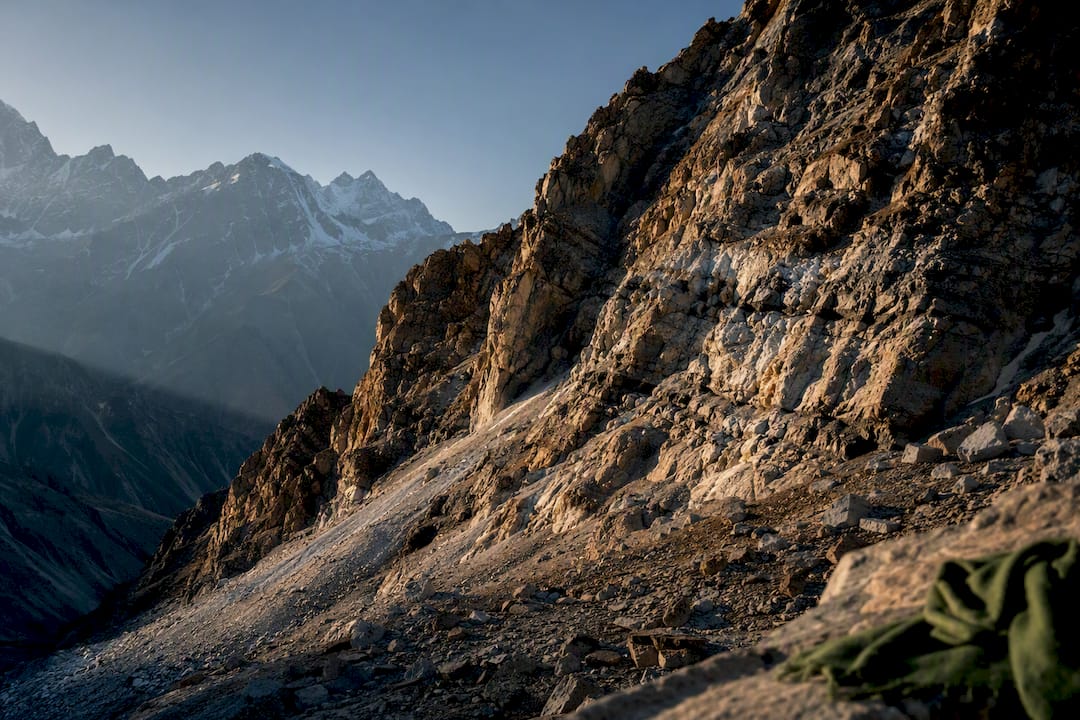
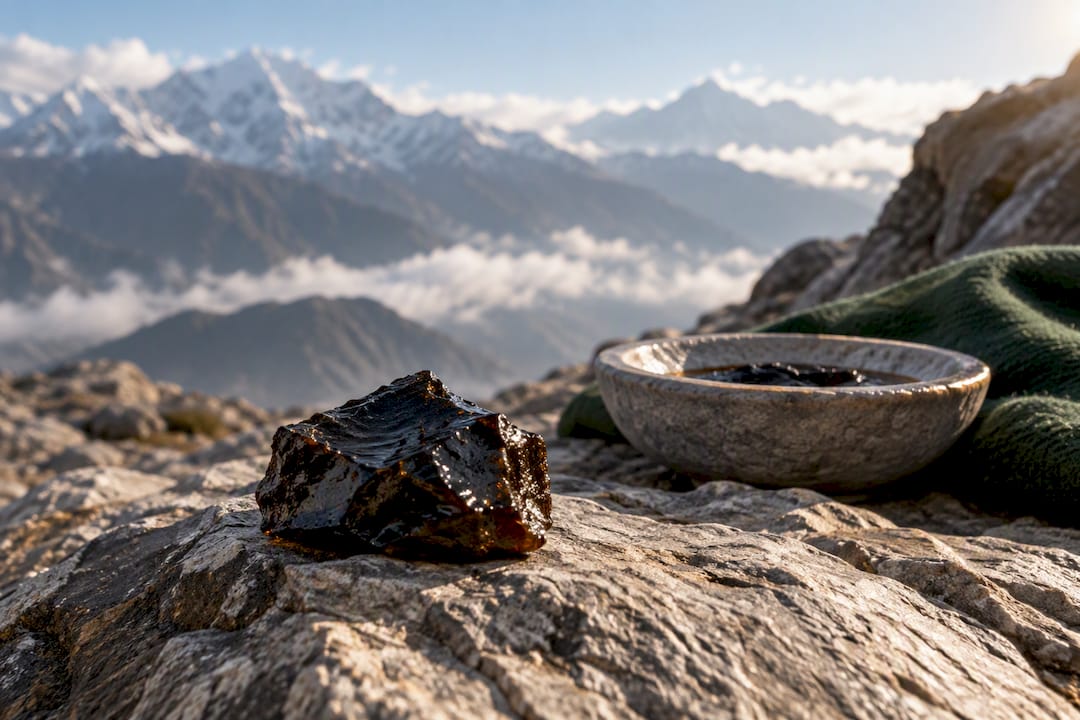
Shilajit forms in high mountain rock, most commonly across the Himalayas, the Altai Mountains, the Caucasus, the Karakoram, and the Pamir ranges, typically exuding from fissures at high altitudes in mountainous regions. Scientists still argue over exactly how it forms. The two leading theories involve slow plant decomposition and mineral exudation from rock strata, and neither fully closes the case. That unresolved chemistry is precisely why raw shilajit needs purification and lab testing before anyone consumes it.
TL;DR:
- Shilajit deposits are highly localized, forming only in specific high-altitude, sheltered rock fissures within regions like the Himalayas, Altai, Caucasus, and others.
- Its formation process is still debated, with scientific theories suggesting it results from both biological plant decomposition and geological mineral exudation, depending on the site.
- The chemical profile of shilajit varies by origin, especially in fulvic acid and trace minerals, which can serve as regional fingerprints verified through lab testing.
- Raw shilajit must undergo thorough purification, including heavy-metal screening, to remove contaminants, and reputable vendors should provide batch-specific certificates of analysis.
- Provenance and transparency are essential for quality, with genuine Himalayan sources supporting higher purity and safety standards.
Shilajit deposits cluster in specific high-altitude zones, not evenly across all mountains. According to Wikipedia’s compiled distribution data, reported sources include:
These ranges share a specific set of conditions. Britannica describes shilajit as a sticky, tar-like substance that seeps out of rock fissures and crevices in high, rocky terrain, generally within that 1,000 to 5,000 meter band. The rock needs to be porous enough to let organic material accumulate and compress over long stretches of time, but sheltered enough that wind and rain don’t strip it away before it consolidates. Steep cliff faces with narrow cracks and overhangs tend to hold onto deposits the longest.
That combination of altitude, shelter, and geology is uncommon, which explains why usable deposits are sparse rather than widespread. Wikipedia notes that reserves are limited and geographically patchy even within regions known to produce shilajit. A single mountain range might have only a handful of accessible exudation points worth harvesting, and most of a given slope will never produce anything at all. This scarcity is part of why sourcing claims matter so much when you’re evaluating a supplement, and it’s worth understanding before you look at how purity and origin get verified in a finished product.
No single theory fully explains shilajit’s formation, and that’s not a knowledge gap researchers are embarrassed about. It’s a genuinely hard problem, because the sites where shilajit forms are some of the least accessible spots on the planet.
Two competing models dominate the scientific literature:
A 2020 field study on Tibetan shilajit (locally called Zhaxun) mapped actual exudation points and found stratigraphic and lithology patterns that lined up with the geological model in that region, at altitudes between 2,000 and 4,000 meters. That doesn’t disprove the biological model elsewhere. It suggests both processes might be happening, depending on the specific rock formation and climate history of a given site. A phytocomplex review published in PMC treats shilajit as a plant-derived complex formed over centuries, while acknowledging that the exact mechanism remains debated.
Pro Tip: If a product description tells you with total confidence exactly how its shilajit “was formed millions of years ago,” treat that as marketing language, not settled science. Even the researchers mapping actual exudation sites describe the mechanism as still under investigation.
Part of the problem is access. Exudation points sit on steep, high-altitude rock faces that are difficult and sometimes dangerous to reach repeatedly for sampling. Systematic geological surveys are rare because getting equipment and researchers to 3,000 meters on a cliff face isn’t a weekend project. Until more of these sites get properly mapped and cross-referenced, the biological and geological camps will likely keep coexisting as complementary explanations rather than one replacing the other.
Shilajit’s chemical profile centers on a handful of consistent players, but their concentrations shift depending on where the material formed.
The PMC phytocomplex review singles out fulvic acid as the component most consistently studied, but measured concentrations differ meaningfully between samples from different mountain ranges. A resin pulled from a Himalayan fissure at 4,000 meters won’t necessarily match the mineral signature of one sourced from the Altai range, because the surrounding rock chemistry and local plant life aren’t identical.
This matters practically. Because shilajit forms under different geological and climate conditions across ranges, its trace-element and volatile profile can actually function as a kind of chemical fingerprint for origin when labs test it properly. That’s a meaningful point for anyone comparing products: a batch’s composition isn’t a fixed number you can quote across the whole category. It depends on where that specific resin came from, which is one reason fulvic acid content itself varies by source and shouldn’t be treated as a universal constant between brands.
Collectors don’t mine shilajit the way you’d extract ore. They scrape it, and only during a narrow seasonal window.
Britannica’s description of the substance softening in warm weather lines up with what collectors in these regions have reported for centuries: shilajit becomes collectible, not constantly available. A single mountainside might yield usable resin for only a limited seasonal period each year, which is part of why supply stays limited even in regions with confirmed deposits.
Raw shilajit scraped straight off a rock face is not something anyone should eat. WebMD’s consumer guidance is direct about this: because shilajit forms over hundreds of years absorbing whatever is in the surrounding rock and soil, it can also absorb contaminants, including heavy metals like lead, arsenic, and mercury.
Traditional Ayurvedic purification involves dissolving the raw resin in water, filtering out insoluble rock and plant debris, then reducing the liquid back down through controlled heating, sometimes repeated multiple times. Modern processing adds a layer traditional methods never had: laboratory screening for heavy metals and microbial contamination before a batch ever reaches a shelf. You can read more about how that purification process actually works if you want the mechanical detail.
Before buying any shilajit product, run through a short checklist:
Pro Tip: A supplier who can’t produce a batch-specific lab report on request usually can’t produce one at all. Treat “purity tested” as a claim, and a COA as the proof.
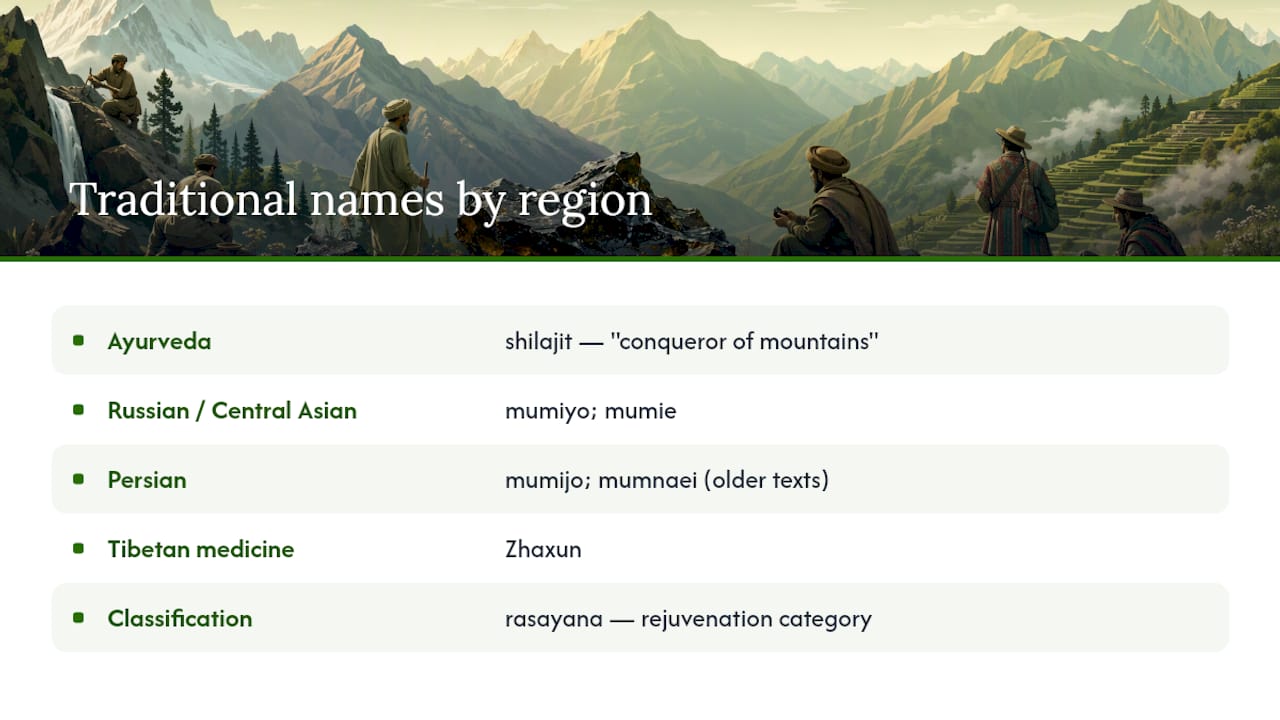
Shilajit carries different names depending on region and tradition, and the terminology itself tells you something about how long humans have been using it. In Ayurveda, it’s called shilajit, roughly translating to “conqueror of mountains” or “rock invincible.” In Russian and Central Asian traditions, it’s known as mumiyo or mumie; in Persian contexts, mumijo or mumnaei appear in older texts.
The PMC review on shilajit’s traditional applications describes its historical classification as a rasayana, an Ayurvedic category of substances believed to support rejuvenation and vitality over long-term use. Tibetan medicine holds a parallel tradition under the name Zhaxun. It’s worth being clear-eyed here: centuries of traditional use tell you people valued this substance enough to keep seeking it out across dangerous terrain. That’s cultural evidence, not clinical evidence, and the two shouldn’t get conflated.
Peer-reviewed work on shilajit is more cautious than most marketing copy suggests. The mapping study on Tibetan exudation sites found real stratigraphic correlations supporting a geological or mixed-origin explanation in that specific region, at altitudes consistent with other reported deposits worldwide.
Field mapping of exudation strata and surrounding lithology provides tangible geological evidence for non-biological or mixed-origin formation models in certain localities, helping account for consistent chemical signatures within a given region.
The broader phytocomplex literature keeps circling back to fulvic acid and humic substances as the compounds worth studying, while acknowledging that concentrations shift by source. What’s still missing is a larger, cross-regional mapping effort that could settle how much of shilajit’s formation is biological versus geological across different mountain systems. Until that exists, sourcing transparency remains the most practical thing a buyer can actually verify.
Understanding where shilajit forms, and how unsettled the science still is, shapes every sourcing decision we make. We treat provenance and batch-level lab testing as the baseline, not a bonus feature, because composition genuinely shifts with geology and altitude.
What that means in practice: transparent suppliers should tell you which region a batch came from and hand over a certificate of analysis without you having to ask twice. Traceability is the difference between a claim and a verified fact.
None of this replaces professional medical guidance. Shilajit’s history as a traditional rejuvenator is well documented, but if you’re managing a health condition or taking medication, talk to a doctor before adding any new supplement to your routine.
— Shilajit
Given everything above, geography and lab verification aren’t side notes. They’re the whole story of whether a shilajit product is worth your money. Some companies source their resin from Himalayan regions and provide batch-specific lab reports to verify product contents.
Our 50-gram pure Himalayan shilajit resin comes with the purity documentation this article just walked you through: heavy-metal screening, batch traceability, and a certificate of analysis you can actually check against the product in hand. If you’re still weighing formats or want to understand purity benchmarks before committing, our guide to Himalayan shilajit purity breaks down what a strong COA should include. Either way, don’t buy shilajit from anyone who can’t tell you which mountain range it came from. Explore our Pinterest for visual guides, shilajit insights, product information and helpful tips about natural supplements.
This article is general information, not a substitute for advice from a qualified doctor. Consult a qualified healthcare professional about your own circumstances before acting on anything here.
Avoid shilajit while pregnant or breastfeeding. No controlled trials, contamination risk, and one case links use to high blood pressure. Inform your…
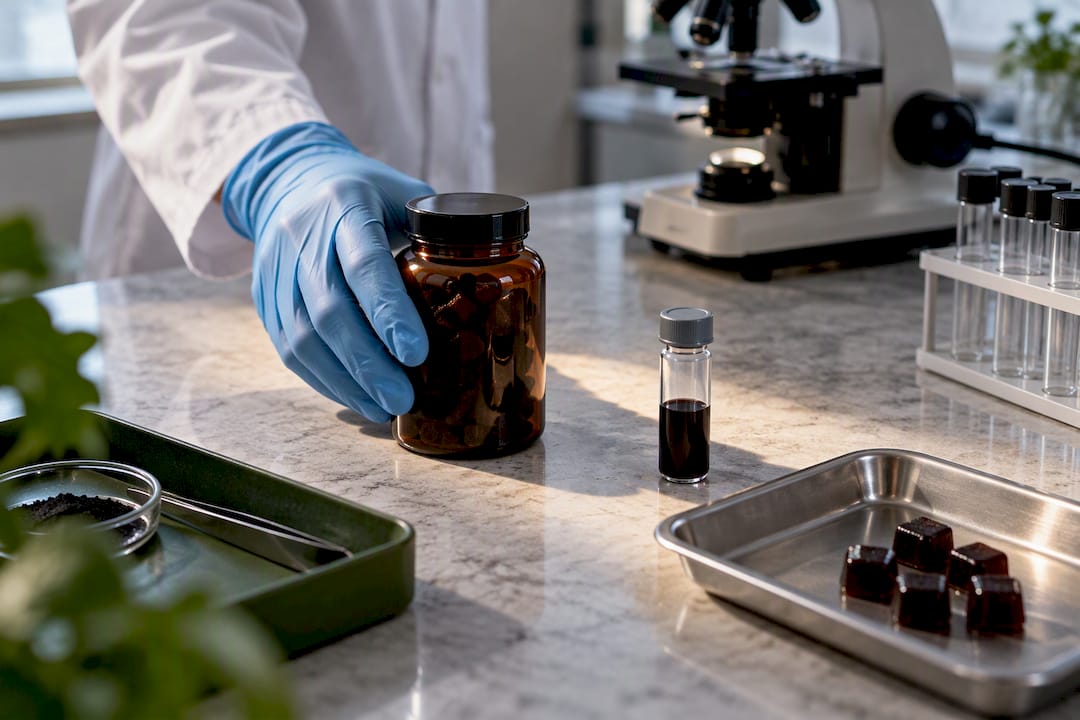
Australia-focused look at shilajit gummies: what human trials actually show, how 500 mg/day dosing compares, and why batch COAs and TGA safety checks matter.