
Uncategorized
6 Point Shilajit Lab Report Checklist for Australian Buyers
Verify Shilajit lab reports in Australia with a six point checklist. Spot fake COAs, check lab accreditation, lot match, analytical methods, and LODs.


An energetic wellness supplement is a dietary product, typically mineral- or herb-based, marketed to support energy, resilience, or what some brands call your “biofield.” Pure Himalayan Shilajit resin is one of the most recognized examples: a mineral-dense exudate harvested from high-altitude rock formations and used in Ayurvedic practice for centuries. Under U.S. law, these products are regulated as food, not drugs, which means no pre-market proof of efficacy is required before they reach store shelves.
That regulatory gap matters. Before you buy anything in this category, three checks should happen first:
The FDA regulates dietary supplements as food under the Dietary Supplement Health and Education Act (DSHEA). Manufacturers must notify the FDA of new ingredients but do not need pre-market approval for safety or efficacy. The burden of truthful labeling sits entirely with the manufacturer.
Pro Tip: When a product uses “frequency-enhanced” or “biofield-charged” language, treat that as a marketing descriptor, not a clinical claim. Prioritize the CoA over the copy.
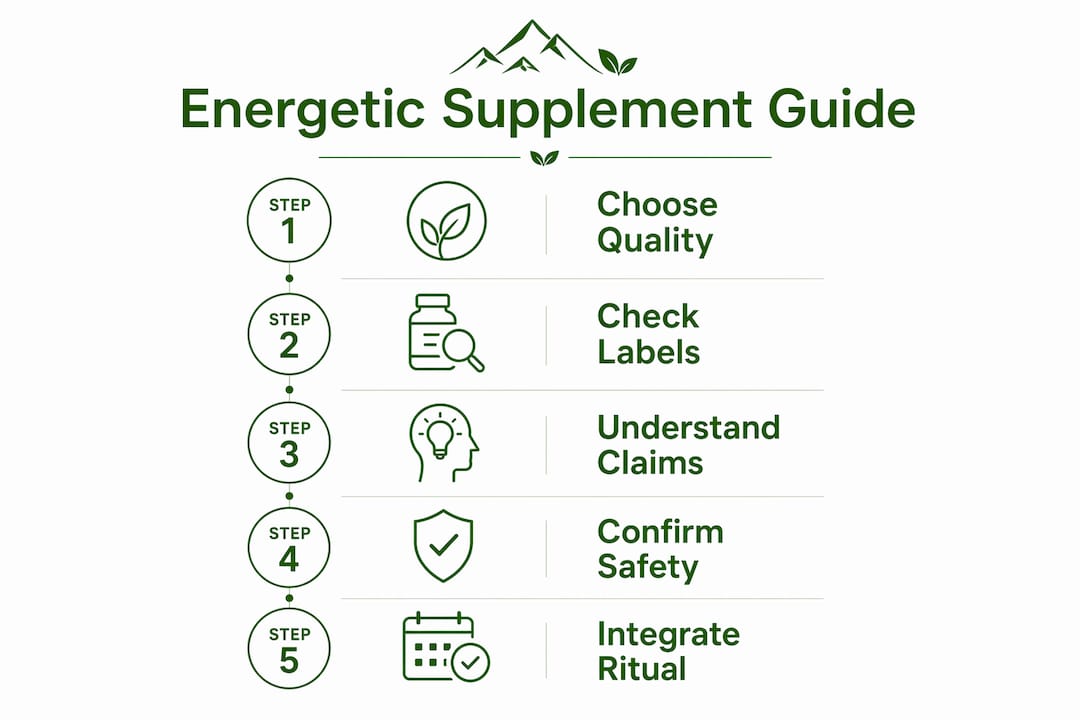
The “energetic” category spans a wide range of ingredients. Some are mineral concentrates; others are botanical adaptogens or functional mushrooms. Knowing the difference helps you read a label with real confidence.
Common ingredients:
Delivery format affects how much of an ingredient actually reaches your bloodstream. Resin dissolves readily in warm water or milk, which can support absorption. Capsules offer convenience but may use lower-grade powder. Tinctures provide rapid uptake. Gummies add palatability but often include fillers and lower active-ingredient concentrations.
| Ingredient category | Common form | Typical consumer claim | Third-party testing available? |
|---|---|---|---|
| Himalayan mineral concentrate | Resin, tincture | Energy, recovery, focus | Yes (CoA, heavy metals) |
| Adaptogenic botanical | Capsule, powder | Stress resilience, endurance | Yes (standardized extracts) |
| Functional mushroom | Elixir, capsule | Cognition, immunity | Yes (beta-glucan content) |
| Pollen/plant concentrate | Powder, capsule | Vitality, hormonal support | Limited |
| Leafy green concentrate | Powder, capsule | Nutrient density, antioxidants | Yes |

Pro Tip: On any label, look for “standardized to X%” next to a botanical extract. That phrase tells you the active compound is measured and consistent. “Proprietary blend” with no percentages is a red flag.
The most common marketing claims for energy-focused supplements include:
Some of these have genuine, if limited, trial support. The COSMOS-Mind trial (approximately 2,200 participants) found that daily multivitamin use over 1–3 years was associated with cognitive benefits equivalent to about three years less of cognitive aging. That is a meaningful finding. It is also a narrow one: the main COSMOS trial found no protection against cardiovascular disease or cancer.
Broader systematic analyses are less encouraging. A BMJ review found that while supplements can reduce the prevalence of nutrient deficiencies, trial evidence does not support recommending vitamins or mineral supplements to prevent non-communicable diseases in generally healthy people.
The “energetic” label adds another layer of complexity. Bio-energetic products often rely on frequency-enhancement or informational-imprinting claims that fall entirely outside conventional nutritional science and have no standardized regulatory evaluation pathway. There is no FDA definition for “frequency-charged,” which means the term carries zero verifiable meaning on a label.
Safety in this category is not a given. Because manufacturers don’t need to prove efficacy or safety before selling under DSHEA, the consumer carries most of the verification burden.
Key risks to know:
More than three-quarters of Americans take at least one supplement, yet the FDA does not approve dietary supplements or their labeling before they go to market. That scale combined with limited pre-market oversight means quality varies enormously across brands.
Third-party testing closes that gap. A batch-specific CoA from a competent analytical lab is the single most important document for high-value mineral concentrates like Shilajit. Widely recognized certifiers include USP, NSF International, and ConsumerLab. None of these imply FDA pre-approval; they verify that what is on the label is in the bottle, at the stated concentration, without dangerous contaminants.
Pro Tip: When reviewing a CoA, check three things: the batch number matches the product you received, the lab is named and independently accredited, and the results include heavy-metal limits (lead, arsenic, cadmium, mercury) with actual values, not just “pass.”
Follow this checklist before you purchase any energetic or Himalayan supplement:
For storage: keep resin in a cool, dry place away from direct sunlight. Tinctures are shelf-stable but degrade with heat. On cycling, most practitioners suggest a break after 8–12 weeks of continuous use to prevent tolerance and allow reassessment. Shilajit’s cycling best practices follow the same principle.
Pro Tip: Track dose, timing, and how you feel in a simple notes app for the first 2–4 weeks. Subjective data is still data, and it helps you separate supplement effects from sleep, diet, or stress changes happening at the same time.
Supplements support a healthy lifestyle; they do not replace one. Diet quality, sleep, exercise, and stress management drive the bulk of long-term wellness outcomes. A Himalayan mineral supplement taken alongside a poor diet and chronic sleep deprivation will not compensate for those deficits.
Three myths worth correcting directly:
A practical daily integration looks like this: dissolve a small amount of Shilajit resin in warm water or herbal tea each morning, alongside a nutrient-rich breakfast. That ritual supports consistency, which is where most of the real-world benefit comes from. You can find practical Shilajit recipes that make daily use straightforward.
Pro Tip: Energetic claims make the most sense when they support a ritual or mindfulness practice. If the routine helps you stay consistent with sleep, hydration, and diet, the supplement is doing its job, even if the “biofield” language is marketing.
Energetic wellness supplements are supportive dietary tools, not substitutes for medical care, and their safety depends entirely on verified sourcing and third-party lab testing.
| Point | Details |
|---|---|
| Regulatory status | Under DSHEA, supplements are regulated as food; no pre-market safety or efficacy proof is required. |
| Evidence limits | COSMOS-Mind found cognitive benefits from multivitamins; broader BMJ analyses show no cardiovascular or cancer prevention benefit. |
| Safety first | Request a batch-specific CoA verifying heavy metals, microbial limits, and potency before purchasing any mineral supplement. |
| Form affects absorption | Resin and chelated mineral forms generally absorb more efficiently than capsule powders or oxide forms. |
| Shilajit | Pure Himalayan Shilajit resin, batch lab-tested with a published CoA, is a well-documented option in this category when sourced transparently. |
The supplement industry has a transparency problem, and the “energetic” label makes it worse. Frequency-charging and biofield language are not regulated terms. They cannot be tested, verified, or compared across products. What they can do is distract a buyer from the one question that actually matters: does this product have a readable, batch-specific CoA from an accredited lab?
Himalayan mineral supplements like Shilajit sit in a genuinely interesting space. The traditional use record is long, the fulvic acid and mineral content are measurable, and the evidence base, while not large, is more grounded than most “energetic” marketing suggests. The problem is that the same category also contains products with no testing, no sourcing transparency, and no accountability.
The responsible path is straightforward: treat the CoA as the price of admission. Any brand that publishes batch-specific lab results, names its harvest origin, and provides clear dosing instructions has cleared the minimum bar. Any brand that leads with frequency claims and buries or withholds its lab data has not. That distinction is worth more than any marketing claim on the label.
Shilajit sources its resin directly from high-altitude Himalayan rock formations, processed using traditional methods and tested batch by batch for heavy metals, microbial limits, and potency. Every jar comes with a published CoA you can verify before you buy. No frequency claims, no hidden blends.
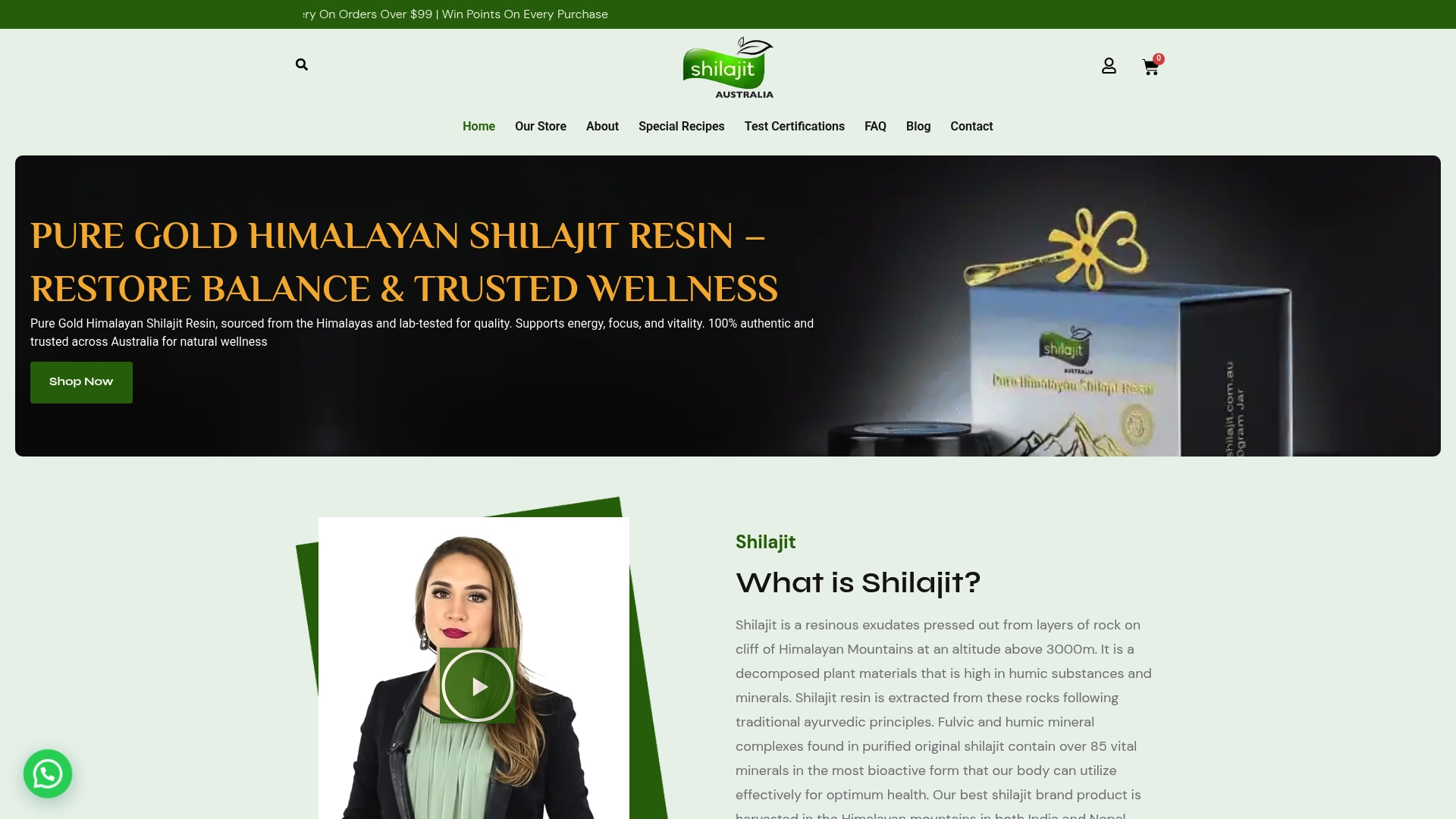
The product range covers pure Shilajit resin in 50-gram jars, mushroom elixir blends, and a Shilajit and pine pollen bundle for those who want complementary mineral and botanical support in one order. Detailed sourcing pages, usage instructions, and customer reviews are all on the product pages. Check the CoA first, then decide.
Verify Shilajit lab reports in Australia with a six point checklist. Spot fake COAs, check lab accreditation, lot match, analytical methods, and LODs.
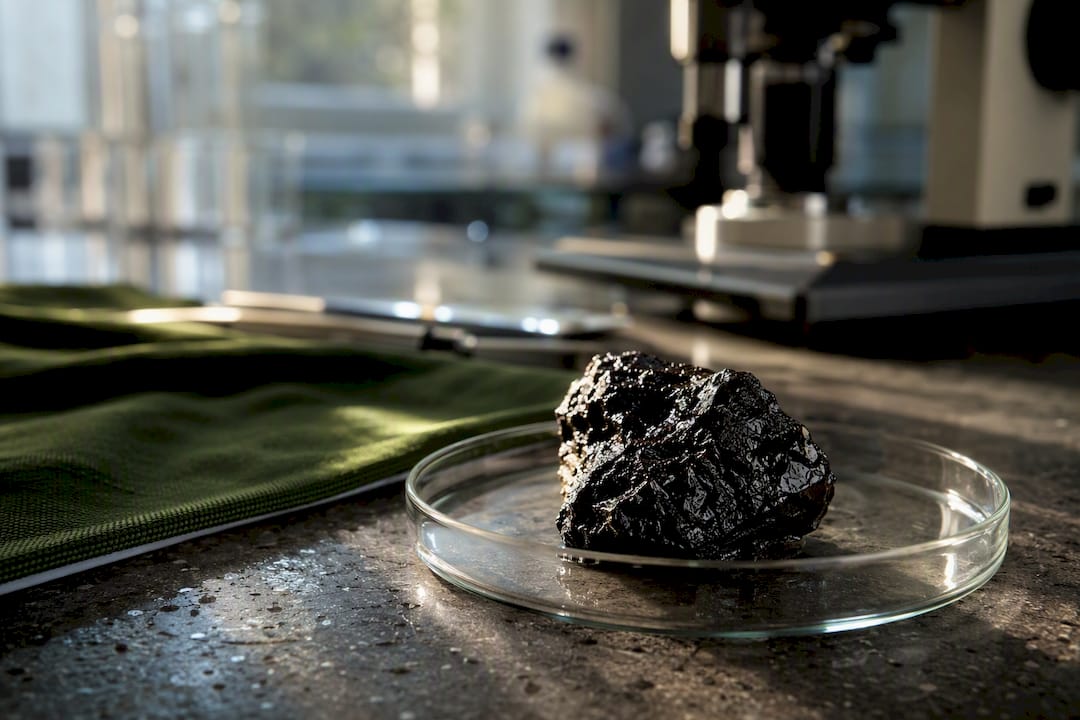
Learn to pick pure shilajit by reading the batch COA. Check fulvic acid range, named lab method, numeric heavy-metal results, and harvest altitude.