Uncategorized
6 Point Shilajit Lab Report Checklist for Australian Buyers
Verify Shilajit lab reports in Australia with a six point checklist. Spot fake COAs, check lab accreditation, lot match, analytical methods, and LODs.


Most people notice subtle shifts in energy or mental clarity within the first two to three weeks of daily shilajit use, but the changes that show up in blood tests and strength measurements take longer. Clinical trials measured real hormonal shifts at 90 days and strength retention at 8 weeks, using doses between 250 mg twice daily and 500 mg once daily. Give it a full 8 to 12 weeks of consistent dosing before deciding whether it’s working for you.
TL;DR:
- Significant hormonal and strength changes typically require 8 to 12 weeks of consistent daily dosing, with blood tests showing measurable improvements after this period.
- Early subjective effects, such as better sleep or increased energy, usually appear within the first two weeks but are not reliably tracked in studies until the full 8 weeks.
- Doses of 250 mg twice daily or 500 mg once daily have been shown in trials to produce measurable benefits, so matching these amounts is key for replicating results.
- The quality and purity of shilajit products are critical; only tested, lab-verified resin with clear sourcing should be used to ensure safety and efficacy.
- Variability in individual response depends heavily on baseline mineral and hormonal status, training level, age, and adherence to daily dosing.
Shilajit doesn’t work like caffeine. There’s no jolt 30 minutes after your first dose, and if you’re expecting one, you’ll be disappointed and possibly quit before the compound has a real chance to do anything. The active constituents, primarily fulvic acid and trace minerals, need to accumulate and interact with slow-moving biological systems like mitochondrial function and collagen turnover. Both take weeks to shift, not hours.
Here’s what tends to happen at each stage, based on how the clinical research lines up with what users commonly report.
Day 1: absorption, not transformation. Shilajit gets absorbed into your bloodstream fairly quickly, delivering minerals and fulvic acid compounds. But one dose isn’t going to move your testosterone or rebuild your mitochondrial efficiency. If you feel something on day one, it’s more likely psychological anticipation than physiological change.
Days 2 to 14: the early subjective window. This is where some people start noticing small things. Slightly better sleep, less midafternoon crash, a bit more mental sharpness. These reports show up consistently in user experience but are not something trials have reliably measured or isolated. Some of this window’s effect is plausibly tied to early mineral repletion, especially in people who were mildly deficient to begin with.
Weeks 4 to 8: the building phase. This is where mitochondrial adaptation and any performance-related changes start to compound. The 8-week randomized trial using PrimaVie® shilajit at 500 mg/day found improved retention of maximal muscular strength after a fatiguing exercise protocol, along with reduced baseline hydroxyproline in some participants, a marker tied to connective tissue breakdown. That’s the timepoint to watch if you’re training and want to see whether shilajit is doing anything measurable for recovery or strength retention.
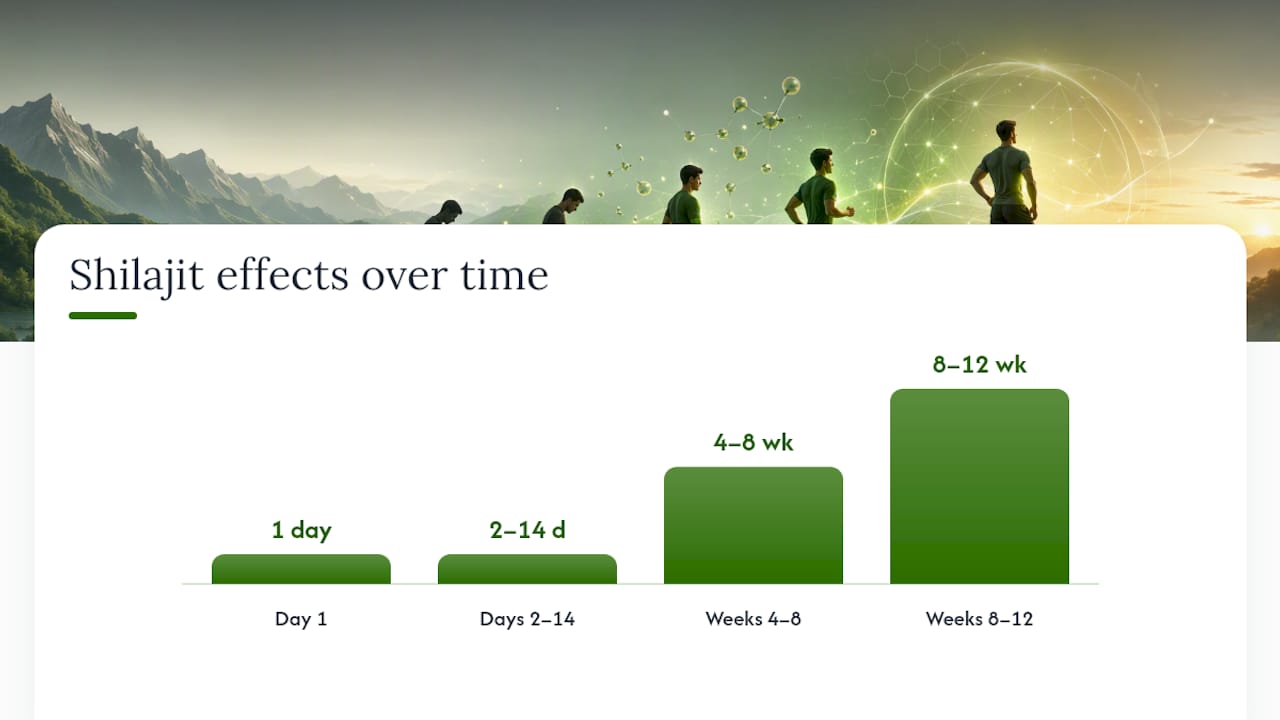
Weeks 8 to 12: the full-effect window. This is where the 90-day testosterone trial comes into play. Healthy middle-aged men taking 250 mg twice daily of purified shilajit saw significant increases in total and free testosterone and DHEAS compared to placebo. Hormonal systems move slowly. Endocrine adaptation of this kind typically needs a full quarter, not a few weeks.
Beyond 12 weeks: uncharted but promising territory. No randomized trial has tracked shilajit past 90 days, so anything beyond that point is informed extrapolation rather than proven fact. Many longtime users continue daily or near-daily use indefinitely, while others cycle it. Either approach is reasonable given the current evidence gap.
A few things to keep in mind as you move through these phases:
Two studies anchor most of what we know about shilajit’s timeline, and it’s worth understanding exactly what each one tested, because the details matter more than the headline claims.
The 8-week trial on muscular strength and fatigue used PrimaVie® shilajit at two dose levels, 250 mg/day and 500 mg/day, against a placebo group. Researchers put participants through a fatiguing exercise protocol and measured how well they retained maximal voluntary isometric contraction strength afterward. The 500 mg/day group showed better strength retention and a drop in serum hydroxyproline at baseline, a marker linked to collagen breakdown. It’s a solid trial, but the sample size was modest and the population skewed toward younger, physically active men, so the findings don’t automatically generalize to everyone.
Trials that ran only 45 days measured biochemical shifts like lipid or antioxidant markers, but shorter windows like these haven’t overturned the 8 to 12 week benchmark that the larger, better-designed trials point to.
The 90-day testosterone trial is the other pillar. It was double-blind and placebo-controlled, using purified shilajit at 250 mg twice daily in healthy middle-aged men. The endpoints were total testosterone, free testosterone, and DHEAS, all measured through blood work at the study’s close. The results showed statistically significant increases across all three markers versus placebo, which is meaningful because hormonal studies this clean are uncommon in the supplement world.
A handful of shorter studies, some running just 28 to 45 days, have looked at biochemical markers like lipid panels or antioxidant activity. They’re worth noting, but they can’t substitute for the 8 to 12 week evidence because hormonal and structural adaptations generally need more time to register on lab tests than a shorter metabolic marker might.
A few limitations apply across this body of research:
Health resources including Cleveland Clinic point out that most human studies on shilajit assess outcomes over weeks to months, and that early subjective reports of energy or clarity exist but haven’t been consistently captured in controlled trial designs.
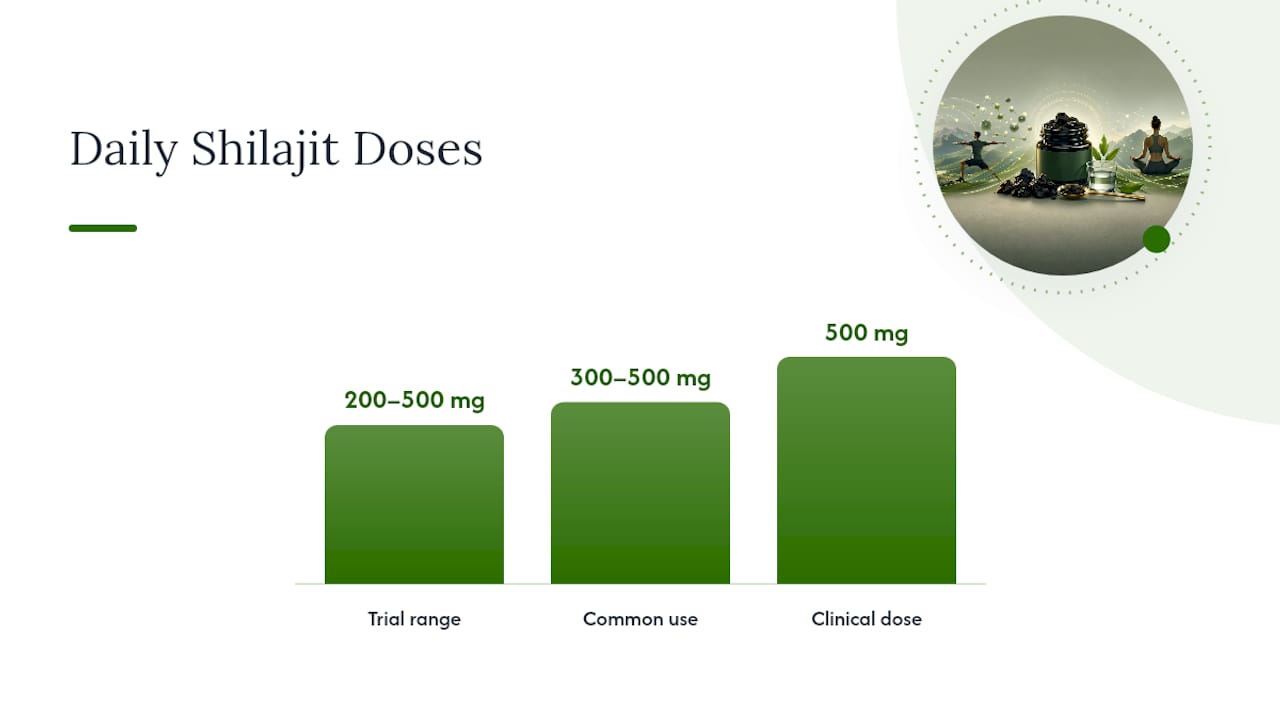
Matching your dose to what the trials actually used gives you the best shot at reproducing their results. Guides that summarize the clinical literature point to a dosing range of roughly 200 to 500 mg per day, and most people land comfortably in the 300 to 500 mg/day range for daily use.
Here’s how to structure it:
Pro Tip: Set a daily reminder tied to an existing habit, like your morning coffee or evening meal. Adherence is the single biggest lever you control, and missing doses is the most common reason people never reach the 8 to 12 week mark with a clean, evaluable trial of their own.
If you want a closer look at how fulvic acid content interacts with absorption, that’s worth reading before you settle on a product.
Two people can take the same dose for the same 12 weeks and walk away with completely different experiences. That’s not inconsistency in the supplement. It’s biology.
Baseline mineral and mitochondrial status matters a lot. If you’re mildly deficient in the trace minerals shilajit supplies, correcting that deficiency can produce a noticeably faster subjective response than someone whose levels were already adequate.
Training status shapes the strength-related outcomes. In the 8-week trial, participants in the upper half of baseline strength showed clearer retention benefits after the fatiguing protocol than those starting from a lower baseline. Your starting point changes what you’ll actually see.
Age and hormonal baseline shape the testosterone response. The 90-day trial specifically studied healthy middle-aged men, so extrapolating those hormonal results to younger men, older men, or women requires some caution.
Other variables worth naming plainly:
Guessing is the enemy of a clean assessment. Here’s a simple protocol that mirrors how the clinical trials measured outcomes, scaled down for personal use.
Pro Tip: If you’re already tracking workouts in an app, add a single custom field for “days on shilajit.” That one column makes it far easier to eyeball whether your recovery metrics actually shifted around week 6 to 8, rather than trying to reconstruct the timeline from memory later. Reviewing signs across different product forms can also help you calibrate expectations if you switch between resin and other formats.
Shilajit is generally well tolerated at trial-aligned doses, but it’s not risk-free, and a poor-quality product can produce false negatives that have nothing to do with whether shilajit itself works.
Mild side effects occasionally reported include digestive upset, headache, or increased heart rate, particularly when starting at doses above what trials used. Stop and consult a clinician if you notice heart palpitations, unusual fatigue, or any skin reaction that doesn’t resolve within a day or two.
Contraindications worth knowing: pregnant or breastfeeding women should avoid shilajit, since no trial has evaluated safety in that population. People on hormone-affecting medications, blood pressure medications, or blood thinners should talk to a doctor first, since shilajit’s mineral content and potential hormonal effects could interact.
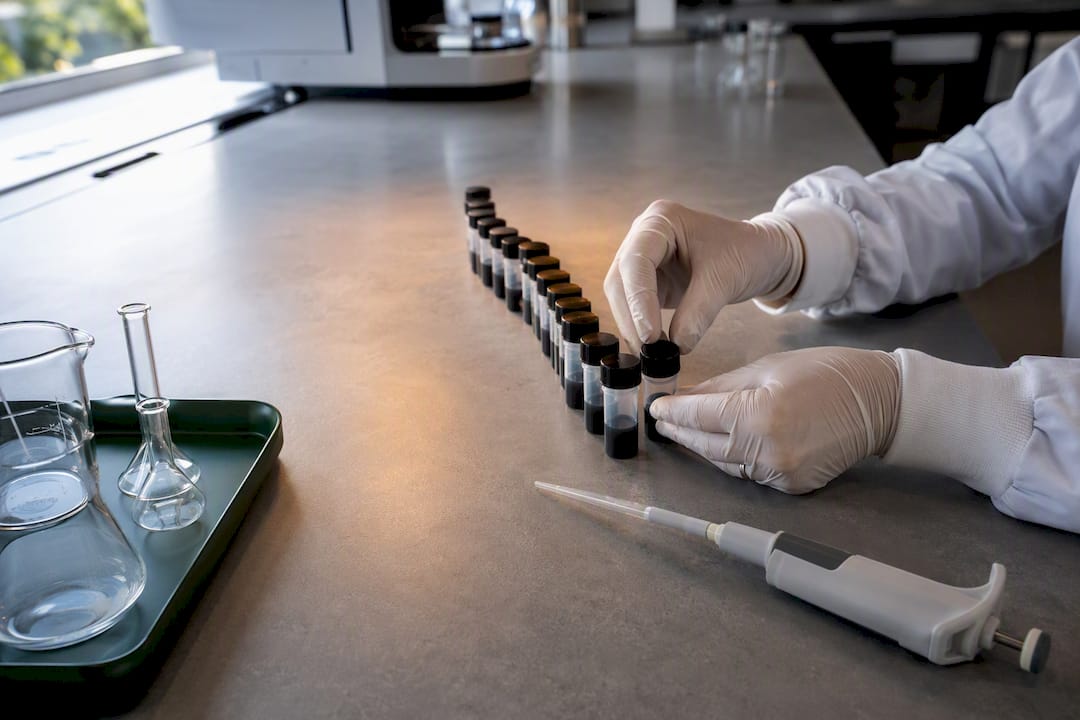
Unregulated or unpurified shilajit sold without lab verification carries a real risk of heavy metal contamination, since raw resin forms in mineral-rich rock strata that can also harbor lead, arsenic, or mercury depending on the source.
That risk is exactly why purity documentation matters more with shilajit than with most supplements. Look for:
Choosing a product that’s actually been purified and tested before it reaches you is what makes trial-aligned dosing meaningful in the first place. A 500 mg dose of contaminated or diluted resin isn’t comparable to the 500 mg used in the strength trial, even though the number on the label matches.
Most of the hype around shilajit skips straight past the boring part: consistency over 8 to 12 weeks, with real tracking, is what separates people who get a clear answer from people who just have a vague sense that “it probably did something.” We’d rather tell you the unglamorous truth than sell you a fast timeline the trials don’t support.
What we see reflected in customer patterns lines up with the clinical picture: small, easy-to-dismiss energy shifts in the first couple of weeks, then more obvious changes, in training recovery or general vitality, by weeks 8 to 12. People who quit at week 3 because “nothing happened” are usually judging the compound on a timeline the biology never promised.
If you’re going to try shilajit, commit to the window the evidence supports, dose at a level a trial actually tested, and track something measurable. Anything less and you’re just guessing with extra steps.
— Shilajit
If you’ve read this far, you already know that matching your dose to what the research actually used gives you a real shot at reproducing those results. Shilajit’s pure Himalayan resin is measured in a form that makes hitting 250 mg twice daily or 500 mg once daily straightforward, without eyeballing a capsule count or guessing at gummy concentration.

Some products provide lab-tested purity documentation, which helps reduce concerns about contamination or dilution affecting your 12-week trial before it even starts. That’s the difference between dosing with confidence and dosing on faith. If you’re ready to run your own 8 to 12 week assessment the right way, start with a batch-tested resin and track your numbers from day one.
The timeline in this article draws on two core human trials and supporting clinical summaries:
This article is general information, not a substitute for advice from a qualified doctor. Consult a qualified healthcare professional about your own circumstances before acting on anything here.
Verify Shilajit lab reports in Australia with a six point checklist. Spot fake COAs, check lab accreditation, lot match, analytical methods, and LODs.
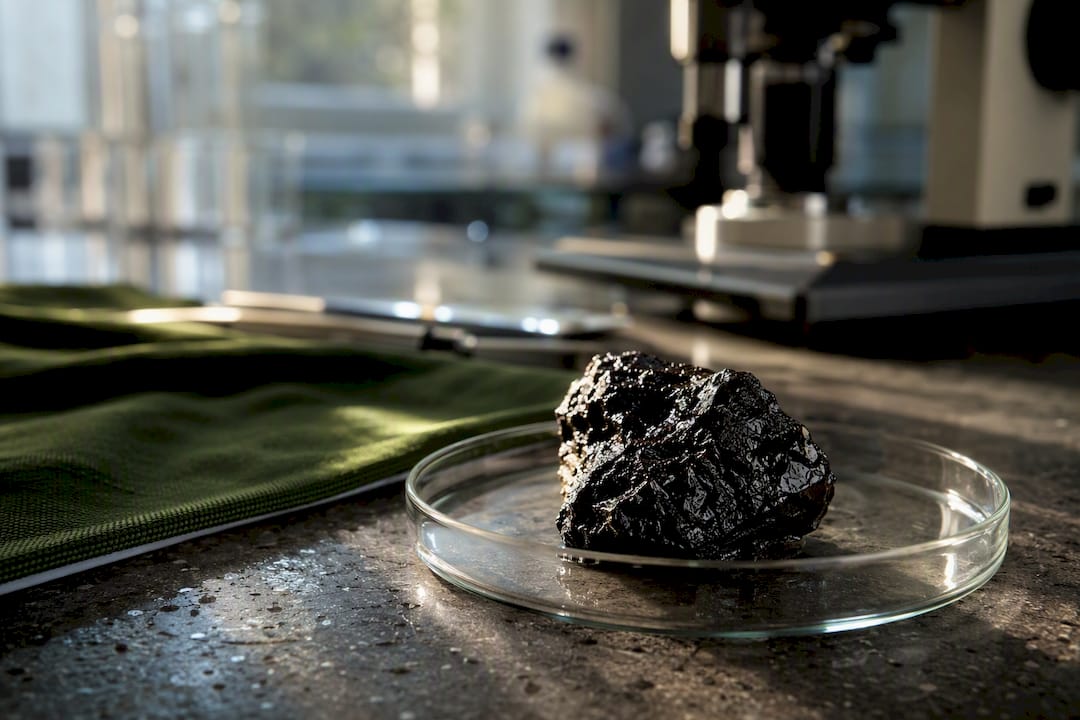
Learn to pick pure shilajit by reading the batch COA. Check fulvic acid range, named lab method, numeric heavy-metal results, and harvest altitude.