Uncategorized
Shilajit in Pregnancy: Why Doctors Advise Against It and What to Do
Avoid shilajit while pregnant or breastfeeding. No controlled trials, contamination risk, and one case links use to high blood pressure. Inform your…
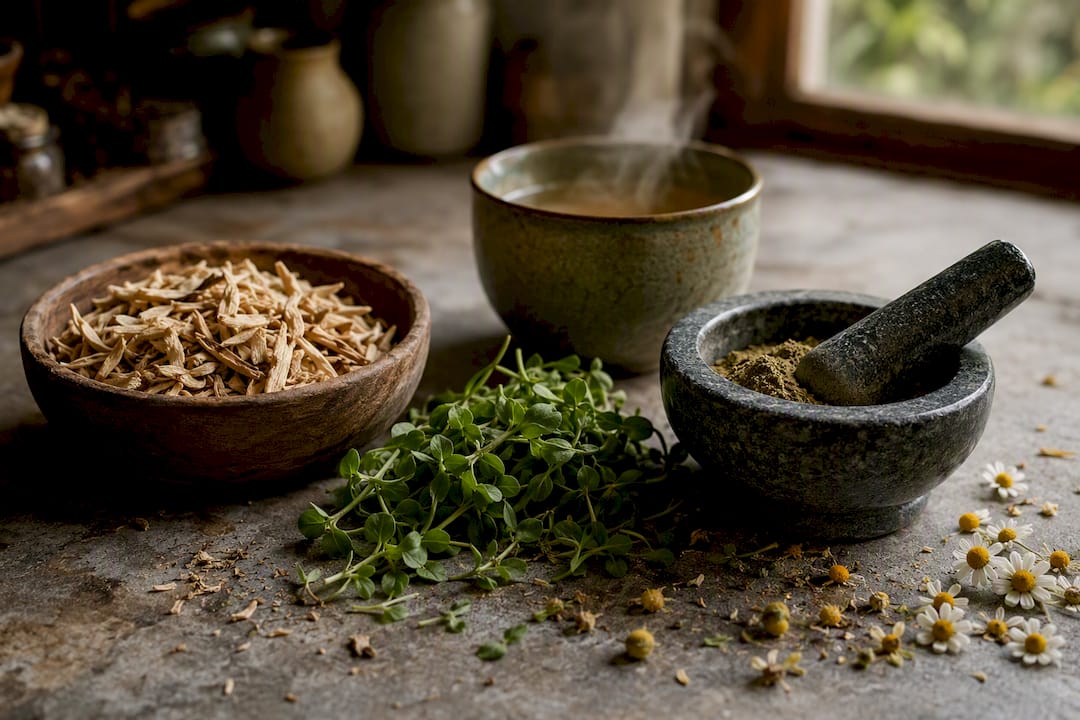
The Ayurvedic herbs with the strongest track record for menopause are Shatavari, Ashwagandha, Brahmi, and standardized phytoestrogen extracts like red clover and rhapontic rhubarb. A randomized trial found that a standardized Shatavari extract dosed at 250 mg twice daily for 60 days meaningfully improved hot flashes, sleep, and quality of life, with no major adverse events reported. Ashwagandha’s evidence base leans toward stress and sleep, Brahmi toward cognitive fog and mood, and the phytoestrogen group toward vasomotor symptoms specifically.
None of these work best as solo acts. The research consistently points to multi-domain approaches: herbs combined with dietary phytoestrogens, stress reduction, and exercise outperform any single intervention for hot flashes and sleep disruption, according to a review on optimizing estrogen levels naturally.
Here’s the shortlist worth discussing with your doctor:
Isoflavones at 50 to 80 mg daily reduced severe hot flashes by as much as 92% in some trials, and curcumin at 500 mg daily showed measurable improvement after about four weeks, per the same estrogen-optimization review. That said, herbal doesn’t mean risk-free. Talk to your GP before starting anything, especially if you have a hormone-sensitive condition or take prescription medication.
Shatavari, Ashwagandha, Brahmi, and standardized phytoestrogen extracts show the strongest combined traditional and clinical support for easing menopausal symptoms when paired with diet and lifestyle changes.
| Point | Details |
|---|---|
| Shatavari has the best trial data | A standardized extract at 250 mg twice daily for 60 days improved hot flashes, sleep, and quality of life. |
| Compound formulas outperform single herbs | Ashokarishta paired with Ashwagandha Churna showed measurable results over 8 to 12 weeks. |
| Isoflavones deliver fast, measurable relief | Doses of 50 to 80 mg daily cut severe hot flashes by up to 92% in trials. |
| Safety checks are non-optional | Request a certificate of analysis and standardization details before buying any herbal product. |
| Mineral support complements herbal work | Lab-tested Shilajit resin can serve as tissue-level support alongside Ayurvedic herbs, not as a replacement for them. |
Ayurveda calls menopause Rajonivritti, meaning the cessation of menstrual blood, and treats it less as a disease to cure and more as a natural transition that needs support. The framework centers on dosha imbalance. Menopause is understood as a period where Vata (the dry, mobile energy governing the nervous system) rises as reproductive tissue declines, while Pitta (heat and metabolism) can spike and produce the classic hot flash and irritability pattern. Treatment aims to calm Vata and cool Pitta simultaneously, which is a different goal than simply “replacing” declining hormones.
This is where Rasayana, the branch of Ayurveda focused on rejuvenation and tissue nourishment, comes in. Rasayana herbs are chosen not to mimic estrogen but to rebuild dhatus (bodily tissues) and support long-term vitality, which is part of why Shatavari and Ashwagandha show up so often in menopausal formulas. They’re classified as Rasayana agents first, symptom relievers second.
Practitioners rarely prescribe a single herb in isolation. A few reasons why:
That’s a meaningfully different approach than reaching for one bottle off a supplement shelf, and it explains why a lot of the strongest clinical evidence for Ayurveda in menopause comes from multi-herb regimens rather than single extracts.
Four herbs dominate both traditional practice and the modern research literature. Here’s what the trials actually show, herb by herb.
Shatavari is the closest thing Ayurveda has to a dedicated menopause herb. Its name translates roughly to “she who possesses a hundred husbands,” a nod to its traditional reputation for female reproductive vitality.
The clinical evidence is genuinely encouraging. A randomized study using a standardized Shatavari extract at 250 mg twice daily for 60 days found significant reductions in hot flash frequency, better sleep quality, and improved overall quality-of-life scores, with tolerability described as good throughout the trial. The extract used was standardized to a specific concentration of shatavarins, the steroidal saponins believed to drive Shatavari’s effects, which matters because unstandardized versions vary wildly in potency from batch to batch.
Bottom line: if you’re going to try one herb first, the trial data makes the strongest case for Shatavari specifically for vasomotor symptoms and sleep.
Ashwagandha’s reputation rests on stress physiology rather than reproductive hormones. It’s an adaptogen, meaning it helps modulate the body’s cortisol response rather than directly targeting estrogen pathways.
For menopausal women, that translates into help with the anxiety spikes, irritability, and racing-mind-at-3am pattern that often accompanies the hormonal shifts, more than direct hot flash relief. It’s frequently paired with other herbs in compound formulas rather than used alone. Precautions matter here: Ashwagandha can interact with thyroid medication and sedatives, and it’s generally not recommended during active autoimmune flares given its immune-stimulating properties.
Brahmi targets a symptom cluster that often gets overlooked in menopause conversations: the cognitive fog, word-finding trouble, and low mood that can show up alongside hot flashes. It’s classified as a Medhya Rasayana, an herb specifically for brain tissue nourishment.
It’s not a fast-acting mood lifter. Cognitive benefits in the broader Bacopa literature tend to build over weeks of consistent use, which is a useful thing to know before giving up on it after a few days.
Black cohosh and red clover carry moderate evidence for reducing vasomotor symptoms, though a review of herbal therapies for menopause notes their mechanisms differ meaningfully: red clover works through isoflavone-driven estrogen receptor activity, while black cohosh’s effect is thought to be more serotonergic than estrogenic. That distinction matters for anyone with a history of hormone-sensitive cancer, since the two herbs don’t carry identical risk profiles.
Statistic worth remembering: dietary isoflavones at 50 to 80 mg daily reduced severe hot flashes by up to 92% in randomized trials, and curcumin at 500 mg daily produced noticeable improvement after roughly four weeks, according to the estrogen-optimization mini review.
A few adjunct botanicals round out most evidence-based protocols:
Ayurvedic practitioners rarely stop at single herbs when treating Rajonivritti symptoms. A clinical evaluation of compound regimens tested a combination of Ashokarishta (a fermented herbal tonic traditionally used for reproductive health), Ashwagandha Churna (powdered root), and Praval Pishti (a processed coral calcium preparation), and found the multi-herb approach produced measurable improvement in menopausal syndrome scores.
Typical formulation approaches include:
Trial timelines are worth setting expectations around. Most clinical evaluations of these compound formulas run for 8 to 12 weeks before measuring outcomes, which is a longer runway than many people expect from a supplement. If you start a formulation and don’t feel different after a week, that’s not necessarily a failure. It’s usually just too early to tell.
Procedural therapies come up less often but do have a place. Panchakarma, the classical Ayurvedic detoxification protocol, includes:
These procedures should only be performed by a trained Ayurvedic practitioner in a clinical setting, never as a DIY approach, since improper technique carries real physical risk.
Pro Tip: Keep a symptom log starting the day you begin any formula, not two weeks in. Trying to recall retroactively whether your sleep improved in week three is nearly impossible, and a daily one-line note makes the 8 to 12 week evaluation window actually useful.
The biggest safety blind spot is assuming “natural” means “risk-free.” A review on nutraceuticals for menopausal complaints is direct about this: herbal medicines and isoflavones can genuinely help symptomatic women, but evidence quality and safety vary a lot between products, and professional oversight improves outcomes.
A few interaction categories deserve real attention:
On sourcing, the NHS guidance on herbal remedies for menopause flags that herbal supplements can contain impurities and interact with prescription drugs, and recommends choosing products with third-party testing. Before buying anything, ask for:
Pro Tip: Start at the lowest studied dose, not the highest one on the label. Titrating up slowly over two weeks while logging symptoms gives you a much clearer read on whether the herb is helping than jumping straight to a full dose.
A pragmatic four to eight week plan beats an all-at-once overhaul. Here’s a structure that tracks with what the clinical literature actually supports:
Mineral status matters too during this window, since low energy and poor recovery often compound hot flashes and disrupted sleep. Rather than treating a mineral supplement as an estrogenic agent, it’s more accurate to think of it as tissue support that complements herbal work. Shilajit’s guide to menopause support walks through realistic expectations for that role.
Before buying any Shilajit product, check for:
Some symptoms shouldn’t wait for an 8 to 12 week herbal trial to run its course. See a doctor promptly if you experience:
A clinician evaluating menopausal symptoms may order FSH and estradiol levels, a thyroid panel (since thyroid dysfunction mimics many menopausal symptoms), and a bone density scan if you’re past 50 or have risk factors.
Bring a written list of every supplement and dose to both your GP and any Ayurvedic practitioner you see. Ask your GP specifically about interactions with current prescriptions, and ask your Ayurvedic practitioner about the rationale behind a specific formula and expected timeline, so both providers are working from the same information.
The conventional wisdom treats Ayurvedic herbs for menopause as a binary choice: either you trust ancient tradition wholesale, or you dismiss it as unproven folklore. Both positions miss what the actual trial data shows. Shatavari’s clinical results aren’t anecdotal goodwill dressed up as science. They’re measured outcomes from a standardized extract with a defined dose and duration.
What gets underestimated is timeline. People try an herb for a week, feel nothing, and move on, when the compound-formula trials that show the clearest results ran for two to three months. That’s not a marketing excuse. It’s how the physiology actually works.
What gets overestimated is any single herb acting alone. The strongest results in this entire body of research come from combining herbs with diet, sleep routines, and stress management, not from chasing one miracle root. If there’s one thing worth prioritizing first, it’s building that foundation before adding anything else.
If you’re building an herbal approach around Shatavari or Ashwagandha, mineral depletion is worth addressing at the same time, since low iron, magnesium, and trace mineral status can amplify fatigue and disrupted sleep during the menopausal transition. Shilajit is a Himalayan mineral resin, not a phytoestrogen, so it works alongside your herb choices rather than competing with them for the same biological pathway.
Every batch of Shilajit’s resin ships with lab documentation covering fulvic acid content and heavy metal screening, the exact transparency the safety section above tells you to demand from any supplement. That’s not a claim you have to take on faith. You can check the 50-gram pure Shilajit resin product page and read the batch testing yourself before you buy. If you’re already taking Ashwagandha, the guide to combining Shilajit and Ashwagandha safely walks through dosing order and timing so the two don’t compete for absorption.
Start with a single pea-sized dose dissolved in warm water each morning, track it in the same symptom log you’re keeping for your herbs, and adjust from there.
Can Ayurvedic herbs replace hormone replacement therapy for menopause?
No single herb or formula has been shown to match HRT’s effect size for severe vasomotor symptoms. Herbs like Shatavari and phytoestrogen extracts can meaningfully reduce symptom severity for many women, but the research supports them as a complementary or alternative option for milder cases, not a direct substitute for clinically supervised HRT.
How long does it take for Ayurvedic menopause remedies to work?
Most clinical trials on compound formulas measured outcomes at 8 to 12 weeks. Single herbs like Shatavari showed significant improvement by 60 days in trial settings. Expecting results within the first week usually leads to giving up too early.
Is Shatavari safe to take with Ashwagandha at the same time?
Many traditional formulas combine the two, and no major adverse events emerged in the trials reviewed here. Still, check with your doctor first if you take thyroid medication, sedatives, or have an autoimmune condition, since Ashwagandha specifically can interact with both.
What’s the difference between Ayurvedic herbs and phytoestrogens like red clover?
Shatavari and Ashwagandha are classified as Rasayana, or rejuvenating tonics, working through broader tissue support rather than direct hormone mimicry. Red clover and similar phytoestrogen extracts act more directly on estrogen receptors, which is why they carry different caution profiles for anyone with a hormone-sensitive health history.
Do I need a prescription to try Ayurvedic medicines for menopause?
No, most of these herbs are available as over-the-counter supplements. That said, the safety guidance above still applies: talk to your doctor before starting, especially if you take other medications, and choose products with third-party testing and a certificate of analysis.
This article is general information, not a substitute for advice from a qualified doctor. Consult a qualified healthcare professional about your own circumstances before acting on anything here. Connect with us on Facebook for more insights on Ayurvedic Medicines for Menopause, natural wellness, traditional herbs and holistic wellbeing.
Avoid shilajit while pregnant or breastfeeding. No controlled trials, contamination risk, and one case links use to high blood pressure. Inform your…
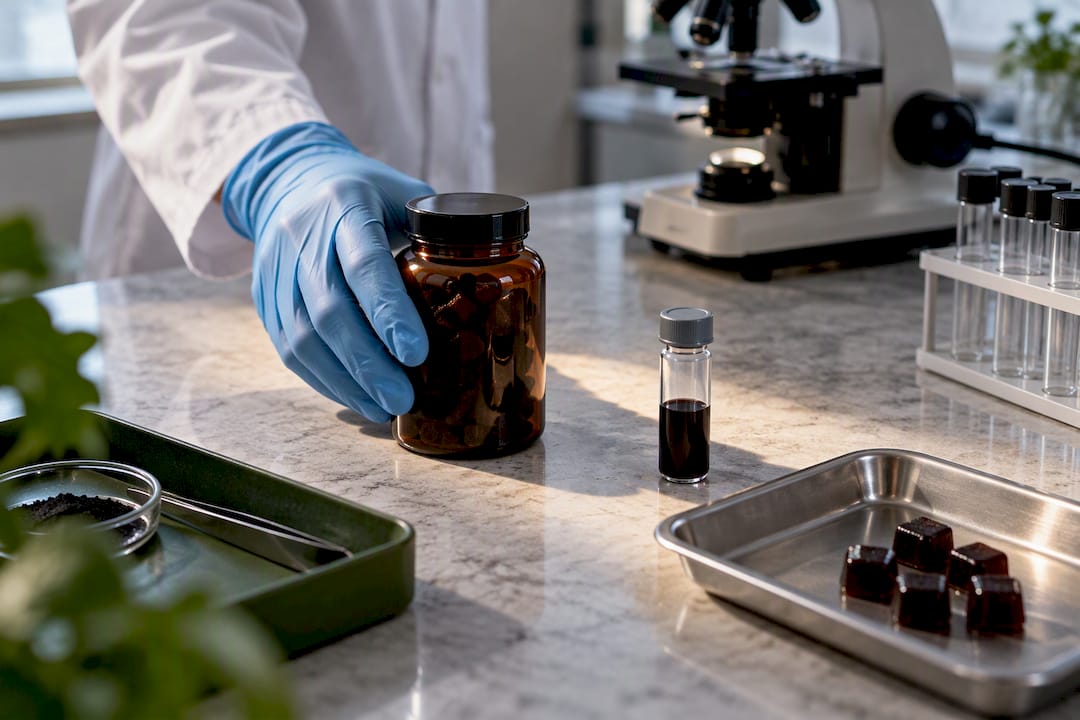
Australia-focused look at shilajit gummies: what human trials actually show, how 500 mg/day dosing compares, and why batch COAs and TGA safety checks matter.