
Uncategorized
Shilajit in Pregnancy: Why Doctors Advise Against It and What to Do
Avoid shilajit while pregnant or breastfeeding. No controlled trials, contamination risk, and one case links use to high blood pressure. Inform your…

Shilajit for thyroid support means using the mineral-rich Himalayan resin to back general energy and metabolism, not to treat, cure or replace medication for a diagnosed thyroid condition. People searching this term are usually dealing with fatigue, sluggish metabolism, or brain fog and want a natural addition to their routine, not a substitute for an endocrinologist. This group also needs to know how shilajit interacts with thyroid medication before they start, which is a different concern from someone just after a stamina boost.
Anyone managing a thyroid condition in 2026 is already juggling medication timing, food interactions, and unpredictable energy levels. Adding a supplement without understanding the timing risk can undo the stability that medication is meant to provide, so this group has a lower margin for guesswork than a healthy adult just wanting more energy.
The honest starting point: shilajit is not a thyroid drug and it is not positioned as one anywhere in credible product literature. What it can reasonably do is support general energy and mineral intake, which matters when thyroid-related fatigue is part of the picture. Read how shilajit resin interacts with common medications before you add it to a thyroid medication routine — this is the single most important step for this segment.
Start with data, not guesswork. Thyroid symptoms overlap with iron deficiency, poor sleep, and stress, and a supplement won’t fix a problem it wasn’t built to address.
Thyroid medication absorption is timing-sensitive, and minerals are a known interference risk for levothyroxine specifically.
This is where the client’s product enters the picture, and it matters more for thyroid patients than for the average buyer because they’re already managing a sensitive system. Contaminated resin sold without testing has been a documented issue in the broader shilajit market, and heavy metals are the specific risk to screen for.
Thyroid patients are often more sensitive to new inputs because their baseline energy regulation is already compromised.
Shilajit’s known composition is fulvic acid, humic substances and trace minerals — it is not an iodine source and shouldn’t be treated as one for thyroid support.
Thyroid patients often already take iron, calcium or magnesium, and stacking without spacing multiplies the interference risk with medication.
Energy shifts can come from sleep, stress or seasonal changes, so subjective improvement isn’t proof of anything for this group specifically.
| Format | Best for | Key limitation |
|---|---|---|
| Raw resin | People who want precise, adjustable dosing and full control over timing | Requires spacing carefully from thyroid medication each day |
| Capsules | Busy people who want consistent dosing without measuring resin | Harder to fine-tune dose down for a cautious start |
| Gummies | People who dislike the taste of resin and want a simple routine | Easy to lose track of exact mineral intake per serving |
| Tincture drops | People who want fast, flexible dosing on the go | Same timing rules around thyroid medication still apply |
Each format carries the same core rule for this segment: the format doesn’t change the medication-timing requirement, only the convenience.
Check lab certificates before you buy
See exactly what’s tested in Himalayan shilajit resin before it reaches you.
Is shilajit safe for thyroid support in 2026?
Shilajit is generally used as a general energy and mineral supplement, not as a thyroid treatment, so anyone on thyroid medication should confirm timing and safety with their doctor first. It is not a substitute for prescribed hormone therapy.
Can shilajit interfere with thyroid medication?
Yes, minerals in shilajit can interfere with levothyroxine absorption if taken too close together. Spacing doses by 3-4 hours is the standard precaution recommended for mineral supplements and thyroid medication.
Does shilajit contain iodine for thyroid function?
No, shilajit’s known composition is fulvic acid, humic substances and trace minerals, not iodine. It should not be relied on to address an iodine deficiency.
How much shilajit should someone with a thyroid condition take?
Start with a smaller-than-standard dose, roughly 300-500mg, and hold it for a week before increasing. This lets you track any reaction separately from your existing medication.
Should I tell my doctor before taking shilajit for thyroid support?
Yes, especially if you’re on thyroid medication or have an autoimmune thyroid diagnosis like Hashimoto’s. Your doctor can flag interactions and adjust monitoring accordingly.
What’s the difference between shilajit resin and capsules for this group?
Resin allows more precise dose adjustment, which matters when starting low and tracking response. Capsules are more convenient but harder to fine-tune down for a cautious start.
How long before shilajit affects energy levels?
Most people track changes over several weeks rather than days, alongside a follow-up bloodwork check at the 6-12 week mark. Subjective energy alone isn’t proof of a thyroid-related change.
Can shilajit replace thyroid medication?
No. Shilajit is a mineral-rich supplement, not a hormone replacement, and stopping prescribed thyroid medication without medical supervision carries real health risk.
The detail most people miss: shilajit’s headline mineral compound is fulvic acid, not iodine, so it was never built to correct a thyroid-specific nutrient gap. Treat it as general metabolism and energy support that sits alongside proper thyroid management in 2026, not ahead of it, and the medication-timing rule matters more than the dose you pick. Stay connected with us on Facebook for more insights about Shilajit for Thyroid, metabolism support, energy, and overall vitality.
You have subscribed to our newsletter successfully.

Avoid shilajit while pregnant or breastfeeding. No controlled trials, contamination risk, and one case links use to high blood pressure. Inform your…
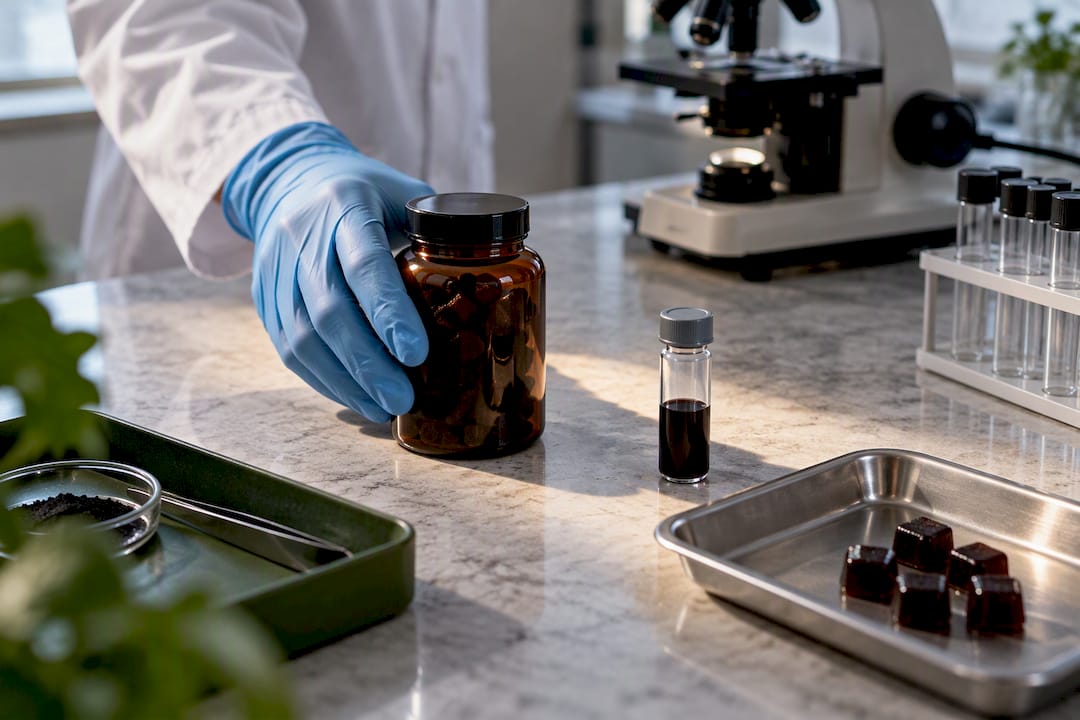
Australia-focused look at shilajit gummies: what human trials actually show, how 500 mg/day dosing compares, and why batch COAs and TGA safety checks matter.

Subscribe to our weekly newsletter and receive exclusive offers you love!!
You have subscribed to our newsletter successfully.