
Uncategorized
6 Point Shilajit Lab Report Checklist for Australian Buyers
Verify Shilajit lab reports in Australia with a six point checklist. Spot fake COAs, check lab accreditation, lot match, analytical methods, and LODs.


Humic acid’s main role in wellness is acting as a gut-level binder: it adsorbs heavy metals, pathogens, and toxins in the digestive tract before they reach your bloodstream, while its smaller cousin, fulvic acid, slips through cell membranes to help shuttle minerals where your body actually needs them. That division of labor is the whole story in miniature. Everything else, from antioxidant buzz to immune talk, builds on that foundation.
Humic acid’s core wellness role is gut-level binding and detox support, while fulvic acid handles cellular mineral delivery, and neither has a universally established human dose.
| Point | Details |
|---|---|
| Primary role | Humic acid binds toxins and heavy metals in the gut; fulvic acid delivers minerals at the cellular level. |
| Strongest evidence | Clinical trials on cadmium excretion using humifulvate regimens show the clearest human data. |
| Weakest evidence | Antiviral, immune, and microbiome effects remain mostly preclinical, based on cell and animal studies. |
| Safety reality | Generally well tolerated, but pregnancy, autoimmune conditions, and chronic medication use need clinician input. |
| Product quality check | Always confirm a Certificate of Analysis with heavy-metal screening and batch-specific testing before buying. |
| Shilajit’s role | Shilajit combines fulvic acid fractions with trace minerals in a lab-tested, traditionally sourced resin. |
The benefits people associate with humic and fulvic acid supplements cluster around a handful of repeatable themes in the research, even though the strength of evidence varies quite a bit from one claim to the next.
People with known heavy-metal exposure, practitioners running detox-support protocols, and those managing diagnosed mineral deficiencies are the groups most likely to look into humic and fulvic supplements. Pregnant women, people with autoimmune conditions, and children should be more cautious, since immune-modulating effects could theoretically interact with an already active or suppressed immune system.
No universal human dosage exists for humic acid as of 2026. WebMD’s clinical reference is blunt about this: follow the product label, and talk to a clinician before starting, especially if you’re pregnant, immunocompromised, or on a chronic medication.
Mechanistically, humic acid and fulvic acid do different jobs because they’re built differently. Humic acid molecules are large and largely insoluble at normal gut pH, so they stay in the digestive tract, where they adsorb heavy metals, mycotoxins, and some pathogens onto their surface rather than letting the body absorb them. Fulvic acid molecules are much smaller and water-soluble across a wider pH range, which lets them cross cell membranes and act as a mineral chaperone, binding magnesium, zinc, or iron and helping carry them into cells.
That size and solubility gap explains why the two compounds get talked about together but used for different purposes. Humic acid’s job happens mostly in the gut lumen. Fulvic acid’s job happens at the cellular level.
Beyond binding and transport, the phenolic and carboxylic acid groups embedded throughout humic substances give them genuine antioxidant capacity, neutralizing reactive oxygen species the way vitamin C or polyphenols do, just through a different chemical scaffold. Reviews summarized in MDPI’s pharmacological analysis also describe immunotropic effects, meaning humic substances can shift how immune cells signal to each other, along with antibacterial, antiviral, and even hepatoprotective activity depending on the source material and extraction method used. Gut microbiome effects round out the picture. Early research suggests humic substances may support gut barrier integrity and interact with the microbial community lining the intestine, though this remains one of the least studied angles.

| Mechanism | Expected Effect | Evidence Type |
|---|---|---|
| Gut adsorption/chelation (humic acid) | Binds heavy metals and toxins before absorption | Human and animal data |
| Membrane transport and chelation (fulvic acid) | Improves cellular mineral uptake | Mostly in vitro and animal |
| Antioxidant activity (phenolic/carboxyl groups) | Scavenges reactive oxygen species | In vitro, some animal |
| Cytokine modulation | Immune signaling shifts, anti-inflammatory effects | In vitro and animal, limited human |
| Gut microbiome/barrier support | Possible improvement in gut lining integrity | Preclinical, very limited |
The clearest human-relevant signal for humic acid concerns heavy-metal detoxification. Everything else, while mechanistically plausible and often exciting in a petri dish, is still waiting on the kind of large, randomized human trials that would let anyone call it proven.
Clinical and experimental work reviewed on PMC documents humic preparations used in cadmium intoxication cases, with specific regimens of humifulvate (HFC) at roughly 156.7 to 313.4 mg per day, corresponding to about 75 to 150 mg of humic acids, showing increased urinary cadmium excretion and reduced blood cadmium levels over weeks of treatment. That’s a real clinical signal, not just theory. But it comes from specific intoxication settings with defined preparations, not from general wellness supplementation in healthy adults.
| Claim | Human Evidence | Preclinical Evidence | Limitations |
|---|---|---|---|
| Heavy-metal binding/detox | Clinical trials on cadmium excretion (HFC regimens) | Broad animal chelation data | Small trial sizes, specific extracts only |
| Antioxidant activity | Limited | Strong in vitro data on radical scavenging | Extraction method changes potency |
| Antiviral/antimicrobial effects | Very limited | Cell-culture studies show activity against several viruses | Not confirmed in human infection models |
| Immunomodulation | Sparse | Animal cytokine studies | Mechanism plausible, clinical dose unclear |
| Gut microbiome support | Almost none | Emerging preclinical interest | Underexplored, no standardized method |
Antiviral activity shows up repeatedly in cell-culture research, including findings summarized in a PMC review of biological activities, but a virus dying in a lab dish is a long way from a supplement preventing illness in a person. One of the biggest practical problems reviewers keep flagging: humic substances aren’t one uniform compound. They vary by source, whether that’s peat, leonardite, or Himalayan shilajit, and by extraction method, which means a study on one product doesn’t necessarily generalize to another sitting on a shelf next to it.
Humic acid works best as a gut-level binder, fulvic acid works best as a mineral delivery vehicle, and natural sources like Shilajit combine both, along with dozens of trace minerals, into a single traditionally processed resin. Which one fits your goal depends on what you’re actually trying to accomplish.
Pro Tip: If your goal is general mineral support and overall vitality rather than a narrow detox protocol, a combined source with a published Certificate of Analysis usually makes more practical sense than hunting down an isolated extract, since you’re getting the fulvic fraction plus the mineral matrix it naturally occurs alongside.
Practitioners frequently combine humic and fulvic acid deliberately, using the gut-binding action of one alongside the cellular delivery of the other rather than picking a single compound and calling it a day.
Humic acid is generally well tolerated in the doses found in commercial supplements, but the clinical evidence base is thin enough that “generally well tolerated” should be read as “no major red flags yet documented” rather than “extensively proven safe.”
Reported side effects tend to be mild: occasional gastrointestinal upset, nausea, or changes in bowel habits, particularly when starting at a higher dose. Contraindications are more about caution than confirmed danger. WebMD’s clinical monograph specifically flags pregnancy and autoimmune conditions as situations warranting a conversation with a doctor before use, since immunomodulatory activity could theoretically shift disease activity in someone with an already dysregulated immune system. People with autoimmune conditions should get physician clearance before starting, given that same immune-modulating mechanism.
Because chelating compounds bind minerals indiscriminately, there’s a plausible interaction risk with essential mineral levels over time, and with medications that rely on stable mineral status. Anyone on prescription medication, particularly anything metabolized through the liver or affecting mineral balance, should mention a humic or fulvic supplement to their pharmacist or doctor.
Pro Tip: If you’re using a humic or fulvic supplement daily for more than a few months, ask your doctor about periodically checking a basic mineral panel, including selenium, since chronic use of any chelating compound carries a theoretical risk of nudging trace mineral levels out of range.
There’s still no universal dose. Follow what the product label says, choose brands that publish third-party lab testing, and loop in a clinician if you’re using it long-term or alongside other medications.
Picking a safe product comes down to transparency: does the company tell you exactly where the material came from and prove, with lab data, that it’s clean?
Pro Tip: Email the company and ask for the most recent batch COA before you buy, not just the one posted on the product page. A supplier willing to send it within a day or two is telling you something about how seriously they take quality control.
Red flags worth walking away from: vague sourcing language like “natural mineral complex” with no origin stated, zero lab documentation available on request, and health claims that sound more like a miracle cure than a supplement. Shilajit’s own product line is built around lab-tested batches specifically because this checklist matters, but the same standard should apply no matter whose bottle you’re holding.
Start low, take it with food if you’re worried about stomach upset, and increase gradually rather than jumping straight to a full serving on day one.
If you’re on prescription medication or managing a chronic condition, mention any new supplement, including fulvic-acid-containing products, to your prescribing doctor before starting. For anyone using it longer than a few months, a basic bloodwork check every six months isn’t a bad habit, particularly a mineral panel if you’re also taking other chelating supplements or mineral-heavy products like a mushroom elixir alongside it.
The biggest gap in humic acid research isn’t a lack of interest. It’s a lack of standardization. Studies use wildly different source materials, extraction methods, and doses, which makes it nearly impossible to compare results across the literature or issue firm clinical recommendations.
When new studies do surface, check whether they’re randomized, whether the sample size is large enough to mean anything (dozens of participants, not just a handful), and whether the product tested comes with its own COA. A study on an uncharacterized extract tells you very little about the bottle sitting on your shelf.
The mechanistic case for humic and fulvic acids is genuinely strong. Chelation, adsorption, antioxidant activity, and immune signaling are all backed by real chemistry and, in the case of heavy-metal binding, real clinical trial data. That’s more than a lot of trendy supplements can claim. But strong mechanisms and a handful of clinical signals aren’t the same as a settled verdict, and readers deserve to hear that distinction stated plainly rather than buried under enthusiasm.
Where this leaves a health-conscious person is in a reasonable, cautious middle ground: a supported trial makes sense for someone with a specific goal, like mineral support or gut-level binding, provided they’re working with a clinician if they have any underlying condition or take regular medication. What matters more than the ingredient itself is the quality behind it. Source transparency, batch-level lab testing, and honest dosing guidance separate a legitimate product from a bag of unverified plant matter with a wellness label slapped on it.
Lab-tested Shilajit resin gives you the fulvic acid fraction and trace mineral content this article covers, backed by a Certificate of Analysis you can actually request and review before you buy. Instead of guessing whether a jar of unlabeled “humic extract” is clean, you get sourcing transparency built into the product from the start.
Pro Tip: Before ordering any humic or fulvic product, ask the seller for the current batch COA, including heavy-metal screening results, and compare it against the assay percentages listed on the label. Shilajit’s purity and sourcing guide walks through exactly what those numbers mean if you’re new to reading one. If you’re ready to see a tested batch for yourself, the 50-gram pure Shilajit resin product page includes current lab documentation alongside usage instructions, so you can check the sourcing and mineral assay before you commit to a purchase.
This article is general information, not a substitute for advice from a qualified doctor. Consult a qualified healthcare professional about your own circumstances before acting on anything here.
Verify Shilajit lab reports in Australia with a six point checklist. Spot fake COAs, check lab accreditation, lot match, analytical methods, and LODs.
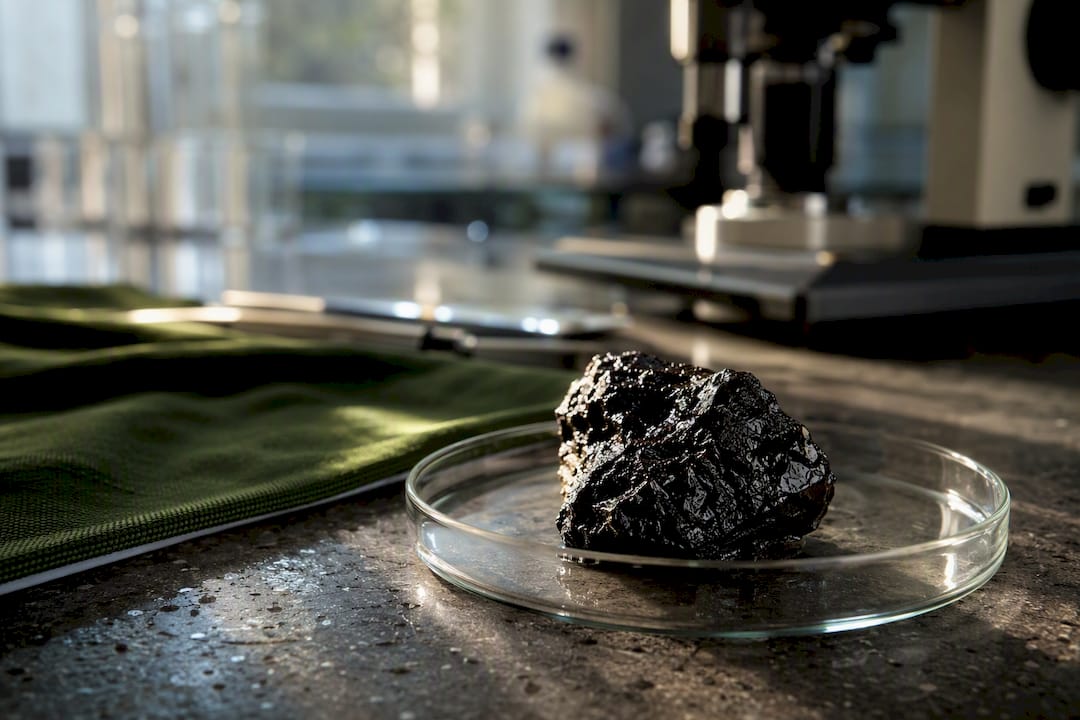
Learn to pick pure shilajit by reading the batch COA. Check fulvic acid range, named lab method, numeric heavy-metal results, and harvest altitude.