Uncategorized
Shilajit in Pregnancy: Why Doctors Advise Against It and What to Do
Avoid shilajit while pregnant or breastfeeding. No controlled trials, contamination risk, and one case links use to high blood pressure. Inform your…
Fulvic acid percentage is the share of a Shilajit product, by weight, made up of fulvic acid. Expect a typical range in purified resins and higher percentages in concentrated extracts, though the honest answer to “how much is in my jar” only comes from a batch-specific lab report. A high number on a label means nothing without a certificate of analysis (COA) behind it.
TL;DR:
- Higher fulvic acid percentages in raw resins are unreliable without batch-specific lab reports confirming the extraction process.
- Concentrated extracts generally have a much higher fulvic acid percentage due to processing, often above 60%, unlike raw resins which are typically below 10%.
- The actual dose of fulvic acid depends on the serving size; multiplying the percentage by the capsule weight provides the true milligram amount taken.
- Lab testing methods like HPLC or UV-Vis, along with batch-specific certificates of analysis, are essential to verify the claimed fulvic acid content and safety.
- A high fulvic acid percentage alone does not indicate safety; heavy-metal testing and verified batch COAs are necessary to avoid contamination risks.
Fulvic acid percentage tells you what portion of the product’s total weight is fulvic acid, the low-molecular-weight, water-soluble compound that drives much of Shilajit’s antioxidant and absorption activity. Brands report this as a percent by weight on the label or COA, sometimes alongside a milligram figure per serving.
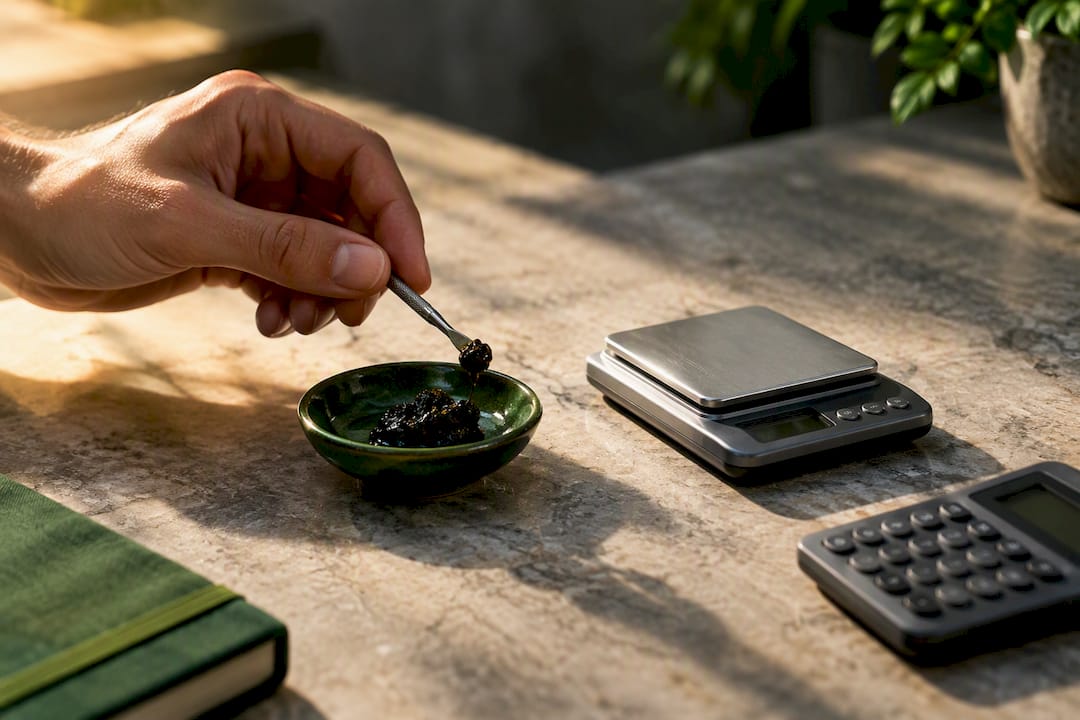
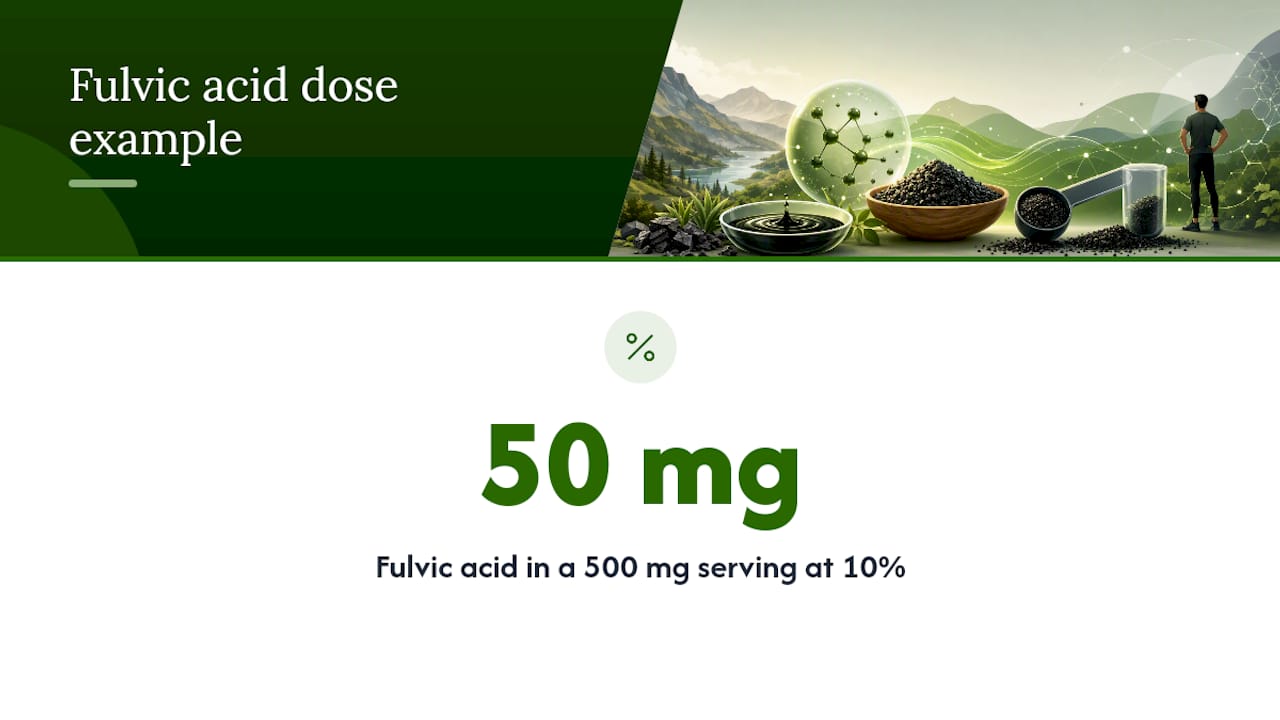
The percentage alone doesn’t tell you how much you’re actually taking. You need serving size too. Multiply the serving size in milligrams by the percentage (as a decimal) to get the actual dose. A 500 mg serving of a product listed at 10% fulvic acid delivers 50 mg of fulvic acid, according to dosing calculations used in research summaries on Shilajit.
Label terms matter here. “Resin” or “purified resin” usually means minimally processed material with a lower, more variable percentage. “Extract” typically signals a concentrated, processed form with a much higher percentage. These aren’t interchangeable products, and a 500 mg scoop of one can deliver a wildly different dose than 500 mg of the other. Always check which category you’re buying before comparing numbers across brands.
Purified resins commonly test at lower single-digit percentages of fulvic acid, though some batches run higher depending on source rock and purification depth. Raw or lightly purified resins vary more widely and concentrated extracts typically have a substantially higher percentage due to additional processing to remove inert mineral matter.
Processing is what moves that number. A 2026 study on Shilajit’s organic and inorganic composition found that acidic-water extraction raised fulvic acid content from an average of roughly 31% in raw material to nearly 74% in enriched extracts. The process works by reducing moisture and inorganic ash, concentrating the fulvic acid fraction rather than adding anything new.
That’s exactly why an implausibly high percentage on a raw resin label deserves a second look. A resin claiming 60% fulvic acid without any extraction step described is either mislabeled or measured incorrectly. Real enrichment leaves a paper trail: a described process, a changed material class, and a lab report to match. If a seller can’t explain how their percentage got that high, treat the number as unverified.
Labs typically use a combination of chromatographic and spectroscopic methods to quantify fulvic acid, including HPLC, UV-Vis spectroscopy, and FTIR, sometimes alongside TLC for fingerprinting the compound profile. Heavy-metal testing runs separately, usually through ICP-MS or ICP-OES, which detect trace metals at the parts-per-billion level.
A credible COA should show several things clearly, not just a headline percentage:
Red flags show up fast once you know what to look for. A percentage with no method listed, a COA that isn’t tied to a batch number, or a number that seems disconnected from the product type (a raw resin claiming extract-level potency) all warrant skepticism. ConsumerLab’s testing protocols treat a vague or missing COA as disqualifying on its own, regardless of how good the marketing copy sounds.
Not necessarily, and the clinical record makes that clear. Human trials on Shilajit have used strikingly different formulations. Another used just 200 mg daily of a 54.8% fulvic acid preparation over 90 days, targeting different outcomes entirely, based on dosing comparisons compiled from the clinical literature.
Run the math and the gap narrows. Two products that look nothing alike on the label end up close in actual dose.
This is the calculation every buyer should run before assuming a bigger percentage number means a stronger product: multiply serving size by percentage, then compare that milligram figure to doses used in actual trials rather than to the percentage alone. Without published dose-response data pinpointing an ideal daily amount, matching your intake to figures used in existing human research remains the most defensible target. If you want more background on how fulvic acid content connects to reported effects, Shilajit’s effects and dosing guidance walks through it in more depth.
Potency and purity are two separate questions, and a strong fulvic acid number tells you nothing about contamination. Independent testing found fulvic acid delivery per serving swinging from 6.9 mg to 2,206 mg across products on the market, a gap wide enough that two “Shilajit” labels can mean entirely different things, according to ConsumerLab’s product testing. That same testing found heavy metals generally low, but a few products would exceed strict daily limits if someone took multiple servings.
That’s the calculation buyers skip. If a product’s COA lists lead at just under the per-serving limit, doubling your dose to hit a target fulvic acid amount can push heavy-metal exposure over the line. Always check the contaminant panel against your actual daily intake, not just a single serving.
Raw or unprocessed Shilajit carries the highest contamination risk, since it hasn’t gone through purification steps designed to strip out heavy metals and other adulterants, a concern echoed in consumer health guidance on fulvic acid safety. The practical fix is straightforward: avoid raw material sold without lab verification, and insist on third-party batch testing before you buy. For a closer look at what contamination actually looks like on paper, see Shilajit’s guide to spotting heavy-metal issues.
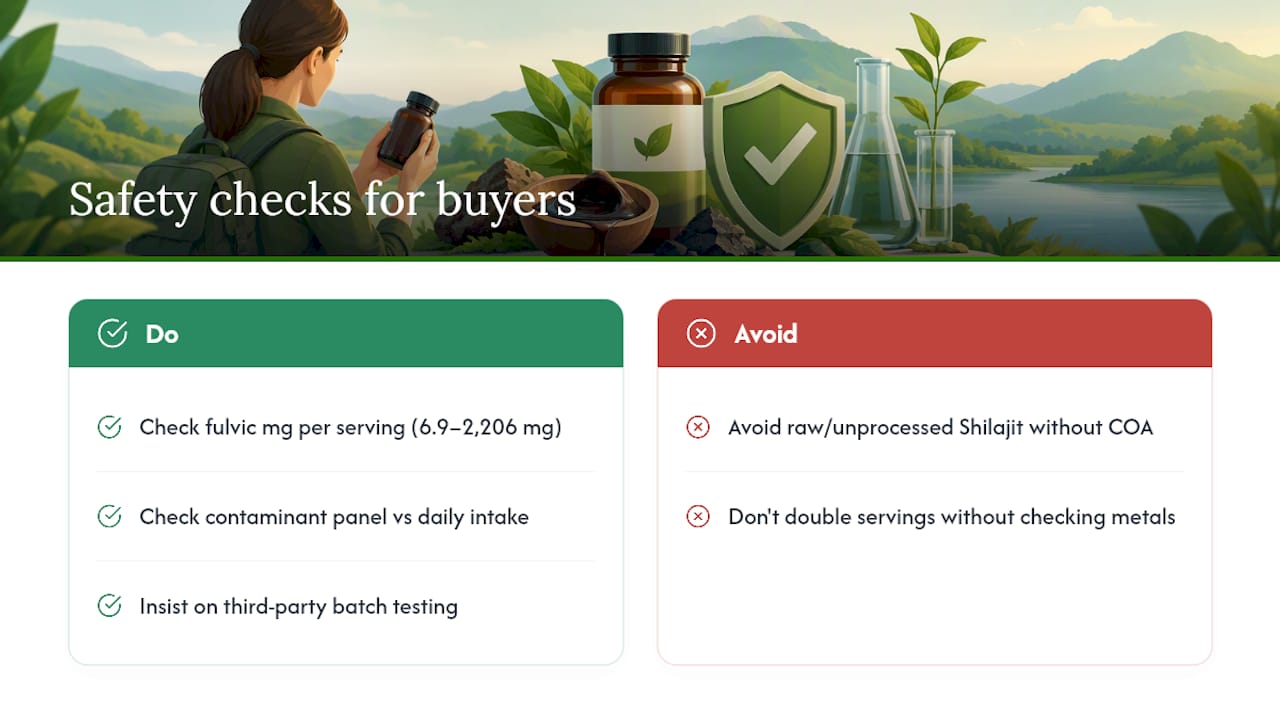
Run any Shilajit product through these steps before comparing price or reading a single review:
Pro Tip: If a seller can’t produce a COA tied to the exact batch you’re buying, or the percentage seems disconnected from whether it’s raw resin or a processed extract, walk away. A real lab report is cheap for a legitimate brand to provide and expensive for a fake one to fake convincingly.
For a deeper look at how purification changes these numbers, Shilajit’s purification breakdown and the purity test checklist both cover the process in more detail.
Too many labels treat fulvic acid percentage as a marketing number instead of a lab result. Legitimate sellers test batches for fulvic acid content and heavy metals, and reports are ideally accessible on the product page. If a number on a Shilajit label can’t be verified by a batch-specific COA, it should be viewed with skepticism.
— Shilajit
You’ve just seen how wide the gap can run between a label claim and what a batch COA actually shows. That gap is exactly why every product in Shilajit’s lab-tested Shilajit resin collection ships with its own batch-specific report covering fulvic acid percentage and a full heavy-metal panel, not a generic spec sheet reused across lots.
If you’d rather start with a specific product than browse the whole category, the 50 gram pure Shilajit resin page shows exactly what that batch tested for before it shipped. Pull up the COA, run the mg-per-serving math from the checklist above, and compare it against whatever you’re currently taking. That single comparison usually tells you more than any percentage claim on its own.
This article is general information, not a substitute for advice from a qualified doctor. Consult a qualified healthcare professional about your own circumstances before acting on anything here.
Multiply the serving size in milligrams by the fulvic acid percentage written as a decimal. For example, a 500 mg serving at 10% fulvic acid delivers 50 mg, a calculation method used throughout Examine’s dosing breakdowns.
Not on its own. A high percentage in a small serving can deliver less actual fulvic acid than a lower percentage in a larger serving, so the milligram total matters more than the percentage alone.
There’s no single established upper limit from human trials, but published studies have used different doses of fulvic acid per day with different formulations, based on clinical dosing data. Staying within ranges used in existing research, and pairing that with heavy-metal testing, is the safer approach.
A legitimate seller posts batch-specific COAs on the product page or provides them on request without delay. Shilajit publishes lab reports covering fulvic acid percentage and heavy-metal testing directly on its Shilajit resin product pages.
No. Purified resins typically contain about 6% to 7% fulvic acid, while concentrated extracts often run 60% to 80% due to additional processing that removes inert material, a gap confirmed in ConsumerLab’s product testing.
Avoid shilajit while pregnant or breastfeeding. No controlled trials, contamination risk, and one case links use to high blood pressure. Inform your…
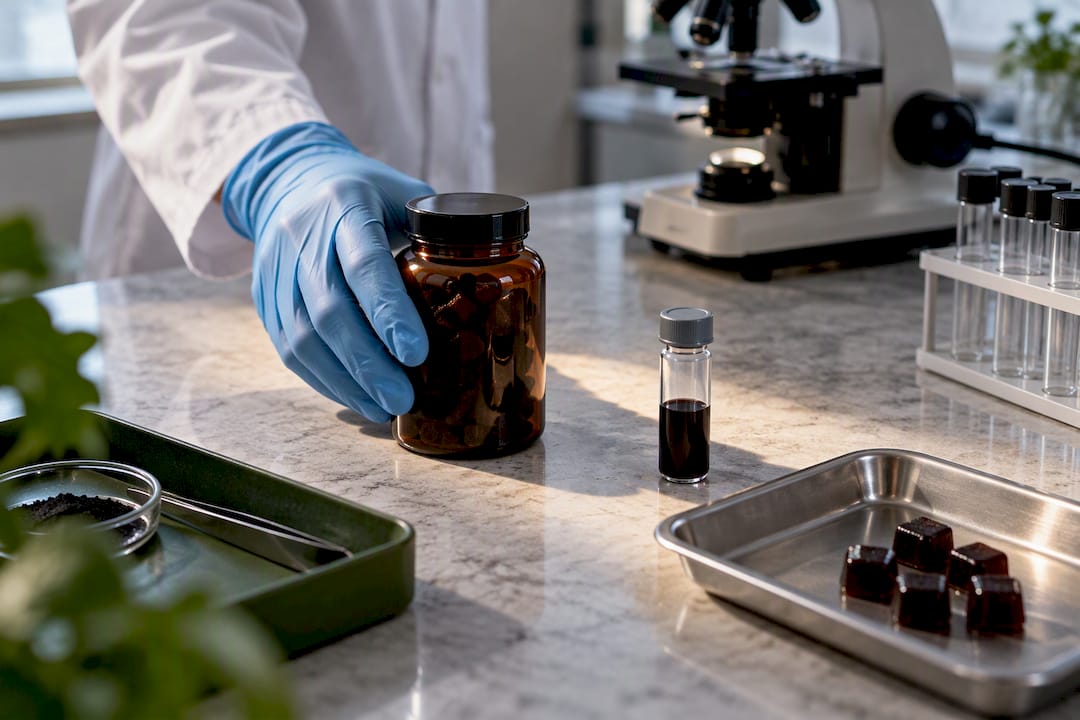
Australia-focused look at shilajit gummies: what human trials actually show, how 500 mg/day dosing compares, and why batch COAs and TGA safety checks matter.