Uncategorized
Shilajit in Pregnancy: Why Doctors Advise Against It and What to Do
Avoid shilajit while pregnant or breastfeeding. No controlled trials, contamination risk, and one case links use to high blood pressure. Inform your…

Shilajit tincture has real, human-trial support for a short list of benefits: energy and fatigue reduction, retention of muscle strength after exercise, and modest gains in testosterone markers in middle-aged men. The evidence comes from small trials, not large-scale research, so the effects are real but modest, not miraculous. The bigger risk isn’t whether it works. It’s whether the product you buy has actually been purified and lab-tested for heavy metals before it reaches your dropper.
TL;DR:
- Human trials show modest benefits in energy, muscle recovery, and bone health from purified shilajit, but results are limited to small studies.
- A single well-designed trial reports roughly a 20-23% increase in testosterone after 90 days of taking 250 mg twice daily in middle-aged men.
- The strongest evidence supports shilajit’s role in enhancing muscle strength after exercise and reducing bone mineral loss in postmenopausal women.
- Shilajit’s effects depend heavily on standardization, regional sourcing, and proper purification to avoid contamination with heavy metals.
- Use shilajit tincture cautiously, verify lab-tested purity, start with low doses, and consult a healthcare professional if on medication or managing health conditions.
Most of what gets written about shilajit online is traditional Ayurvedic lore dressed up as science. The actual clinical picture is narrower, but it’s also more trustworthy, because it comes from randomized trials rather than centuries-old anecdote.
Energy and fatigue support sits at the top of the list, and it’s the benefit with the most consistent traditional and mechanistic backing. Shilajit’s dibenzo-alpha-pyrones (DBPs) are thought to support mitochondrial function, the cellular process that converts nutrients into usable energy. That’s plausible biology, though direct human trials isolating fatigue as a primary endpoint remain limited.
Testosterone and male reproductive markers have the strongest single data point in the shilajit literature. A randomized, double-blind, placebo-controlled trial in 75 healthy men aged 45 to 55 found total testosterone rose roughly between one-fifth and nearly one-quarter, and free testosterone rose by about one-fifth, after 250 mg of purified shilajit taken twice daily for 90 days. That’s a meaningful shift for a natural supplement, but it’s one trial, in one age group, using one specific extract. It shouldn’t be read as a guarantee for every user.
Muscle strength and connective tissue recovery showed up in an eight week trial of PrimaVie®, a standardized purified shilajit extract used in several of the field’s better-controlled studies. At 500 mg per day, participants retained more maximal muscular strength after fatiguing exercise, and higher-performing subjects showed lower markers of collagen breakdown, according to the PrimaVie® supplementation study. For anyone training hard and worried about connective tissue wear, that’s a genuinely interesting signal.
Bone health has one solid data point worth knowing about, especially for postmenopausal women. A 2022 clinical study followed 60 postmenopausal women with osteopenia and found that 250 mg or 500 mg of daily shilajit reduced bone mineral loss and lowered markers of oxidative stress compared to placebo.
Cognitive and anti-aggregation potential is where the evidence gets thin fast. Fulvic acid, one of shilajit’s key active compounds, shows antioxidant and anti-aggregation activity against tau protein in lab settings, according to a broad phytocomplex review. That’s an in vitro finding, meaning it happened in a lab dish, not in a living brain, and no human trial has confirmed a cognitive benefit from shilajit tincture.
Here’s a quick rundown of where the evidence actually stands:
Anything not on that first five list, including immune support, antiviral activity, and altitude sickness relief, belongs to traditional Ayurvedic use rather than controlled research. That doesn’t make those claims false. It means nobody has tested them the way testosterone and bone density have been tested.
Reading the studies themselves, rather than secondhand summaries of them, changes how you weigh the claims. Here’s what each trial actually did.
The pattern across all three trials is the same: small sample sizes, short durations, and use of single standardized extracts rather than the wide variety of shilajit products actually sold. Geographic sourcing also matters. Shilajit composition varies by altitude, rock type, and region, so a study using one purified Himalayan extract doesn’t necessarily predict how a different sourced product will perform.
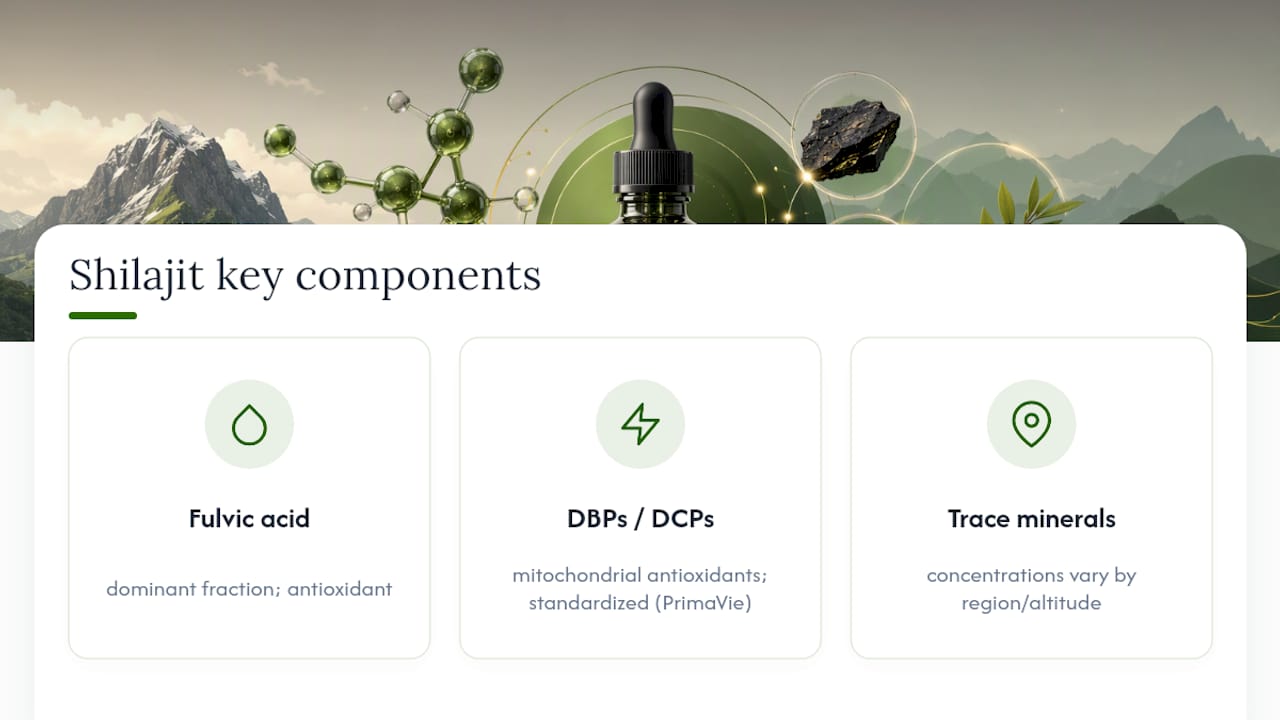
Shilajit’s biological activity traces mainly to two compound families. Fulvic acid is the dominant one by volume, and it functions as both an antioxidant and a mineral-transport molecule, helping the body absorb trace minerals more efficiently. The same phytocomplex review that documented fulvic acid’s anti-aggregation activity against tau protein in vitro also flags shilajit’s significant compositional variability between sources, which is precisely why standardization matters for anyone trying to replicate trial results.
Dibenzo-alpha-pyrones (DBPs) and dibenzo-alpha-pyrone chromoproteins (DCPs) are the second major compound class, and they’re the leading candidates for shilajit’s mitochondrial and antioxidant effects. PrimaVie®, the extract used in several of the strongest trials, standardizes its DBP content specifically to make dosing and results more reproducible across batches.
Trace minerals round out the profile, but their concentrations shift by region and altitude, which is exactly why a lab-tested, standardized tincture matters more than a vague “Himalayan sourced” label.
Reported side effects in trials and case reports are generally mild: nausea, headache, and dizziness top the list. Rare but serious events have shown up in isolated case studies, usually tied to contaminated or unpurified product rather than shilajit itself.
The bigger safety concern is contamination. Unpurified shilajit can carry heavy metals like lead, mercury, and arsenic, along with mycotoxins from improper processing. This is a documented risk across clinical and consumer safety sources, and it’s the reason purification and batch testing exist as a category in the first place.
Who should be cautious or avoid it entirely:
Pro Tip: Before buying any shilajit tincture, ask the seller for a current Certificate of Analysis (COA) that includes a heavy metal panel, a stated fulvic acid percentage, and a description of the purification method. If they can’t produce one, don’t buy it.
Trial doses of purified shilajit in human studies are commonly between moderate ranges such as a few hundred milligrams per day, often split into two doses. Translating that into tincture form takes a little more attention than swallowing a capsule, since liquid concentration varies by brand and batch.
Nearly every shilajit product claims to be “pure” and “authentic,” but claims and lab reports are different things. Shilajit’s own approach centers on Himalayan sourcing, batch-specific lab testing, and a traditional Ayurvedic purification process, offered across resin, tincture, and capsule forms.
What actually matters for verification:
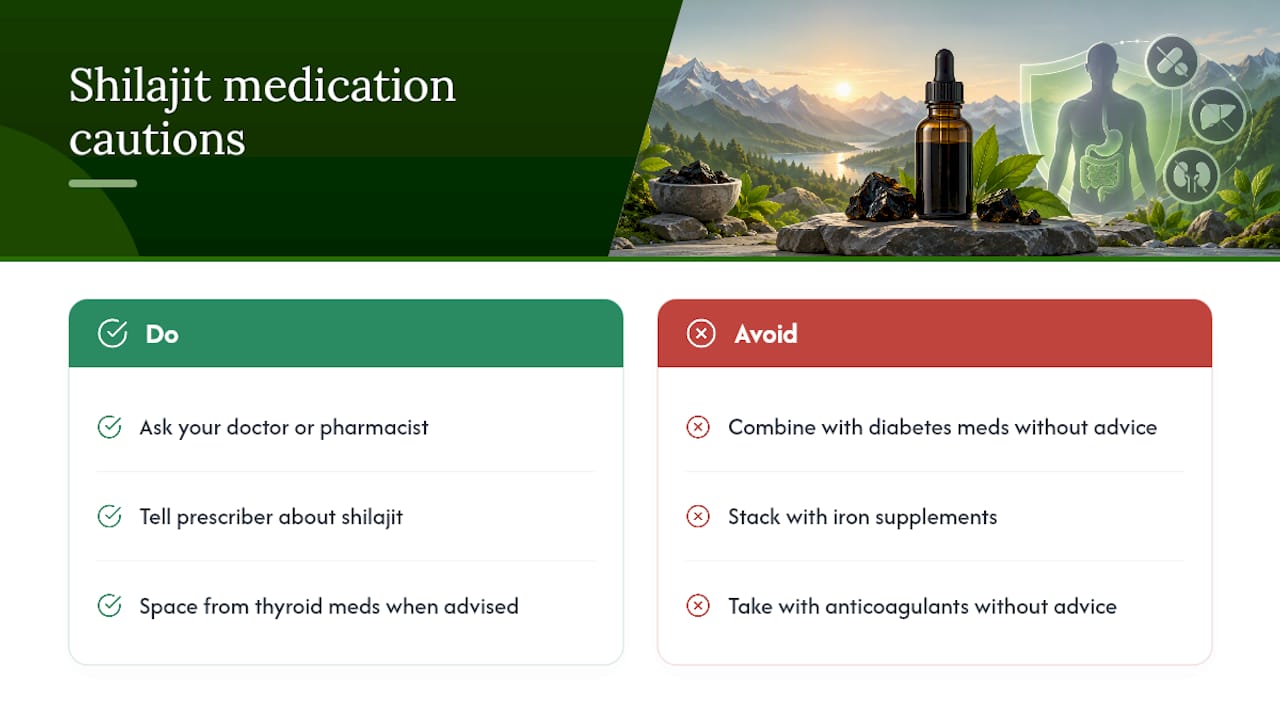
Shilajit’s mineral and antioxidant content means it can interact with several common medications and supplements, so this isn’t a category to mix casually. It may lower blood sugar, which raises the risk of hypoglycemia when combined with diabetes medications like insulin or metformin. It can also amplify the effects of blood pressure medications, since some research points to mild blood-pressure-lowering activity.
Iron supplements deserve particular caution. Shilajit contains trace minerals, including iron, so stacking it with an iron supplement raises the risk of excess intake, especially for anyone with a history of iron overload or hemochromatosis. Anticoagulant and antiplatelet medications, including warfarin and aspirin, are another area of concern, since shilajit’s effect on platelet activity hasn’t been well studied in combination with these drugs.
If you’re taking thyroid medication, be aware that shilajit’s mineral content could theoretically interfere with absorption timing, similar to how calcium and iron supplements are often spaced apart from thyroid medication. None of this means shilajit is unsafe to combine with everything. It means anyone on prescription medication should talk to a doctor or pharmacist before adding it, and should mention it explicitly rather than assuming a “natural” supplement is automatically low-risk.
The clearest use cases are athletes managing recovery, midlife men curious about their testosterone markers, and anyone dealing with persistent low energy who wants an evidence-informed option rather than a folklore-based one. Expect modest, not dramatic, results. Confirm purity before you confirm dosage, and track your own symptoms honestly. If something feels off, stop.
— Shilajit
If you’ve read this far, you already know the benefits are real but bounded, and the biggest variable isn’t the compound, it’s the purity of what’s in the bottle. Some sellers offer Himalayan-sourced resin and tincture, batch-tested for heavy metals and processed using traditional purification methods before it reaches consumers.
Every product listing links back to its purity information, so you’re not taking a seller’s word for it. Browse the current shilajit tincture and resin lineup, check the dosage guide to match trial-equivalent amounts to your product’s concentration, and if you’re on medication or managing a health condition, talk to your doctor before starting. Purity first, dose second, that’s the order that actually keeps you safe.
The clinical claims in this guide draw from a small set of controlled human trials and reviews: the testosterone trial in 75 men, the 2022 postmenopausal bone health study, the 8-week PrimaVie® strength trial, and a broad review of shilajit’s phytochemistry. Cautionary context comes from Cleveland Clinic’s overview and Examine’s supplement summary.
This article is general information, not a substitute for advice from a qualified doctor. Consult a qualified healthcare professional about your own circumstances before acting on anything here.
Daily use at trial doses (250 to 500 mg) has been linked to modest improvements in energy, testosterone markers, and exercise recovery over 8 weeks in controlled trials. Effects build gradually, nothing in the research supports an immediate or dramatic shift within days.
Shilajit tincture drops are typically used for energy support, exercise recovery, and, in men, testosterone-related markers, based on the same active compounds found in resin and capsule forms. The liquid format simply makes dosing more flexible, provided the product lists milligram equivalents on its label or COA.
Most first-time users notice mild effects like a subtle energy lift within the first week, though some report nausea, headache, or dizziness, which is why starting with a lower dose than the trial amount is recommended. If you experience anything beyond mild discomfort, stop and consult a doctor.
Avoid unpurified or untested shilajit, since contamination with heavy metals and mycotoxins is a documented risk in lower-quality products. People who are pregnant, breastfeeding, managing gout or kidney disease, or taking blood sugar, blood pressure, or blood-thinning medications should avoid it without first checking with a clinician.
Avoid shilajit while pregnant or breastfeeding. No controlled trials, contamination risk, and one case links use to high blood pressure. Inform your…
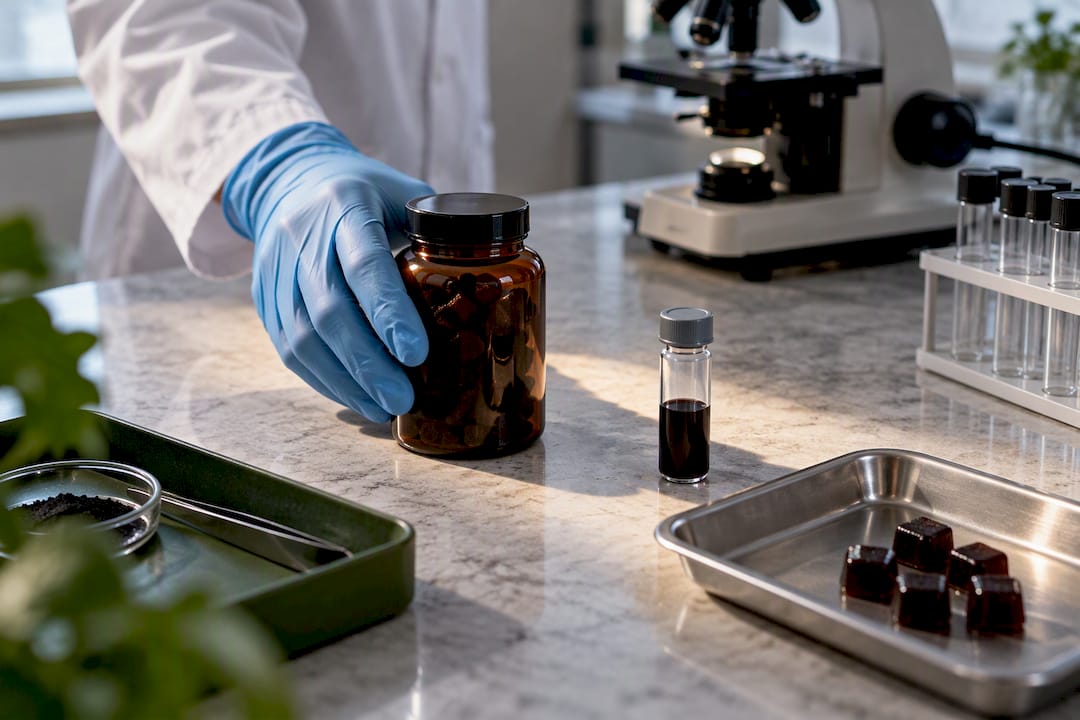
Australia-focused look at shilajit gummies: what human trials actually show, how 500 mg/day dosing compares, and why batch COAs and TGA safety checks matter.