Uncategorized
Shilajit in Pregnancy: Why Doctors Advise Against It and What to Do
Avoid shilajit while pregnant or breastfeeding. No controlled trials, contamination risk, and one case links use to high blood pressure. Inform your…

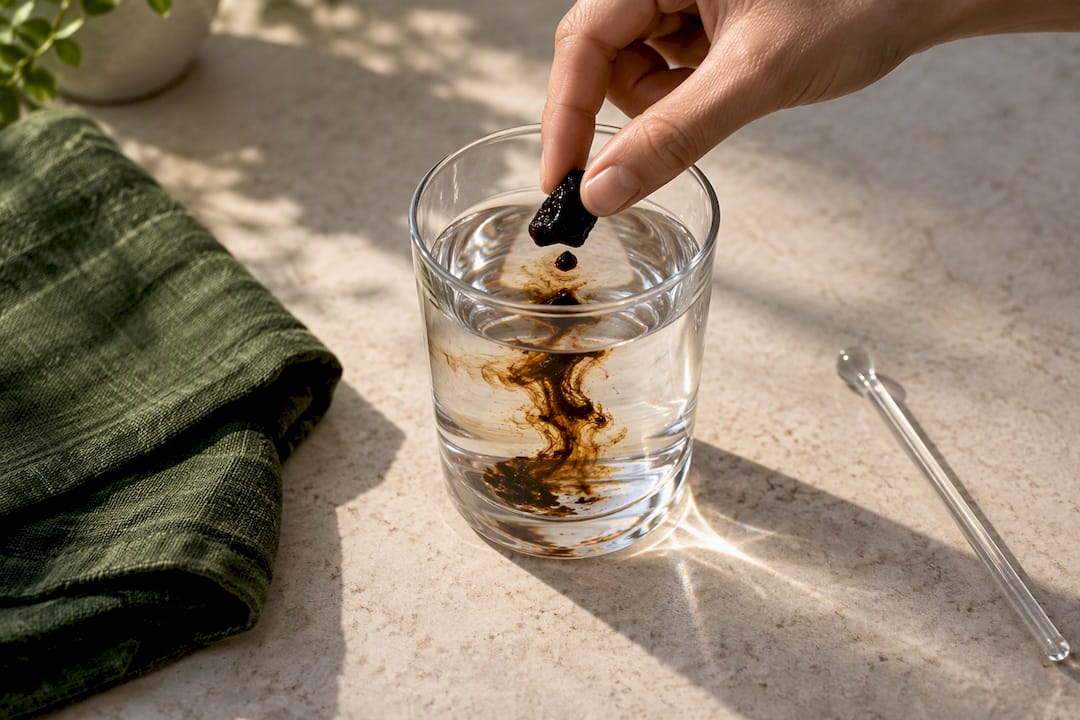
Dissolving shilajit resin the right way takes three moves: pinch off a small, pea-sized portion, stir it into 2 to 3 tablespoons of warm, not boiling, liquid until it turns into a smooth dark solution, then top up the cup and drink it right away. Getting the dose and temperature wrong is why some people end up with gritty clumps floating in their tea. Choose a resin that is tested for purity before you even get to the spoon.
TL;DR:
- Using warm, not boiling, liquid around 40 to 50°C (104 to 122°F) ensures proper dissolution without degrading bioactive compounds.
- Dissolving a pea-sized resin in a small volume of liquid first prevents clumping and ensures a smooth, mostly transparent dark solution.
- Most authentic shilajit resin contains fine sediment from humic substances but should not produce large, gritty particles or a strong chemical smell.
- Only buy from vendors that provide batch-specific certificates of analysis testing for heavy metals, microbes, and fulvic acid content.
- Consuming shilajit on an empty stomach in the morning or with warm milk in the evening aligns with traditional practices and may optimize absorption.
The technique that actually works, and the one traditional Ayurvedic practitioners have used for generations, is to dissolve first, then dilute. Skip that order and you’ll spend five minutes chasing a stubborn brown lump around the bottom of your mug.
Here’s the full protocol:
That order matters more than people realize. A stepwise dissolve-then-dilute method solves the single biggest complaint new users have: clumping. Dump resin straight into a full glass of water and you’re fighting surface tension and dilution at the same time. Concentrate it in a small volume first and the resin has nowhere to go but into solution.
What to expect visually: good shilajit resin dissolves into a solution that looks like strong coffee or dark tea, glossy and mostly transparent when held up to light. A small amount of fine sediment at the bottom of the cup is normal and gets covered in more detail below. What’s not normal is a solid lump that refuses to break down no matter how long you stir. That usually means either the liquid wasn’t warm enough or you’re trying to dissolve too much resin in too little liquid.
Quick troubleshooting checklist:
A small pea-sized portion is the serving size most brands and practitioner guides settle on. Without a scale, use visual comparison. Roll the resin into a ball about the size of a small pea or a grain of dried rice. It should feel slightly sticky and pliable, not crumbly.
Timing depends on what you’re using it for:
Start at the low end of the range for the first one to two weeks and pay attention to how you feel before increasing. Shilajit resin dosage isn’t one-size-fits-all. Body weight, sensitivity, and the specific product’s mineral concentration all shift what “right” looks like for you. The dosage guide breaks down how to adjust based on goals and tolerance over time.
Pro Tip: Keep a simple note on your phone tracking dose, time of day, and how you felt a few hours later. Two weeks of data will tell you more about your ideal dose than any generic recommendation ever could.
Warm filtered water is the simplest carrier and the one that lets the resin’s natural taste come through without competing flavors. Herbal teas, chamomile or tulsi work well, add a mild flavor buffer if you find the earthy, slightly bitter taste of raw shilajit off-putting on its own.
Milk, dairy or plant-based, is the traditional pairing in Ayurvedic practice, where shilajit is classified as a rasayana, a rejuvenating substance typically taken with milk to improve palatability and align with centuries of practical use. Oat and almond milk both dissolve shilajit reasonably well, though the flavor profile shifts slightly compared to dairy.
A few things to avoid:
If you’re on prescription medication, especially anything affecting hormones, blood pressure, or blood sugar, it’s worth a conversation with your doctor before adding shilajit to your routine regardless of what you mix it with.
“Warm” means somewhere around 40 to 50°C (104 to 122°F), noticeably warmer than room temperature but nowhere near boiling. If you’ve just boiled water, let it sit for a minute or two before adding the resin. That short cooling window is usually enough to bring it into the right range.
Overheating isn’t just unnecessary, it can work against you. High heat is linked to the formation of unwanted byproducts in heated organic compounds generally, which is part of why “warm, not boiling” shows up consistently in preparation guidance rather than “as hot as possible.”
Practical ways to hit the right temperature without a thermometer:
Stick with a small starting volume, that 2 to 3 tablespoons, for the initial dissolve. A bigger volume drops the temperature faster and dilutes the resin before it’s had a chance to properly break down.
Pro Tip: If your kitchen runs cold in winter, warm your mixing cup itself under hot tap water for a few seconds first. A cold cup can pull heat out of your liquid faster than you’d expect, right when you need it most.
A small amount of sediment at the bottom of your cup usually isn’t a problem. Shilajit resin is rich in fulvic acid, which dissolves cleanly into liquid, alongside humic and humin compounds that behave differently. Some of that humic material disperses as extremely fine particles rather than fully dissolving at the molecular level, and it’s a documented, largely benign part of how genuine shilajit behaves in water.
Purified resins can still leave a faint sediment layer, and that alone doesn’t indicate contamination. The distinction that matters is between dissolved and dispersed. Fulvic acid, the compound most associated with shilajit’s mineral-transport properties, goes fully into solution. Larger humin particles can remain suspended as fine grit without signaling anything is wrong with the product.
What should raise a flag: a gritty, sandy residue that feels distinctly mineral rather than fine and silty, a strong chemical or metallic smell, or a solution that stays cloudy and won’t clarify even after thorough stirring. Any of those warrant checking the product’s certificate of analysis rather than assuming it’s normal sediment.
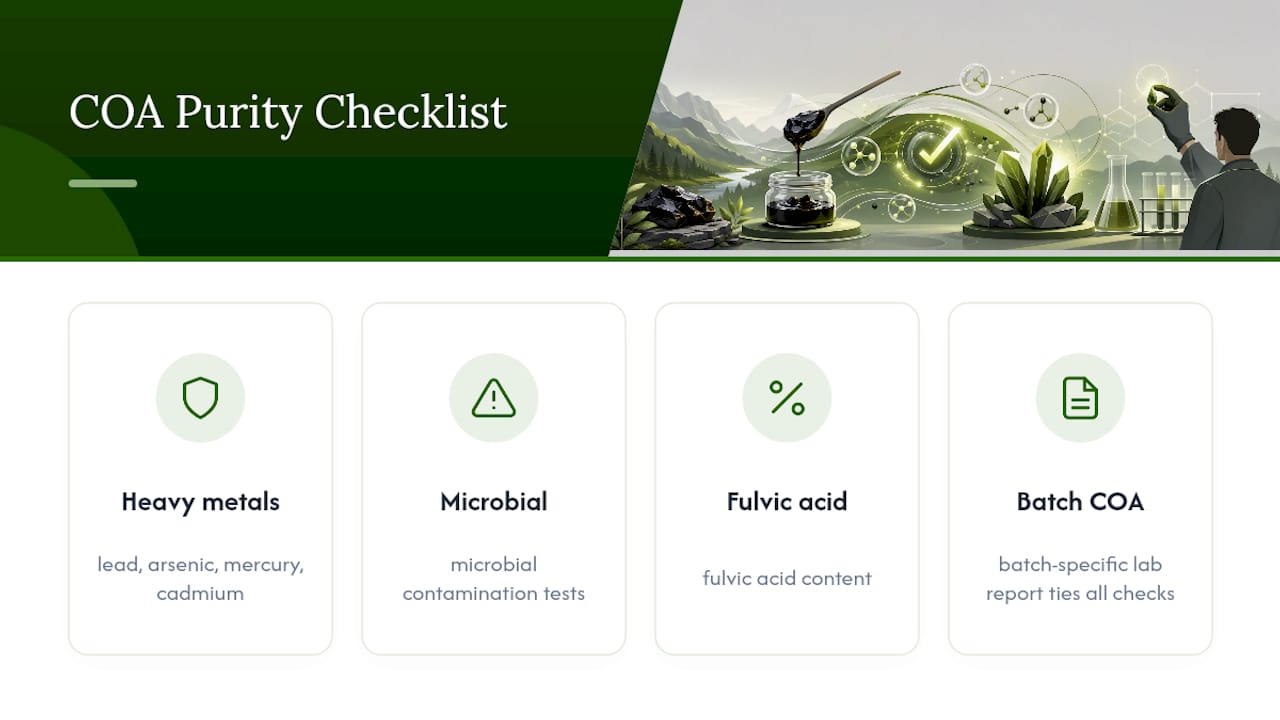
A reliable COA reports independent lab results for heavy metals (lead, arsenic, mercury, cadmium), microbial contamination, and fulvic acid content. Raw, unpurified shilajit can carry heavy metal and microbial contamination if it hasn’t gone through proper processing, which is exactly why batch-specific testing matters more than marketing language about purity. You can run through a purity test checklist to know what numbers to look for before you buy.
Most dissolving problems trace back to one of five habits, and every one of them is fixable in about ten seconds.
A fast mental checklist before you dissolve: warm liquid, small starting volume, non-metal spoon, pea-sized portion, tested product. Hit all five and you’ve eliminated nearly every common failure point.
Most healthy adults tolerate shilajit resin well at recommended doses, though mild digestive upset, headache, or a temporary increase in heart rate has been reported by some users, usually tied to starting at too high a dose. People who are pregnant, breastfeeding, managing a chronic condition, or taking prescription medication should talk to a doctor before starting, since research on shilajit’s interactions and long-term safety is still limited compared to more heavily studied supplements.
Reading a certificate of analysis is the single most useful skill for a shilajit buyer. A trustworthy COA covers:
Broader reviews of supplement safety consistently point to the same gap: evidence for many claimed benefits is still developing, and quality control varies enormously between brands, which is exactly why third-party testing and clinician consultation matter more than the marketing copy on the label.
If you want a deeper walkthrough of what specific numbers on a COA should look like, the heavy metal contamination guide covers acceptable ranges in plain language.
Shilajit resin holds up well for years if you store it correctly, and poorly if you don’t. Heat and moisture are the two things working against you.
Building a routine helps as much as storage does. Taking your dose at the same time each day, whether that’s a fasted morning ritual or a warm milk wind-down before bed, makes it easier to notice patterns in how you feel and easier to stay consistent long enough to actually judge whether it’s working for you.
We’ve watched enough people struggle with clumpy, half-dissolved shilajit to know the dissolve-first, dilute-second method isn’t a nice-to-have technique. It’s the difference between a smooth daily habit and a frustrating one that gets abandoned after two weeks.
Our approach to sourcing follows the same logic as our approach to preparation: skip shortcuts. Himalayan shilajit that has gone through traditional purification and batch-specific lab testing behaves differently in the cup than poorly processed resin does. It softens faster, dissolves more evenly, and leaves less unexplained grit at the bottom of your mug.
That said, no amount of good technique substitutes for verifying what’s actually in your jar. Traditional use of shilajit stretches back centuries, but modern safety concerns around purity and contamination are real and worth taking seriously. Check the COA. Ask questions if a seller doesn’t have one readily available. Talk to a healthcare provider if you’re managing a health condition or taking medication. Good preparation technique and good sourcing decisions solve different problems, and you need both.
— Shilajit
Every batch we sell comes with its own certificate of analysis, tested for heavy metals, microbial safety, and fulvic acid concentration, so you’re not guessing at what’s actually in the jar. That’s the real advantage over buying resin from a source that treats “pure Himalayan shilajit” as a slogan rather than a testable claim.
Our Shilajit resin is processed using traditional purification methods before it ever reaches a customer, and it dissolves the way this guide describes: soften a pea-sized portion in warm water or milk, stir until smooth, and you’re done. If you’re deciding between formats, the resin versus capsule comparison walks through which one fits your routine better.
Before you buy anything, from us or anyone else, pull up the batch’s COA and check it against the thresholds covered earlier in this guide. If you’re ready to start, browse the 50-gram pure Shilajit resin jar and its testing documentation, and decide for yourself whether the numbers hold up.
This article is general information, not a substitute for advice from a qualified doctor. Consult a qualified healthcare professional about your own circumstances before acting on anything here.
Pinch off a pea-sized portion, drop it into 2 to 3 tablespoons of warm (not boiling) water, milk, or herbal tea, and stir for 30 to 60 seconds until it forms a smooth, dark solution. Top up with more liquid once it’s fully dissolved, then drink right away.
Avoid boiling liquids, since high heat can degrade some of the resin’s bioactive compounds, and skip alcohol and highly acidic mixers like citrus juice. If you take prescription medication, particularly anything affecting hormones or blood pressure, check with your doctor before combining it with shilajit.
Dissolve a small pea-sized portion in warm liquid first, then dilute and drink. Some people prefer it first thing in the morning on an empty stomach for energy, while the traditional approach pairs it with warm milk in the evening. The dosage guide has more detail on adjusting over time.
Purified, properly tested shilajit taken at recommended doses hasn’t been shown to burden the liver or kidneys in most healthy adults, but research on long-term safety remains limited. The bigger risk comes from untested raw shilajit, which can carry heavy metals that do stress those organs, so buying lab-tested resin and checking the COA matters more than the shilajit itself.
A small amount of fine sediment is normal and usually comes from humic compounds that disperse rather than fully dissolve, which doesn’t necessarily indicate a purity problem. Coarse, sandy grit paired with a strong chemical smell is different and worth checking against the batch’s certificate of analysis.
Avoid shilajit while pregnant or breastfeeding. No controlled trials, contamination risk, and one case links use to high blood pressure. Inform your…
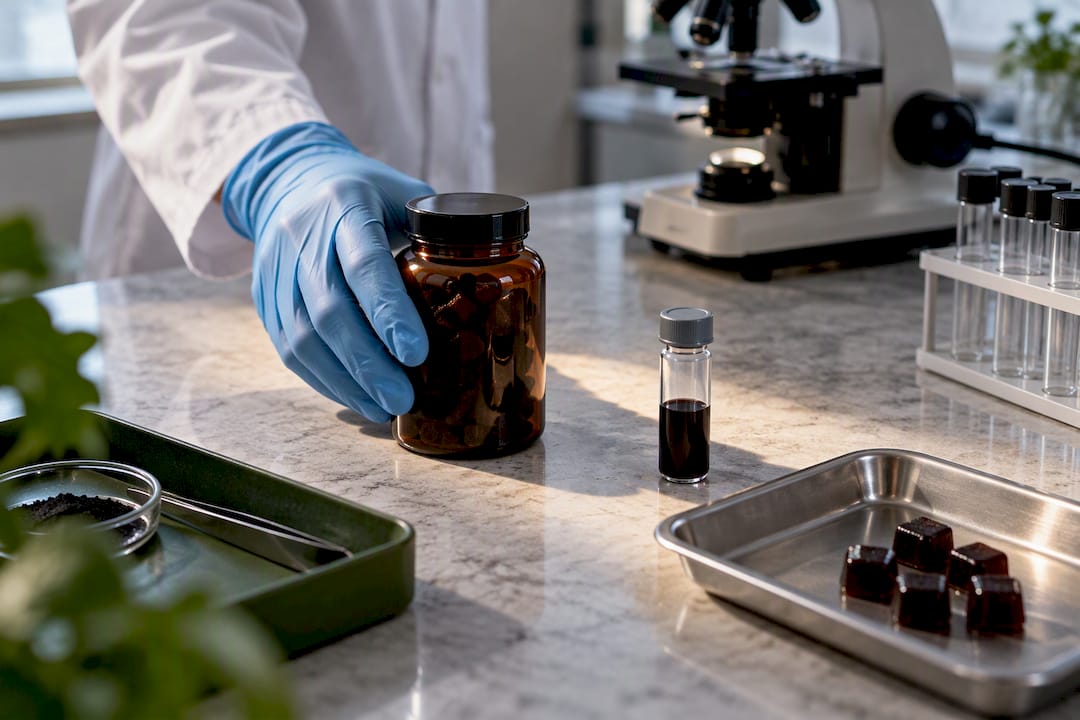
Australia-focused look at shilajit gummies: what human trials actually show, how 500 mg/day dosing compares, and why batch COAs and TGA safety checks matter.