Uncategorized
6 Point Shilajit Lab Report Checklist for Australian Buyers
Verify Shilajit lab reports in Australia with a six point checklist. Spot fake COAs, check lab accreditation, lot match, analytical methods, and LODs.

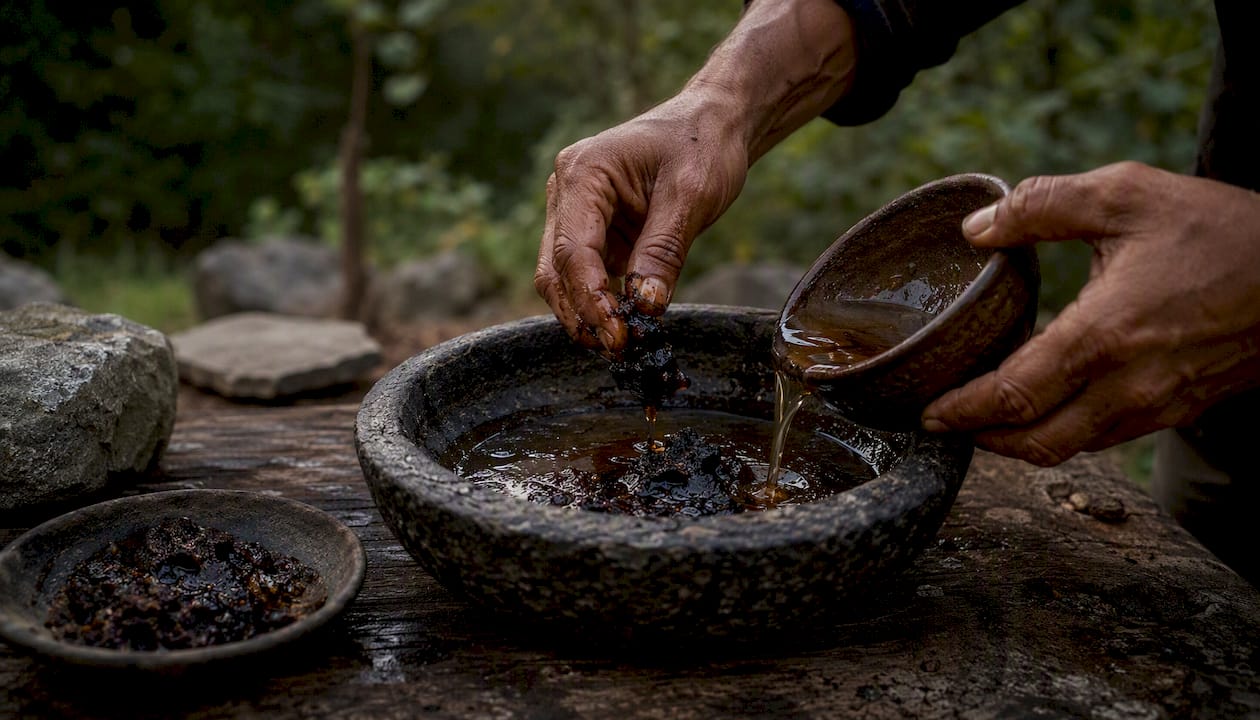
Ayurvedic purification, known formally as shodhana, is the traditional process of dissolving raw Himalayan Shilajit in a liquid medium, filtering it through fine cloth, and concentrating it through low-heat evaporation to remove physical debris and refine the active fraction for safe consumption. For anyone buying Shilajit, the practical takeaway is this: shodhana is the starting point, not the finish line. What actually protects you is a per-batch third-party Certificate of Analysis (COA) showing ICP-MS heavy-metal results, microbial and mycotoxin screens, and a quantified fulvic acid assay.
Before you buy, look for three things on any product page:
Shodhana translates roughly as “to purify” or “to make clean.” In classical Ayurveda, the term covers a range of processing methods applied to minerals, resins, and metals before they are considered fit for internal use. Applied to raw Shilajit, it means a multi-step wet process that strips out the rock, soil, plant debris, and insoluble mineral fractions that come with the resin as it is harvested from Himalayan rocks at altitude.
Raw Shilajit is not a clean product. It oozes from rock fissures carrying dust, sand, and variable loads of heavy metals from the surrounding geology. Shodhana is what transforms that raw exudate into something consistent enough to dose. The Triphala decoction used in classical shodhana is not just a rinsing agent; its phytochemicals are thought to bind residual minerals and transfer beneficial marker compounds into the resin, according to HPTLC research on the Shodhana process.
The procedure follows a clear sequence. Each step has a measurable purpose, and skipping any of them is a shortcut that shows up in the final product’s purity profile.
Typical yield from this process runs around 40.4%, per published procedural data on Triphala-based shodhana.
Key producer signals worth asking about:
Pro Tip: Ask the brand whether gallic acid appears in their HPTLC fingerprint. Its presence confirms Triphala was used in processing. Absence in a product marketed as “Triphala-shodhit” is a red flag.
The measurable outcomes of proper shodhana are significant. Laboratory analysis of Triphala-based shodhana shows total ash dropping from 52.95% to 21.67% and acid-insoluble ash falling from 2.35% to 0.39%. Those numbers represent the physical mineral debris that would otherwise end up in a capsule or resin jar.
The active fraction improves at the same time. Fulvic acid concentration rises from approximately 36.91% in raw material to around 50.12% after shodhana. That shift matters for dosing: a higher fulvic acid percentage means a smaller effective dose delivers the same bioactive load.
Shodhana also changes the mineral profile in ways that are not always visible to the naked eye. Processing choices — filtration stages, number of cycles, and drying method — directly determine how much silicon and aluminum remain in the final product, according to research on extraction and purification variables. Two products both labeled “purified” can have very different residual contaminant profiles depending on how carefully those steps were executed.
Therapeutically, Ayurvedic texts frame shodhana as enhancing medicinal efficacy, not merely cleaning the resin. The selective extraction concentrates the fulvic and humic acid fraction while reducing inert mineral load, which is consistent with what the lab data shows.
| Test | What It Checks | Consumer Threshold to Look For |
|---|---|---|
| ICP-MS heavy metals | Lead, arsenic, cadmium, mercury at ppm/ppb | numeric Pb, As, Cd, Hg results |
| Microbial plating/PCR | Total plate count, pathogens (E. coli, Salmonella) | Meets USP dietary supplement limits |
| Mycotoxin screen (LC-MS/MS) | Aflatoxins, ochratoxin A | Below regulatory action levels |
| Fulvic acid assay | Quantified % fulvic acid | Stated grade (e.g., 20%, 50%, 70%) |
| Moisture content | Stability and concentration | ≤20% per spec |
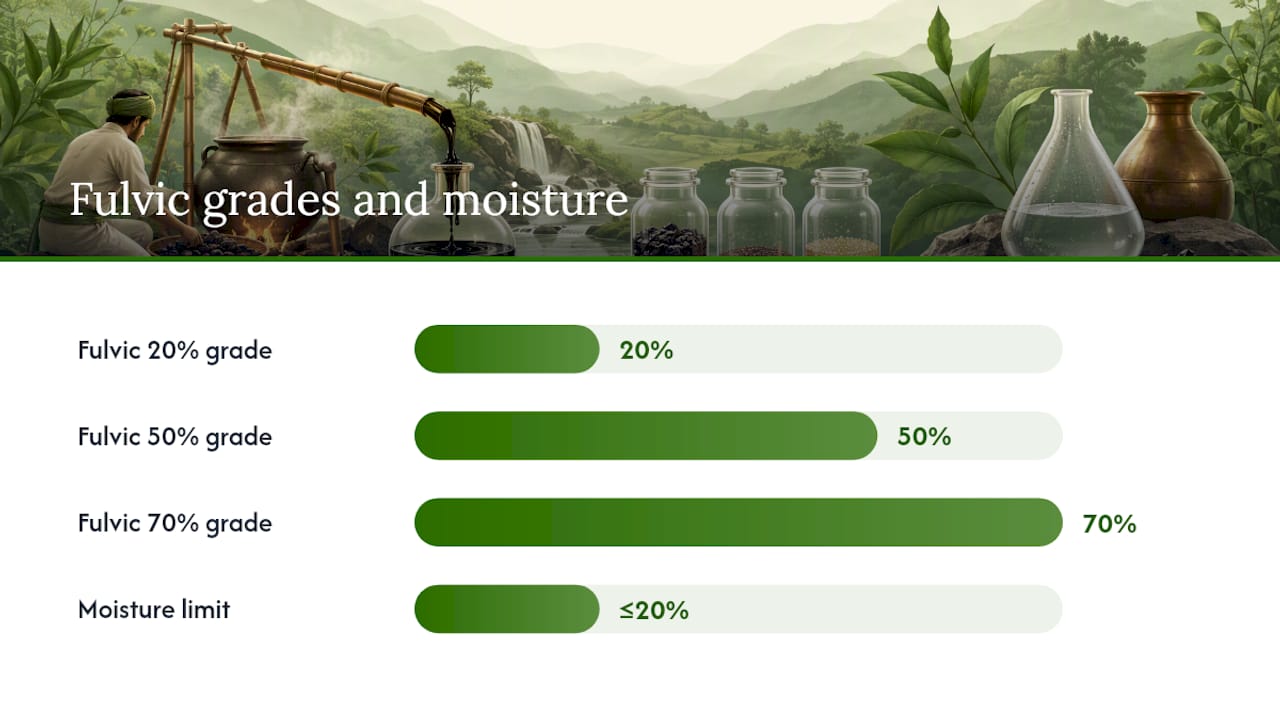
ICP-MS is the analytical gold standard for heavy-metal quantification because it measures at parts-per-billion sensitivity. A COA that reports only “below limit” without stating the detection limit is not giving you the full picture. Fulvic acid standardization grades (20/50/70%) directly affect dosing consistency; a product with no stated fulvic percentage cannot be dosed reliably. Learn more about how fulvic acid percentage affects dosing.
Pro Tip: A trustworthy COA names the lab, states the accreditation, lists the test method for each analyte, gives numeric results with units, and carries a sample ID that matches the batch number on your product label.
Work through a COA in this order:
Red flags on any COA:
Checklist to paste into a vendor email:
Start with a small amount — roughly the size of a grain of rice for resin — and follow the label’s guidance before increasing. Because fulvic acid percentage varies between products, a higher-grade resin requires a smaller dose to deliver the same effect. Avoid combining Shilajit with medications that affect iron metabolism or blood pressure without checking with a healthcare provider first.
Storage is straightforward:
For usage ideas and safe serving suggestions, Shilajit’s product pages include practical guidance alongside the lab documentation.
This article is general information, not medical advice. Confirm current supplement safety standards with a qualified healthcare provider or the FDA’s dietary supplement resources.
Shodhana is necessary but not sufficient: a per-batch third-party COA with ICP-MS heavy-metal results, mycotoxin screening, and a quantified fulvic acid assay is what actually confirms a purified Shilajit product is safe to use.
| Point | Details |
|---|---|
| Shodhana defined | Traditional dissolve-filter-evaporate process using Triphala decoction that removes debris and concentrates fulvic acid. |
| Fulvic acid increase | Proper shodhana raises fulvic acid from ~36.91% to ~50.12%, improving dosing consistency. |
| COA is mandatory | Demand a per-batch ICP-MS panel (Pb, As, Cd, Hg), mycotoxin screen, and fulvic acid assay before buying. |
| Red flags to avoid | “Purified” with no COA, vague “complies” results, missing lab name, or undated reports signal unverified product. |
| Shilajit’s standard | Shilajit provides documented shodhana, per-batch COAs, and ICP-MS results on its product pages for buyer verification. |
The supplement industry has trained shoppers to treat “purified” as a safety guarantee. It is not. Shodhana is a process description, and a well-executed one genuinely does reduce debris and concentrate the active fraction. But the geology of a Himalayan collection site does not care how many filtration cycles a producer runs. Lead and arsenic dissolve into the resin at the source, and no amount of Triphala washing removes them completely if the raw material was heavily contaminated to begin with.
The real question is not whether a brand uses shodhana. Most do, at least nominally. The question is whether they can prove what ended up in the jar after processing. That proof is a batch-specific COA from an accredited lab with numeric ICP-MS results. A brand that publishes those numbers is making a verifiable claim. A brand that says “purified by traditional methods” is making a marketing claim.
U.S. consumers also have a practical reason to care about this beyond personal safety: the FDA’s dietary supplement framework places responsibility on the consumer to verify product quality before purchase. There is no pre-market approval for supplements. A COA is your only independent check.
Shilajit sells pure Himalayan Shilajit resin processed with documented Triphala-based shodhana and backed by per-batch third-party lab testing. Every batch comes with ICP-MS heavy-metal results, mycotoxin and microbial screening, and a quantified fulvic acid assay — all accessible on the product pages before you check out. Origin information, harvest altitude, and the lab name are listed alongside the COA so you can verify the chain from rock face to jar. For a deeper look at purity standards and how to read the documentation, the Himalayan Shilajit purity guide walks through exactly what each test result means. View the current batch COA and place an order at the product page linked above.
Verify Shilajit lab reports in Australia with a six point checklist. Spot fake COAs, check lab accreditation, lot match, analytical methods, and LODs.
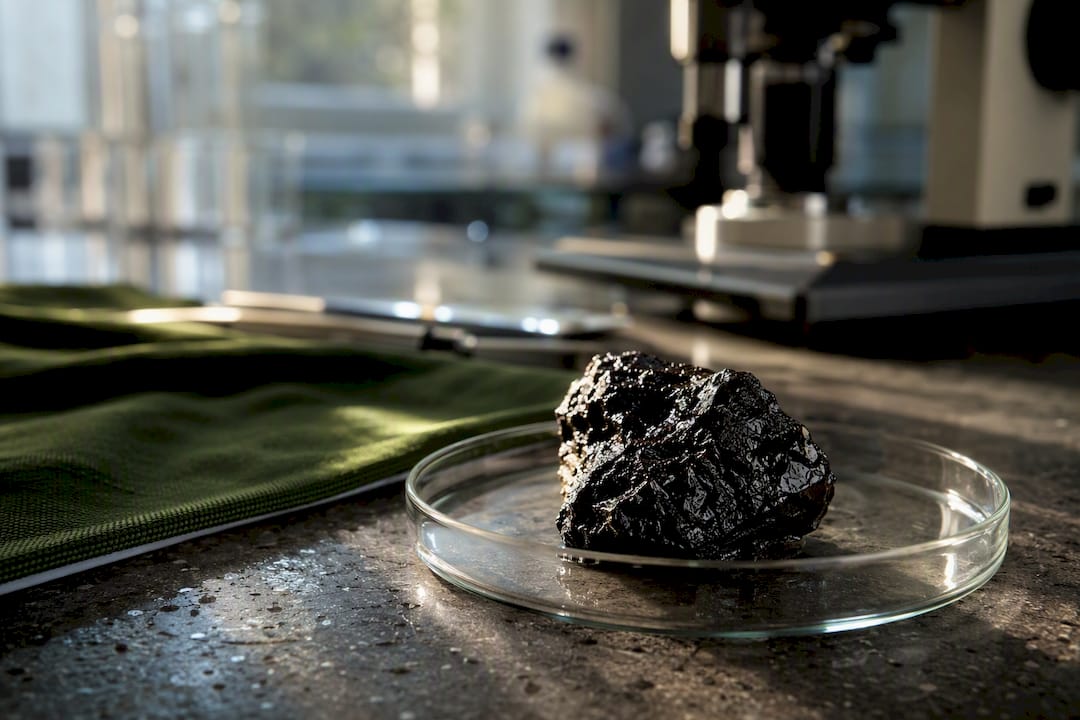
Learn to pick pure shilajit by reading the batch COA. Check fulvic acid range, named lab method, numeric heavy-metal results, and harvest altitude.